1
Device Mounting Procedure
5.2.1.1.
5.2.1.2.
5.2.1.3.
Select the desired annulus diameter. ISO 5840-3:2013 states that testing shall
be completed for at least the smallest and largest valve sizes, each deployed to
the largest and smallest deployed diameters as per the Instructions For Use.
Select the desired ellipticity. Although transcatheter valves are round in
design, implantation of these valves commonly results in an elliptical
conformation to the annulus.
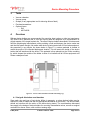
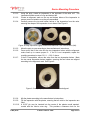
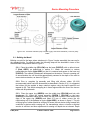
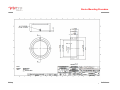
Machine or 3D-print a cylinder with the desired annulus diameter and
ellipticity. This cylinder should be at least 16mm tall and have a #25 hole drilled
through the centre to align and fasten the mandrel into the mould. See Figure 6.
≥ 16mm
#25 hole
Figure 6. 26mm round annulus mould mandrel for transcatheter valves.
5.2.2. Surgical Valves – Mechanical & Bioprosthetic
Since surgical valves generally all have unique profiles, creating a mould mandrel will be a
custom, device-specific process. For mass production of valve holders, it may be desireable
to have a 3D-printed model of the devices to be mounted. For surgical mechanical valves, it
is possible to remove the sewing cuff and fabricate a Delrin™ fixture to seal the valve into,
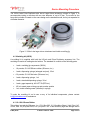
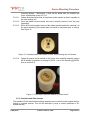
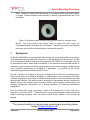
then mould the silicone part of the holder to the profile of the Delrin™ fixture, as shown in
Figure 7.
Figure 7. Carbomedics surgical mechanical valve sealed in Delrin™ fixture for interfacing
with silicone holder.
For situations when 3-D printing of a replica device isn’t advantageous nor is removing the
sewing cuff, it is possible to make a plaster cast replica of the device profile using the
following steps:
5.2.2.1.
6 May 2015
Mix a small amount of condensation putty and catalyst according to the
manufacturer’s directions.
© ViVitro Labs Inc. 2015
Page 8 of 19