1
48
Picture Perfect 4.5 Interface
User Manual
Introduction
The CCTV control systems operate separately from Picture Perfect and require their own hardware and
software which is provided by the CCTV manufacturer. The interface between a CCTV controller and Picture
Perfect provides the capability to automatically control CCTV cameras.
For controllers providing video loss monitoring and reporting using the controller printer port, an optional
video loss interface component of Picture Perfect can be configured to issue alarms using the Alarm Monitor
feature whenever a camera video signal has been lost.
The first step is to configure the Picture Perfect system and the CCTV system or to verify the set up if this is an
existing system. Next, use Picture Perfect to link or “map” the desired Picture Perfect alarms to the appropriate
CCTV cameras. When the mapped alarm is received by Picture Perfect, a message is sent to the CCTV system
to turn on the linked CCTV cameras and monitors. The CCTV system will then control the appropriate
cameras and monitors. No operator intervention is required. As an alarm is cleared by the operator from the
Picture Perfect Alarm Monitor screen, the CCTV system will be informed that the alarm has been reset and the
appropriate camera will turn off.
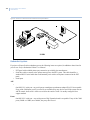
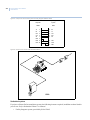
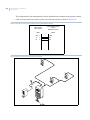
The CCTV interface to Picture Perfect supports the configuration of multiple CCTV devices connecting to the
Picture Perfect host.
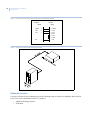
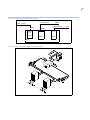
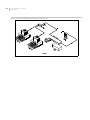
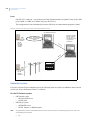
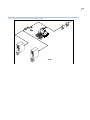
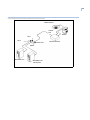
Refer to Figure 25, Overview of the Picture Perfect and CCTV interface on page 55.
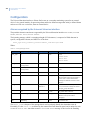
Redundant systems
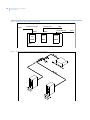
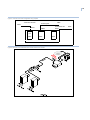
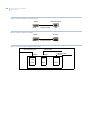
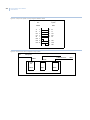
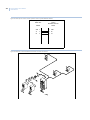
The CCTV interface to Picture Perfect supports operations in a redundant Picture Perfect environment where
two hosts have connectivity to a single CCTV switcher. Connectivity is achieved by using a splitter between
the Picture Perfect system and the CCTV switcher. This allows the physical connection of the CCTV switcher
to an RS-232 serial port on each Picture Perfect host computer.
In a redundant configuration, the CCTV interface software executes on both Picture Perfect hosts and both
receive alarm notifications. However, only the interface software executing on the primary host communicates
with the CCTV switcher. Whenever an alarm notification is received by the interface software, it determines if
it is executing on the primary host.
Alarm notifications received by the interface software executing on the redundant host are processed but
output to the switcher is suppressed. In the case of a failover, the mode on the redundant host will change to
indicate that it is now the primary and the interface software will then conduct communications with the CCTV
switcher.
Refer to Figure 28, Overview of the redundant Picture Perfect and CCTV interface on page 57.