1
N30 Supervisory Controller User’s Manual
A-3
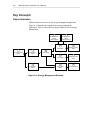
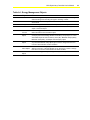
Table A-1: Energy Management Objects
Number
Object
Role
1
DLLR
Receives energy consumption data from the Pulse Meter object to manage
demand limiting and load rolling through the shedding of loads.
2
Load
Registers with the DLLR object to let the DLLR object know that it exists and
can be shed.
3
Utility Profile
Collects utility data from a Pulse Meter object and a DLLR object.
4
Pulse Meter
Collects energy consumption data to be available to either the Utility Profile
object or the DLLR object.
5
N2 Pulse
Counter
Counts energy pulses via the N2 Bus from an actual hardware meter and
relates the data to the Pulse Meter object.
6
Output
Object
Acts as the associated output for the Load object, which switches it off for the
actual physical load shedding. Besides an N2 Binary Output object, a Load’s
associated output can also be a Binary Value (BV), Multistate Output (MSO),
Multistate Value (MSV), or Multiple Command (MC) object.
7
Output Alarm
Object
Provides the attribute supplying the output alarm condition. This attribute can be
any numerical attribute of any object type in which a change from zero to a
non-zero value indicates an alarm condition.
8
Comfort
Alarm Object
Provides the attribute supplying the comfort override alarm condition. This
attribute can be any numerical attribute of any object type in which a change
from zero to a non-zero value indicates an alarm condition.
9
Schedule
Object
Starts new billing periods by resetting the Utility Profile object.