1
Doc No: UG60917-IDP-030
Rev A
Date: 08 February 2012
Contract No. NNG10XA03C
Page 2
the Customer locations, and enables mission planning, asset management, and generation
and delivery of the mission products.
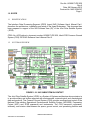
The CGS Program is responsible for the design, implementation, integration, test, deployment,
and transition of the three JPSS Ground Segments: the Command, Control, and
Communications Segment (C3S), the Interface Data Processing Segment (IDPS), and the
Field Terminal Segment (FTS). C3S manages the overall JPSS CGS mission, including active
management and accounting of mission data, from storage on the satellite solid-state recorder
to delivery to the IDPS. The IDPS is responsible for receiving raw mission data from C3S and
for creating and delivering useable environmental products to Users. FTS provides hardware
and software specifications needed to build JPSS CGS-compliant field terminals (FTs), along
with updated processing software designed to handle direct broadcast data streams.
The IDPS of JPSS CGS is responsible for providing data records to four meteorological
centrals: Air Force Weather Agency (AFWA); National Environmental Satellite, Data, and
Information Service (NESDIS); Fleet Numerical Meteorology and Oceanography Center
(FNMOC); and Naval Oceanographic Office (NAVOCEANO)) on a time critical basis. The
IDPS ingests and processes Stored Mission Data (SMD) received from the Command, Control
and Communications Segment (C3S). The artifacts from satellite onboard storage and ground
communication routing are removed prior to arrival at the IDPS; with initial ingest processing
providing Raw Data Records (RDRs).
The RDRs, which contain raw data on a per sensor basis, are subsequently processed to
create Sensor Data Records (SDRs), Temperature Data Records (TDRs), and Environmental
Data Records (EDRs). In support of the creation of the RDRs, SDRs, TDRs, and EDRs, IDPS
is also responsible to collect various Mission Support Data (MSD) used in the system. These
are used internally and archived to CLASS.
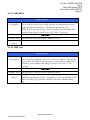
The IDPS Infrastructure (INF) Subsystem manages the startup and shutdown of all IDPS
processes as well as providing common interfaces for all Sis.
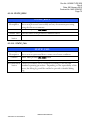
The ING SI serves two main functions. The ING SI interfaces with C3S Data Handling Node
(DHN) to receive SMD in the form of Extended Application Packets on TCP/IP sockets to
produce RDRs. ING SMD strips off the extended headers and stores only the Consultative
Committee for Space Data Systems (CCSDS) Application Packets (APs) into the RDR. ING
creates metadata and stores the RDRs into the Data Management Subsystem (DMS).
ING also receives Ancillary and Auxiliary files referred to as Mission Support Data (MSD) on
specific directories called “Landing Zones”. These files are read from the landing zone and
stored in the native format to DMS with metadata. ING MSD receives both dynamic data
during normal operations and static data received from the Integrated Support Facility (ISF)
during software updates. In some cases, ING also converts the received “native formats” to an
“internal format” to provide quicker access for the Processing (PRO) SI. These “internal
formats” are also stored to DMS with appropriate metadata.
HARDCOPY UNCONTROLLED
JPSS CGS Form J-075A 04/20/2011