1
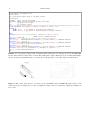
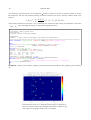
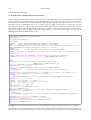
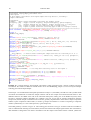
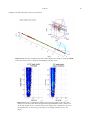
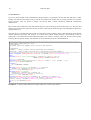
JDN 18 19 /************************************************************************************************ * Instrument: liquid_simple.instr * %Description * A liquid scattering example. * * %Parameters * lambda: [Angs] incoming neutron wavelength (monochromatic) * material: [Angs] liquid or powder description file (lazy/fullprof/crystallographica/qSq/Sqw) ************************************************************************************************/ DEFINE INSTRUMENT liquid_simple (lambda=2.36, string coh="Rb_liq_coh.sqw", string inc="Rb_liq_inc.sqw") TRACE COMPONENT Source= Source_simple(dist=1, radius=0.01, xw=0.01, yh=0.01, Lambda0=lambda, dLambda=lambda*0.01) AT (0,0,0) ABSOLUTE COMPONENT sample= Isotropic_Sqw(Sqw_coh = coh, Sqw_inc = inc, radius = 0.005, yheight = 0.05) AT (0,0,0.5) RELATIVE PREVIOUS COMPONENT banana= Monitor_nD(xwidth=1, yheight=0.3, options="banana ; abs theta limits=[10,130] bins=240 ; y bins=50") AT (0,0,0) RELATIVE PREVIOUS COMPONENT bananE= Monitor_nD(xwidth=1, yheight=0.3, options="banana ; angle limits=[10,130] bins=120 ; auto energy bins=100") AT (0,0,0) RELATIVE PREVIOUS END Example 9. A simple liquid scattering example, which also works with powders and gases. Figure 13. Neutron scattering from a liquid rubidium sample, obtained from the Example 9 at λ=2.36 Å. The left plot shows the liquid DebyeScherrer rings as obtained from a diffractometer 2D detector, whereas the right one shows a radial angleenergy signal with inelastic contribution. Intensity is shown in log scale, with colors ranging from blue (low) to red (high). 5.3.3 Single crystal structures When the sample is a single crystal, the averaging on many crystallites that is responsible for the scattering rings in a powder does not apply. The Bragg law is still valid, but similarly as a mirror, each atomic plane selects a single reflected monochromatic ray. As there are many structural planes available, a polychromatic neutron beam will be scattered as a large number of distinct rays, forming spots on detectors. This happens in the monochromators discussed in section 5.2.5, but in this case only one reflection of interest is used, the others are scattered around, generating background.