1
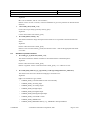
Linux driver development User’s Manual Edwin Version: <2.4> Date: 8/3/2004 Returns: on sucess, comedi_data_write() returns 0. If there is an error, -1 is returned. Ø int comedi_dio_read(comedi_t *it,unsigned int subd,unsigned int chan,unsigned int *bit); This function reads the status of channel belonging to the digital input subdevice. Argument: it is the values return from comedi_open(). subd is the index of the subdevice, chan is the index of the channel, bit contains the result, 0 or 1. Returns: return 0 on success, returns -1 on failure. This function is equivalent to comedi_data_read(it,subd,chan,0,0,bit). Ø int comedi_dio_write(comedi_t *it,unsigned int subd,unsigned int chan, unsigned int *bit); This function reads the status of channel belonging to the digital input subdevice. Argument: it is the values return from comedi_open(). subd is the index the the subdevice, chan is the index of the channel belonging to the digital output device, bit contains the data that will be write to the channel, 0 or 1. Returns: return 0 on success, returns -1 on failure. Ø int comedi_dio_bitfield(comedi_t *it,unsigned int subd,unsigned int write_mask,unsigned int *bits); This function allows multiple channels to be read simultaneously from a digital input or digital I/O device. Argument: it is the values return from comedi_open(). subd is the index of the subdevice, write_mask is the mask of a channel, bit contains the data that will be write to the channel, 0 or 1. Returns: return 0 on success, returns -1 on failure. Ø comedi_trigger(comedi_t *it, comedi_trig *trig); This function instructs comedi to perform the command specified by the trigger structure. Argument: it is the values return from comedi_open(), trig is the comedi_trig structure, as we motioned before, Results: depend on the particular command being issued. If there is an error, -1 is returned. Ø Confidential comedi_command(comedi_t *it, comedi_cmd *cmd); Advantech Automation Corporation, 2001 Page 40 of 41