1
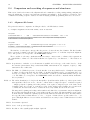
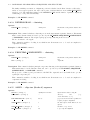
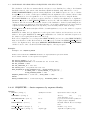
2.2. STEREOCHEMICAL PARAMETERS AND MOLECULAR TOPOLOGY
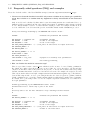
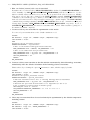
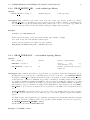
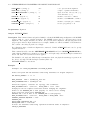
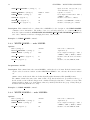
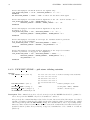
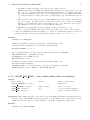
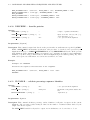
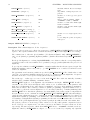
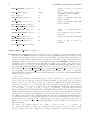
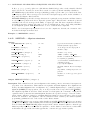
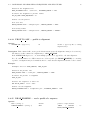
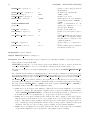
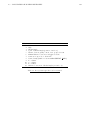
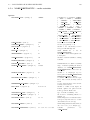
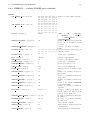
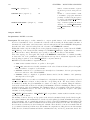
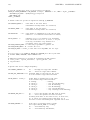
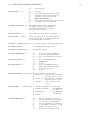
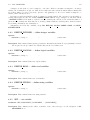
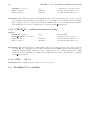
SEQUENCE = hstring : 1i
’undefined’
ATOM FILES = hstring : 0i
’’
ATOM FILES DIRECTORY = hstring : 1i
’./’
WATER IO = hlogical : 1i
off
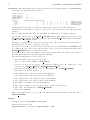
35
protein code in the alignment whose
topology is constructed
complete or partial atom filenames
input atom files directory list (e.g.,
’dir1:dir2:dir3:./:/’)
whether to read water coordinates
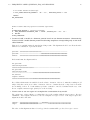
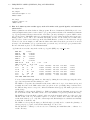
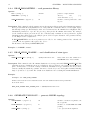
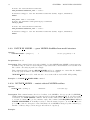
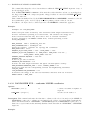
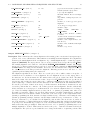
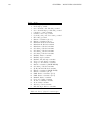
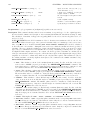
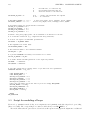
HETATM IO = hlogical : 1i
off
whether to read HETATM coordinates
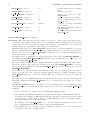
HYDROGEN IO = hlogical : 1i
off
whether to read hydrogen coordinates
TOPOLOGY MODEL = hinteger : 1i
3
selects topology library: 1–10
Requirements: topology and parameter libraries
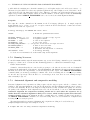
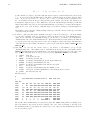
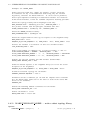
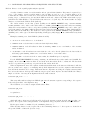
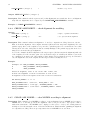
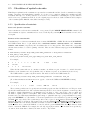
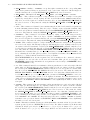
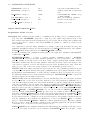
Description: This command calculates MODEL’s covalent topology (i.e., atomic connectivity) and internal coordinates, and assigns Charmm atom types, Modeller atom types for non-bonded spline restraints, atomic
charges, and atomic radii.
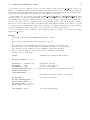
If a protein with code SEQUENCE is found in the current alignment (codes of proteins in the current alignment
are stored in ALIGN CODES), this protein’s topology is calculated. If no SEQUENCE entry exists or if the
alignment does not exist, the sequence of the MODEL is used. If the MODEL does not exist, an error is
reported. The MODEL can be read in from an atomic coordinates file with the READ MODEL command.
The new sequence is added to the list of segments of the MODEL if ADD SEGMENT is on, otherwise this list
is initiated.
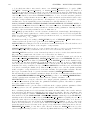
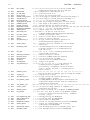
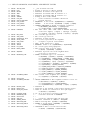
A sequence in the alignment can use any non-patching residue listed in the single-character code column of the
$RESTYP LIB library (’modlib/restyp.lib’). Examples of non-standard residue types include water (’w’),
zinc (’z’), calcium (’3’), heme (’h’), and many others. Patching residues must not be used here, but with
the subsequent PATCH commands. Unrecognized residues are ignored. A special allowed residue type is
the chain break ‘/’. This can be used to construct a protein that consists of several chains separated by chain
breaks. Chain breaks before a non-standard residue type (there are 23 standard residue types, including ’-’,
’Asx’ and ’Glx’) are inserted automatically and do not have to be specified explicitly in the sequence.
The GENERATE TOPOLOGY command generates only the topology of the MODEL, not its Cartesian
coordinates; the Cartesian coordinates are assigned by the BUILD MODEL, TRANSFER XYZ, or
READ MODEL commands.
In general, the GENERATE TOPOLOGY command has to be executed before any energy commands
(ENERGY, OPTIMIZE, PICK HOT ATOMS). The reason is that reading the Cartesian coordinates
by the READ MODEL command does not generate all the data usually needed for energy evaluation.
However, if the order and number of atoms in the input file correspond exactly to the order and number of
atoms implied by the restraint atom indices and if you are not using dynamic restraints that rely on nonexisting data, such as bond, angle, and dihedral angle lists, atomic charges, radii, Lennard-Jones parameters,
Modeller atom types, or Charmm atom types (which are used to determine the atomic radii), it is sufficient
to do only READ MODEL and omit GENERATE TOPOLOGY before the energy commands. In short,
if you use static restraints alone and if the atom file has the atoms in the correct order, you do not have to
call GENERATE TOPOLOGY before calculating energy.
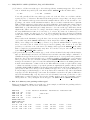
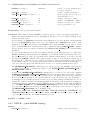
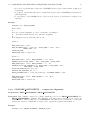
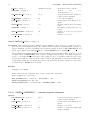
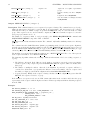
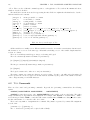
The variables ATOM FILES, ATOM FILES DIRECTORY, WATER IO, HETATM IO, HYDROGEN IO, and
TOPOLOGY MODEL are necessary only when the ’BLOCK’ residues are present in the sequence whose topology is generated. In that case, the template PDB files are read in.
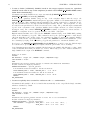
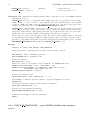
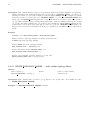
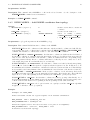
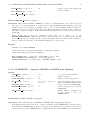
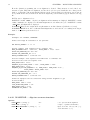
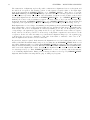
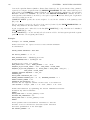
Example: See PATCH command.
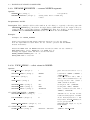
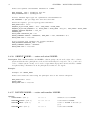
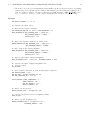
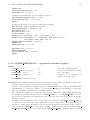
2.2.7
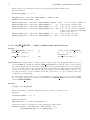
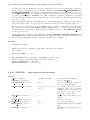
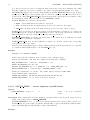
PATCH — patch MODEL topology
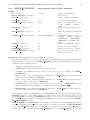
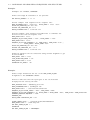
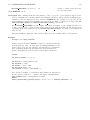
Options:
RESIDUE IDS = hstring : 0i
’’
identifiers of the patched residues