1
California Air Resources Board
Instructional Guidance for Mandatory GHG Emissions Reporting
December 2008
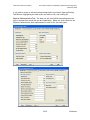
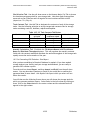
When you have chosen all the storage tanks for which you want to generate emissions
reports, click Run Report.
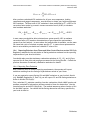
The output of the report is then used to calculate methane emissions. Use the Total
VOC emissions (TANKS output expressed in lbs VOC) to calculate methane emissions.
Multiply this number by either the default conversion factor of 0.6 or the tank specific
conversion factor derived from tank headspace analysis to calculate annual methane
emissions. Finally, convert from pounds of methane to metric tonnes methane and
report this value.
You should frequently back-up your TANKS data bases to ensure that all your dataentry work is protected from unforeseen computer problems such as a hard-disk
failure.
10.5.4 Reporting Equipment Fugitive Emission - Methane
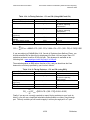
Equipment fugitive methane emissions methods are based upon your local AQMD/APCD
Leak Detection and Repair (LDAR) procedures. You will need to extend your LDAR
monitoring to all gas service components. This includes all components carrying
natural gas, refinery fuel gas, and low Btu gases. All components should be identified
as one the following six classification types: value, pump seal, connector, flange,
open-ended pipe, and other. For guidance you should consult and use the Component
Identification and Counting Methodology found in the following CAPCOA (1999)
document:
California Implementation Guidelines for Estimating Mass Emissions of Fugitive
Hydrocarbon Leaks at Petroleum Facilities, CAPCOA and CARB, 1999.
www.arb.ca.gov/fugitive/fugitive.htm
10-26
Refineries