1
California Air Resources Board
Instructional Guidance for Mandatory GHG Emissions Reporting
December 2008
10.1.6.2 Destruction of low Btu gas in a flare or other destruction device (section
95113(d))
The operator should choose the appropriate emissions calculation method based on
the disposition of the low gas stream. Choose the applicable option below:
a) Your Low Btu gas is sent to a flare or flares and you report these flare
emissions to your local AQMD/APCD: In this case refer to section 95113(d)(2).
Choose the method you use based on your Air District reporting requirements.
For a more detailed discussion see the Flare/Control Device (section 95113(d)
discussion below.
b) Your Low Btu gas is destroyed in a destruction device such as a thermal
oxidizer and emissions are not reported to the local AQMD/APCD: In this case
refer to section 95113(d)(3). You must determine carbon content and
molecular weight of the low Btu gas quarterly and compute an annual average.
You must also determine the volume of low Btu gas destroyed annually (± 7.5
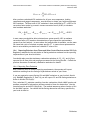
percent) and use the equation in section 95113(d)(3) to calculate annual CO 2
combustion emissions.
10.1.7 Calculating Stationary Combustion CH4 and N2O emissions (section 95125(b))
CH4 and N2O emissions resulting from fuel combustion represent a small fraction of
fuel combustion related GHG emissions. While CH4 and N2O emissions are strongly
dependent on combustion technology, calculation methods are fuel specific and based
on fuel HHV. You should choose the most appropriate of the following three methods
for calculating CH4 and N2O stationary combustion emissions.
10.1.7.1 Source Testing (section 95125(b)(4)):
The operator may elect to conduct source testing to determine fuel and combustion
specific emissions factors (EFs) for CH4 and/or N2O. The source test plan you use
must be approved by ARB and repeated at least annually under the supervision of ARB
or the local air district. EFs should be
expressed in terms of grams of CH4 or
Emission factors derived from source testing
are specific to fuel and combustion
grams of N2O per MMBtu. Additionally,
technology. If you conduct source testing on
the HHV of the fuel in question should be
a steam boiler combusting refinery fuel gas,
measured at the time of the source test.
for example, the derived CH4 and N2O EFs
Use the measured fuel HHV rather than a
should
be used only when calculating CH4 and
default value, and the methodology
N2O emissions from similar boilers combusting
specified in section 95125(b)(2). Source
refinery fuel gas.
testing is addressed in more detail in
Appendix B of this guidance document.
10.1.7.2 Measured HHV and a default emission factor:
Use the method found in section 95125(b)(2) in situations where the HHV of the fuel in
question is measured.
10.1.7.3 Default fuel HHV and emissions factors:
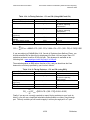
In the case where the fuel HHV is not measured, you may use default HHV and EF
values. Default HHV and EF values for CH4 and N2O are found in Table 4 of regulation
10-7
Refineries