1
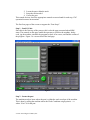
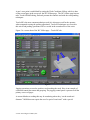
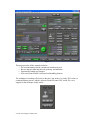
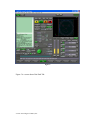
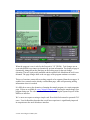
Accordingly, these became the design goals for the project: Work flow: The primary screen pages would mirror the common work flow steps people were already using. The number of primary usage pages would be limited in accordance with known UI and human factor principles. Four pages cover normal usage of Mach and three others provide support for secondary (setup, configuration and diagnostic) functions. Context sensitivity would be used to show the operator information when it was needed. This would help to mitigate limitations imposed by what can fit on a single screen page. UI Consistency: Controls would be consistent. Buttons would look like buttons, numeric displays like displays and status indicators like lights/LEDs. There would be no oddities such as “look here, if you click this LED in the upper right corner it brings up this special function”. All features and controls would be documented. Appearance: Form follows function. The appearance must support the requirements of operation of a CNC control. Screen Graphics were to be a tool, not the end goal. Graphics should not be allowed to detract from the presentation of information to the operator. Animation and flashing were to be used only when it was really desired to catch the human eye and only when the operational situation required it. Color schemes would avoid red/green combinations to better support color blind users (this was also considered a way to enhance operation safety). Colors would be used consistently. Functionality: Goals were set for the enhanced functionality for the package: Make job setup operations easy. This goal drove the integration of touch plate support and an extensive set of probing operations. Integration into the package would make UI operation consistent. With this integrated, it would be easy to set Work Coordinates Offsets. Reduce the tasks of the “human tool changer”. Features would be included to make tool handling easier. Automatic measurement of tools during a tool change was desired. Basic part inspection. Support for basic on-machine part measurements would be included. Full User Documentation. All functions would be documented. The user documentation for a feature was often written and circulated for comment before the corresponding code was implemented. The resulting user manual is extensive and is regularly the source of complimentary user comments. © 2011-2012 Calypso Ventures, Inc.