1
Writing Pulse Programs
A-188
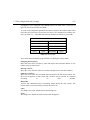
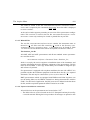
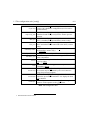
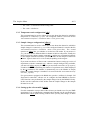
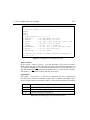
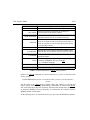
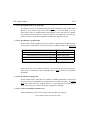
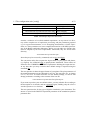
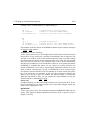
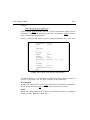
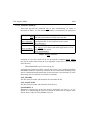
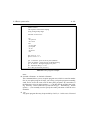
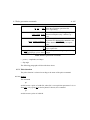
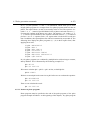
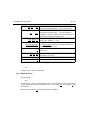
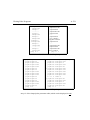
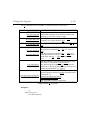
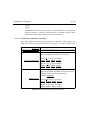
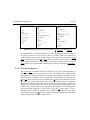
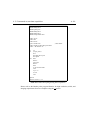
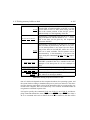
pling commands are legal, although it is not meaningful to use them here. Table
4.16 displays an example of an acquisition loop based on eosc.
INDEX
The eosc commands may also be specified behind a delay, e.g. 100u eosc. In this
case, they are executed during theDONE
specified delayINDEX
instead of the default 3 milliseconds. The delay must not be shorter than 100 microseconds.
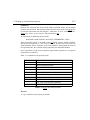
4.13.4 The commands ze and zd
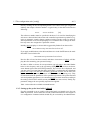
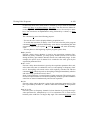
Both commands perform the following actions:
1. They set the scan counter, visible during real time fid display, to 0 or -DS. Negative values indicate that dummy scans are in progress.
2. They set a flag which informs the next go, gonp, gosc, goscnp, or adc command
that the fid, digitized by the respective command, should replace any existing
data in the acquisition memory. All NBL memory buffers are concerned. If ze
or zd are placed outside an acquisition loop, the replace mode will only be valid
for the first scan performed by the loop. The fids of all the scans that follow will
be added to the data present in the memory buffer.
3. The difference between ze and zd is that zd inhibits the execution of dummy
scans by go, gonp, gosc, goscnp, and by adc (combined with rcyc or eosc), even
if DS > 0.
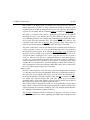
The commands ze and zd should be written behind a delay command (with a delay
> 10 microseconds, depending on the number of phase programs in the sequence).
Then, they are executed during the delay. If they are placed on a separate line, their
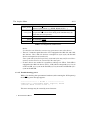
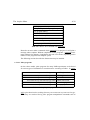
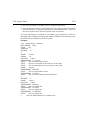
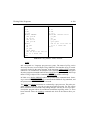
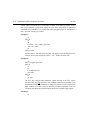
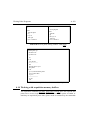
execution will require 3 milliseconds. The cosy pulse program of the Bruker
library (Table 4.15) illustrates the use of ze and zd.
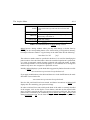
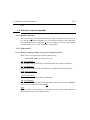
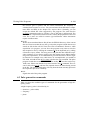
4.13.5 The command adc
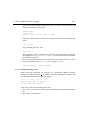
The command adc starts the digitizer and, at the same time, opens the receiver.
Please refer to the description of the parameters DW/DWOV/DIGMOD on how
the sampling rate is calculated. The result of adc will be a digitized fid signal of
TD data points, where the time domain size TD must be defined by the user. The
fid will be placed in the current memory buffer (cf. the section Working with acquisition memory buffers).
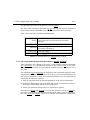
It is the responsibility of the user of adc to account for the various switching delays
provided automatically by the go commands (cf. description of go=label). It is also