1
Loudspeakers and the natural crossfeed filter
By nature the soundstage produced by loudspeakers in a stereo-setup is limited to the space between
these speakers. Reflections of the sound waves from the walls as well as reverberation may create an
enhanced feeling of spaciness, but the position of a source of sound will always be projected within the
boundaries of the speakers.
With music that requires a wide sounstage (large orchestral or choral music for instance) the limitations
given by the speaker-setup often result that the most outwards instruments or singers are not projected
“full-body” but in a relatively small space in the direction of the corresponding speaker. This can strongly
hamper live-feeling, especially when the loudspeakers are placed relatively close to each other.
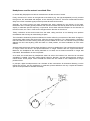
The sound of a source to the right side of the listener not only reaches the right ear but, attenuated and
delayed, is also heard by the left ear. However, since it has to travel a longer way to reach the left ear it
will be slightly delayed in time. And because of the shadowing effect of the head it will also be smaller in
amplitude. The level of attenuation and the delay time of this crossfeed signal provide important
directional information. Within a speaker setup the amount of signal that reaches the opposite ear is
always relatively large and the delay time is relatively short. This prevents the brain from “detecting” wider
angles.
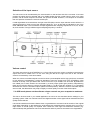
The CORDA STAGEDAC can electronically enhance the soundstage. It has a so-called crossfeed filter
that can be activated by the second switch from the right side of the front plate (crossfeed mode). The
switch has three positions. In its middle position no crossfeed is present and sound reproduction is
standard stereo. In its lower position the filter will work in speaker-mode. In its upper position it will be in
headphone-mode (to be discussed later).
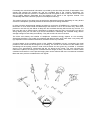
With the crossfeed filter set to loudspeaker-mode the signal of the right stereo channel will be slightly
delayed and attenuated and next subtracted from the signal offered to the left loudspeaker. This delayed
signal will reach the left ear at the same time as the original right channel signal that comes from the right
loudspeaker and, as it has opposite phase, it will partly cancel this original signal. Thus the amplitude of
the right channel signal that reaches the left ear is effectively lowered. The brain interpretes this as an
increase of the angle by which the sound is to be projected into the soundstage.