1
Headphones and the natural crossfeed filter
In normal daily life people use various mechanisms to locate sources of sound.
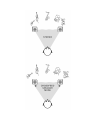
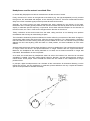
Firstly, the sound of a source to the right side of the listener (e.g. the right loudspeaker) not only reaches
the right ear, but, attenuated and delayed, is also heard by the left ear. The level of attenuation and the
delay time of this crossfeed signal provide important directional information.
Secondly, the sound waves are partly absorbed and partly reflected by the tissues of the head.
Reflections at the oracles (pinnae) interfere with the sound waves that directly enter the ear-channel and
amplify or attenuate specific frequency components. Since these reflections depend on the direction of
the sound wave, the “color” of the sound changes with the direction of the source.
Thirdly, reflections of the sound waves from the walls, ceiling and floor of our listening room produce
reverberation that conveys an extra feeling of space.
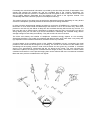
The information obtained by these mechanisms is further refined by movements of the head. Changes in
sound levels, delay times and sound color refine the sense of direction. For a demonstration, blindfold a
friend and ask him to locate a ticking clock that you have hidden in the room. He will start turning his head
although he can’t see anything. With his head in a fixed position, an exact localization is much more
difficult.
All these mechanisms are missing when we listen to music by headphones. The sound at the right ear will
no longer reach the left ear, and pinnae-reflections no longer interfere with the original soundwave.
Moreover, the headphones are directly attached to our head, and so head movements no longer add
information. Reverberation is also not present.
As a result, the sound heard by headphones seems to stick to the inside of our head and an unnatural
soundfield is created. The brain misses logical clues for direction, and this subconsciously results in
mental stress. Some people cannot tolerate this stress and are unable to use headphones for longer
periods of time.
In principle, digital soundprocessors can simulate all the mechanisms for directional listening, but the
results are, thus far, not very satisfactory. In particular, pinnae-reflections are very complex and listenerspecific and impossible to simulate accurately.