1
•
o A broadcast synchronization packet with processing frame number (always)
o A broadcast time packet (every 10th processing frame)
o One Telecommand to any instrument (optional)
During the second half only RT -> BC communication is taking place consisting of following TM data all from
one and the same instrument:
o Health data, House Keeping data, Science data
o Instrument Command Response on the Telecommand for first half of the Processing Frame.
IM specif. TC
IM TC MMI
TC route
Operator
IM TC
TC Data
RT #
STD
modeling
TC in Mil packet
Mil Rx buffer
DHPU
EuroSim
Scheduler
events
General TC
Read /
decode TC
Data (encoded)
RT #
SA #
Get TC
IM TM + Command
Response
Generic TC
handling
Synchronize
Send TM
IM TM MMI
Mil routing
TM in Mil packet
Mil Tx buffer
TM Data (encoded)
RT #
SA #
.
TM Data (encoded)
Model ID
type
TM encode
Fault
IM send TM
TM Data
Model ID
type
Fault
Injection MMI
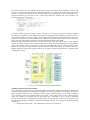
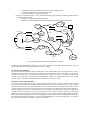
Fig. 6. Scheduling of Mil-bus instruments and data flow in ESM.
The data rate for the Housekeeping packets is 0.1 Hz, 1 Hz for the Science packets and a health status rate of 1 Hz. The
EuTEF DHPU EM controls the rates and the simulator has to comply.
RS-422 Instrument Modelling
For the RS-422 instruments the interface specifications of the EuTEF DHPU EM and instruments were used to
implement a generic model in which specific deviations for the individual instruments were added. For the RS-422
instruments the refresh rate when selecting continuous mode can range from 0.1 Hz to 1 packet/hour. Therefore, the
user has to request explicitly for one shot science or housekeeping telemetry for the RS-422 instruments (one_shot_HK
and one_shot_SC). The health information becomes available at a low frequency (0.1Hz).
Modularity for Instrument Modelling
The level of detail is limited to the scope of the ESM requirements and can be easily expanded via de STD-files
representing each instrument. Due to limited information about the as-built instrument behaviour, it was felt a rule like
formalism could be the basis for improvements later. In a first iteration a subset of commands which could be executed
with the flight model on ground was the basis. Based on those experiences an attempt was made to enhance realism via
dedicated coding in the action part of the STD-rules. For each instrument a dedicated timer variable is available in the
STD-files which was incremented every second. The user can use this to mimic events with some delays and transient
behaviour. Note that the response for each instrument depends on the interfacing method commanded via the EuTEF
DHPU EM for housekeeping (HK) or science (SC) telemetry. For both the Mil-Std-1553 standard and RS-422 the user
had to enable the continuous acquisition via control of the EuTEF DHPU just as with the Flight Model. An effort has
been made to represent typical command responses in the simulator.