1
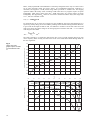
Early Decay Time (EDT)
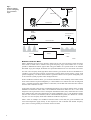
Because EDT relates more than the other reverberation parameters to the inital and highest level part
of the decaying energy, it is also the parameter that relates most to modulation reduction. EDT is
derived from the decay curve section between 0 dB and 10 dB below the initial level. From the
corresponding slope, EDT is calculated as the time to reach –60 dB.
Hardware Guidelines
Mouth-directional Loudspeaker Sound Sources
Mouth-directional loudspeaker sound sources, in short mouth simulators, have a directivity similar to
a human mouth. This directivity is relevant for speech intelligibility, in that speech intelligibility is
highest on the axis of the source. A small, high-quality loudspeaker with a diameter not exceeding
100 mm is usable for this purpose; though, an artificial mouth with directivity characteristics according
to ITU–T P.51 [5] is preferred.
A mouth simulator is normally used in the situation of an unamplified talker or in a situation with a
sound system equipped with a close-talking microphone. It is driven by a power amplifier with an
output power of approximately 10 W.
Equalizers
In general, due to background noise affecting speech intelligibility, the absolute sound pressure level
in each octave frequency band is of great importance. The sound card output and/or mouth simulator
octave band frequency characteristic needs to be flat in order not to distort the standard speech spectra
provided by DIRAC. This is accomplished using pink noise and an octave frequency band equalizer.
Pink noise is generated by DIRAC. By properly adjusting each equalizer octave band gain, while
generating the pink noise signal through the sound card, you can get equal energy in each octave
frequency band of the sound card or mouth simulator output. After equalizing, the spectrum is ready
for being shaped by the standard voice source filters in DIRAC.
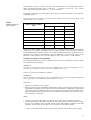
In the case of STI, the relevant octave frequency bands to be equalized range from 125 Hz through
8 kHz. RASTI only requires the 500 Hz and 2 kHz band to be equalized, which is of course much easier.
Normally, a common audio octave band equalizer, providing a ± 12 dB or 24 dB level range, will be
able to equalize a sound card plus a loudspeaker frequency characteristic. Once the correct equalizer
settings have been determined, you can write them down and reuse them for any future speech level
calibrated measurement.
External Signal Generators
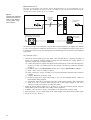
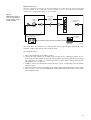
MLS or Sweep Generator: Digital Sound Recording Device
With external MLS or sweep measurements, you have to use a generator that produces the same
periodic MLS or sweep signal as DIRAC does in Internal MLS or Internal Sweep mode. Because a
slight timing difference between the generator and the sound card could easily cause the Impulse
response to Noise Ration (INR) to decrease substantially, a better method is to record an excitation
signal, generated by DIRAC through a sound card, on a digital sound recording device, and then use
the same sound recording device to play back this signal, and the same sound card to record the room
responses. This is particularly true for MLS signals, which are much more sensitive to timing errors
than sweep signals.
An appropriate digital sound recording device preserves the original digitized information, has a
stepwise recording gain control with a read-out in dB, and has an overload detector. Examples of
suitable digital sound recording devices are a DAT recorder and a notebook PC with an audio or data
CD recorder. Do not use digital sound recorders applying audio compression, such as DCC, MP3 or
Minidisk recorders, because audio compression may reduce the INR and/or SNR significantly.
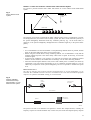
The external MLS and sweep measuring methods rely on highly stable and identical recording and
playback speeds. It is good practice to make sure that this condition is not violated due to temperature
changes and ageing of the sound recorder and/or media, by verifying prior to each measurement session
that the loopback1 impulse response is free from clearly visible noise or spikes (see instructions in
1. In this instance: digital sound recording device output connected to measuring PC sound card input 1.
6