1
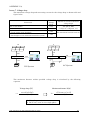
The potential candidates that immediately come to mind are the community assemblies and the NED
(as a power distribution company).
The assemblies would appear to be the better candidates in the aspect of local operation of the
facilities, but would face many problems in constructing organizational setups and raising the funds to
cover the requisite O&M costs. As was learned from the DANIDA project, even if transferred to
assemblies with a low organizational capability, asssets are liable to be left unmaintained.
As a power distributor, the NED has a strong capability for organization including technicians and
also has regional locations. There are several other benefits in transfer of the existing SHS to the NED,
as follows.
First, although SHS are positioned as a supplement to grid electrification, the SHEP program to this
end is saddled with problems in respect of continuity, and fallout from them is impairing the execution
of projects for SHS electrification. If the NED takes over ownership of the existing SHS from the
RESPRO, it could promote PV electrification by relocating SHS facilities that were installed for the
interim until grid connection to the next unelectrified communities as grid electrification progresses.
Of the approximately 2,000 SHS already installed by the RESPRO, about half will have to be moved
due to the arrival of distribution lines. In addressing this task as well, the NED could make sensible
decisions in selecting communities for facility relocation as the SHEP program proceeds.
In the second place, if the NED becomes the SHS owner, the application of lifeline tariffs to SHS, the
biggest issue in the fee-for-service model, would have proper grounds. If SHS utilization could be
positioned as a provisional measure until connection to the grid as a service in power supply to
customers by the NED, it would be possible to apply the same tariff scheme as for the supply by
distribution lines. Although this would entail a sort of cross-subsidization within the NED tariff scheme,
the issue would be the setting of the lifeline tariff itself, and ought to be resolved in the context of the
overall tariff scheme.
In the third place, extension of distribution lines through the SHEP program imposes a big financial
burden on the NED, and is the cause of the mounting deficit. The addition of PV off-grid electrification
as one of the electrification options would allow the NED to postpone plans for unreasonable extension
of distribution lines, reduce its investment on RE, and put its finances on sounder footing.
Considering the costs entailed by O&M over the coming years, there would be no incentive for the
party to take over the assets unless the transfer price was extremely low. The existing RESPRO
facilities were installed with GEF funding, and there consequently would be no actual debt left for the
RESPRO. The transfer price would probably have to be minimal (e.g., 1 cedi) in order to offset the
future O&M cost.
6-2