1
6.1.3 New business model for the RESPRO
The foregoing raises the question of the fields on which the RESPRO should concentrate if it
develops business in place of the fee-for-service operation.
The fee-for-service business model is definitely a heavy burden for the RESPRO, which has a staff of
less than ten and shaky financial foundation. At the same time, however, each member of the staff is
highly competent and possessed of specialized skill in PV facility installation and O&M accumulated to
date. As such, the RESPRO has a high competitiveness even as compared to private firms in the field.
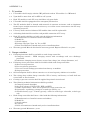
It should concentrate its energies in the following areas to make the most of this potential.
(1) O&M service contractor
The RESPRO is doing O&M work for the approximately 2,000 SHS already installed through the
GEF project, and has strength in this field. As a first step, it could undertake the provision of O&M
services on a contract basis for the party to which the existing facilities are transferred (e.g., the NED).
To set prices for this service, it would have to conclude a separate contract on the level required for
maintenance of the RESPRO business.
For the SHS installed so far with non-GEF funding, it would be necessary to increase the number of
O&M service contracts with their owners.
(2) PV system installer for a dealer or in public works projects
PV system installation is another new business prospect. It should be noted that the RESPRO would
not purchase SHS directly with government funding as to date; instead, it would merely perform
installation under the umbrella of another private-sector PV dealer or in the context of PV projects
promoted by the government.
The big difference from the situation of the RESPRO so far is that it would be placed on equal footing
with private-sector PV dealers and other installers, and enter into competition in the market.
(3) Training of PV technicians and testing of PV equipment through partnership with local
polytechnical schools
In the northern regions, cultivation of the PV industry is an urgent task, and it is vital to train
technicians for on-site work and establish the test facilities needed for quality control. The local
polytechnic schools already in these regions are keenly interested in these fields as means of
contributing to the growth of the PV industry.
The construction of centers for training of technicians and testing of PV equipment in each district
would also be necessary for establishment of the PV industry supply chain. As such, it would be
advisable for the RESPRO to build such regional centers in partnership with the polytechnic schools.
6-3