1
D 1.6 – Integrated Modelling Methodology - Version 2.0
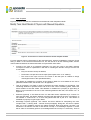
On-line questionnaires. These questionnaires propose to the KEs statements and questions
that are extracted from the domain models contained in the MoKi and aim to verify if the
Knowledge Experts agree with those statements. In case of disagreement, the KEs need to
manually verify and revise the domain model directly in MoKi.
Activities 1 and 2 can be performed in parallel and concern both models (task and domain). Activity 3
has to be executed after 1 and 2 and concerns only the domain model as described in Section 4.4.1.2.
3.5.3
Supporting Tools, Techniques & Resources
To support the modelling activities in this phase of the IMM, we designed a bunch of tools and
guideline documents. The whole process is described in the ―Validation & Revision of Domain + Tasks
Manual‖ included in the Annex (Part 3: Validation & Revision of Domain + Tasks), which also contains
the list of checks, presented as questions, to be performed in the Manual Checks activity, and
suggestions for possible revision according to the results of the (manual and automatic) checks. The
automatic checks are performed via a Java tool which performs some SPARQL queries over the OW L
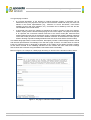
models created. The on-line questionnaires are implemented in the Ontology Questionnaire tool. Both
the automated checks and the Ontology Questionnaire tools are described in Section 4.4.1. A manual
of the Ontology Questionnaire is contained in the ―Validation & Revision of Domain + Tasks Manual‖.
3.6 Phase 3. Modelling of learning goals
3.6.1
Goal
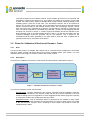
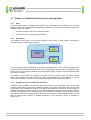
The goal of this phase is to produce the specification of the learning goal model. Starting from the
initial alignment between domain elements and tasks produced in Phase 2, the users specify in detail
the learning goals using TACT, which was developed within the project and is described in detail in
Section 4.3.
3.6.2
Description
In this phase, it can be assumed that the domain and task model are stable in that no relevant domain
concepts or tasks are missing. Changing labels and descriptions of tasks and domain as well as
removing redundant tasks and domain concepts does not affect the learning goal model. It is also
assumed that the necessity of task parameters will sometimes only be recognised in this phase, which
is the reason why adding and removing task parameters is directly supported in TACT.
At the end of this phase, a correct and complete learning goal model in OWL is available. This model
is directly exported from TACT.
3.6.3
Supporting Tools, Techniques & Resources
The Task-Competence Tool (TACT) supports the activity of creating learning goals based on tasks
and domain concepts. The TACT allows modifying the task model insofar as adding or removing task
parameters is possible. Furthermore, modelling with task and learning goal parameters is supported
in that users mostly need only model learning goals for abstract tasks, while the rest is automatically
added by the TACT. The TACT also supports modelling by highlighting tasks which are not described
through learning goals and domain concepts which are not used as part of learning goals.
A manual of TACT, included in the Annex (Part 4: TACT User Manual), was distributed to the users,
which contains guidelines to modelling and a technical description of how to use the TACT. Guidelines
for modelling learning goals were also used for validation and revision support (see Section 3.7).
© APOSDLE consortium: all rights reserved
page
18