1
Laboratory Curriculum Development using Renesas Technology
Abstract
This paper describes the laboratory curriculum developed for a junior-level introductory course
in microprocessors for electrical engineering majors. The Bachelor of Science in Electrical
Engineering (BSEE) curriculum has a required course in microprocessors and the prerequisites
are courses in structured programming and digital systems. The laboratory procedures developed
for this course are aimed at meeting the learning objectives of this course including assembly
language programming, program debugging, serial communication, input/output devices,
interrupts, interfacing, and direct memory access (DMA). The laboratory projects introduce
students to the host–target environment using an integrated development environment (IDE). The
platform currently utilized is a Freescale Semiconductor 68HC11 board produced by Axiom
Manufacturing. The 68HC11 is a dated 8-bit architecture and has proved to be a robust platform
to teach an introductory course.
A new platform is currently being investigated for the microprocessor course partly enabled by
an equipment grant from Renesas Inc. The lab projects were developed on the M16C/26A Quick
Start Kit (QSK26A) supplied by Renesas Technology. The QSK26A board features on-board-in
circuit debugging (ICD) and programming support, eliminating the use for an external ICD unit.
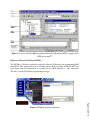
The High-performance Embedded Workshop (HEW4) is a powerful real-time source-level debug
environment supplied with the QSK26A. Apart from this, the Flash-over USB (FoUSB)
programmer software allows in-system programming of the QSK26A board’s M16C/26A Flash
MCU. An extensive set of manuals and technical literature is also available for the board. Some
of the lab applications implemented in this project were: introduction to the M16C/26A,
arithmetic operations, looping, subroutines, logical operations, LCD interface and application
development (traffic signals). The lab projects are intended to give students a quick
understanding of the instruction set, programming and operation of a microprocessor. A pilot lab
is planned in the upcoming academic year.
Page 14.829.2