1
156
CHAPTER 18. PHYSICS MODELS USED IN THE PARTICLE MATTER INTERACTION MODEL
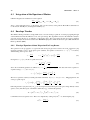
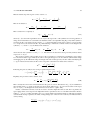
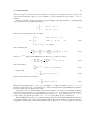
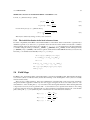
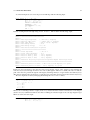
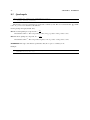
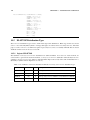
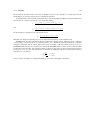
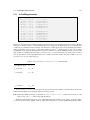
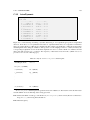
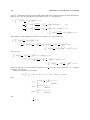
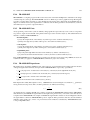
distribution is calculated by:
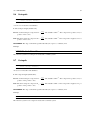
Z
σ02 = 4πNA re2 (me c2 )2 ρ ∆s,
A
where ρ is the density, ∆s is the thickness.
18.2
(18.3)
The Coulomb Scattering
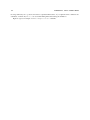
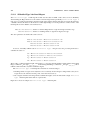
The Coulomb scattering is treated as two independent events: the multiple Coulomb scattering and the large angle
Rutherford scattering.
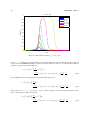
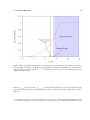
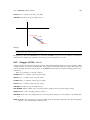
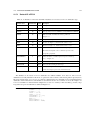
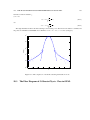
Using the distribution given in Classical Electrodynamics, by J. D. Jackson, the multiple- and single-scattering
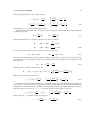
distributions can be written:
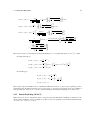
2
1
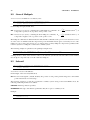
PM (α)dα = √ e−α dα,
(18.4)
π
PS (α)dα =
where α =
θ
<Θ2 >1/2
=
1
dα
,
8 ln(204Z −1/3 ) α3
(18.5)
√θ .
2θ0
√
the transition point is θ = 2.5 2θ0 ≈ 3.5θ0 ,
θ0 =
13.6M eV √
z ∆s/X0 [1 + 0.038 ln(∆s/X0 )],
βcp
(18.6)
where p is the momentum, ∆s is the stepsize, and X0 is the radiation length.
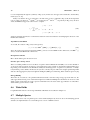
18.2.1
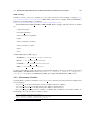
Multiple Coulomb Scattering
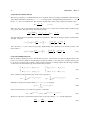
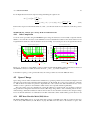
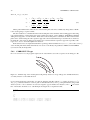
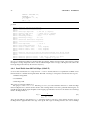
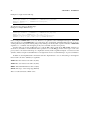
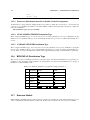
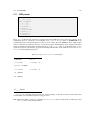
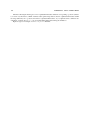
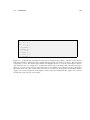
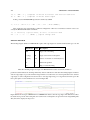
Generate two independent Gaussian random variables with mean zero and variance one: z1 and z2 . If z2 θ0 > 3.5θ0 ,
start over. Otherwise,
√
(18.7)
x = x + ∆spx + z1 ∆sθ0 / 12 + z2 ∆sθ0 /2,
px = px + z2 θ0 .
(18.8)
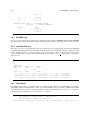
Generate two independent Gaussian random variables with mean zero and variance one: z3 and z4 . If z4 θ0 > 3.5θ0 ,
start over. Otherwise,
√
y = y + ∆spy + z3 ∆sθ0 / 12 + z4 ∆sθ0 /2,
(18.9)
py = py + z4 θ0 .
18.2.2
(18.10)
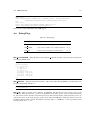
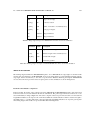
Large Angle Rutherford Scattering
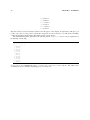
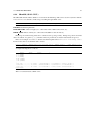
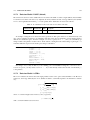
∞
P (α)dα
2.5 S
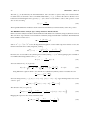
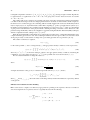
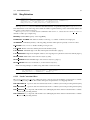
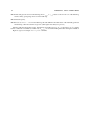
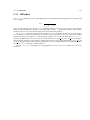
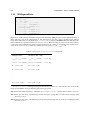
Generate a random number ξ1 , if ξ1 < 2.5 P ∫(α)dα+
= 0.0047, sampling the large angle Rutherford
∞
M
∫0
∫2.5 PS (α)dα
scattering.
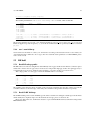
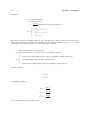
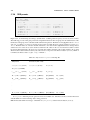
The cumulative distribution function of the large angle Rutherford scattering is
α
F (α) =
where ξ is a random variable. So
∫2.5 PS (α)dα
= ξ,
∞
∫2.5 PS (α)dα
√
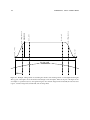
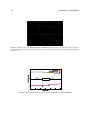
α = ±2.5
1
= ±2.5
1−ξ
√
1
.
ξ
(18.11)
(18.12)