1
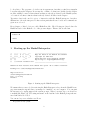
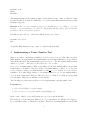
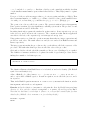
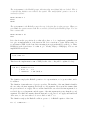
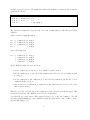
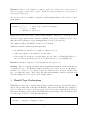
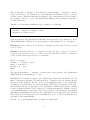
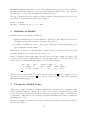
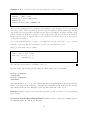
Example 12 Here is a function that calculates the average of a list of integers. The average of
n1 +···+nk
m and n is given by m+n
. In
2 , the average of a list of k integers n 1 , . . . , nk is given by
k
general, averages are fractions, so the result type of average should not be Int but the Haskell
data-type for floating point numbers, which is Float. There are predefined functions sum for the
sum of a list of integers, and length for the length of a list. The Haskell operation for division
/ expects arguments of type Float, so we need a conversion function for converting Ints into
Floats. This is done by fromInt. The function average can now be written as:
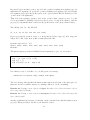
average :: [Int] -> Float
average [] = error "empty list"
average xs = fromInt (sum xs) / fromInt (length xs)
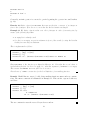
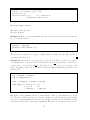
Again, it is instructive to write our own homemade versions of sum and length. Here they are:
sum’ :: [Int] -> Int
sum’ [] = 0
sum’ (x:xs) = x + sum’ xs
length’ :: [a] -> Int
length’ [] = 0
length’ (x:xs) = 1 + length’ xs
Note that the type declaration for length’ contains a variable a. This variable ranges over all
types, so [a] is the type of a list of objects of an arbitrary type a. We say that [a] is a type
scheme rather than a type. This way, we can use the same function length’ for computing the
length of a list of integers, the length of a list of characters, the length of a list of strings (lists
of characters), and so on.
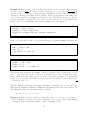
The type [Char] is abbreviated as String. Examples of characters are ’a’, ’b’ (note the
single quotes) examples of strings are "Russell" and "Cantor" (note the double quotes). In
fact, "Russell" can be seen as an abbreviation of the list
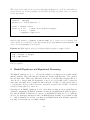
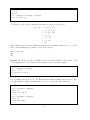
[’R’,’u’,’s’,’s’,’e’,’l’,’l’].
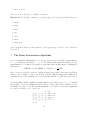
Exercise 13 Write a function count for counting the number of occurrences of a character in
a string. In Haskell, a character is an object of type Char, and a string an object of type String,
so the type declaration should run: count :: Char -> String -> Int.
13