1
RF Communication and Signals Experiments
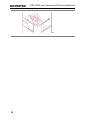
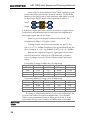
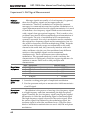
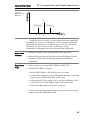
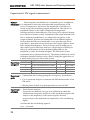
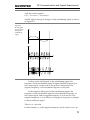
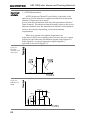
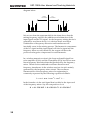
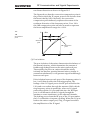
non-linear distortion as shown in Figure 10-3
The figure shows that the conversion compression point is
the point in which the IF output power level deviates from
the linear ideal by 1dB. Obviously, the conversion
compression point indirectly expresses the extent of the
nonlinear distortion of the frequency mixer. For a LNA
this 1dB compression point can also be used to represent
the linear amplification range for a LNA.
10-3
1dB
compression
point
PI
PI
dBm
1dB
Saturation
point
1dB compression
point
PR Dynamic Range
PR
dBm
(3) Port isolation
The port isolation of the mixer characterizes the balance of
the internal circuitry, which determines the amount of
feedthrough leakage between the mixer and each port.
Theoretically the ports on a mixer should be strictly
isolated, but because practical internal mixer circuitry is
somewhat unbalanced, it will generate signal feedthrough
between each port.
If the isolation between each port of the frequency mixer is
low, it will directly affect the following aspects: The
leakage of the LO signal port to the RF port will affect the
LNA and even radiate through the antenna. With a diode
ring frequency mixer in particular, when an LO signal
passes through the LO port and leaks into the RF input
port, it will transmit out the LO signal through the
antenna to create interference in the adjacent channels.
The leaking power from the RF port to the LO port makes
the LO vulnerable to frequency pulling. When the LO port
leaks to the mixer output port, a big LO signal can affect
the amplification of the IF signal.
101