1
31
System Security Services
This chapter describes the security system services that provide various
mechanisms to enhance the security of operating systems. It contains the
following sections:
Section 31.1 provides an overview of the protection scheme.
Section 31.2 describes identifiers and how they are used in security.
Section 31.3 describes the rights database.
Section 31.4 describes the persona and per-thread security features.
Section 31.5 describes how to create, translate, and maintain access control
entries (ACEs).
Section 31.6 describes protected subsystems.
Section 31.7 describes security auditing.
Section 31.8 describes how to determine a user’s access to an object.
Section 31.9 describes SYS$CHECK_PRIVILEGE system service.
Section 31.10 describes how to implement site-specific security policies.
31.1 Overview of the Operating System’s Protection Scheme
The basis of the security scheme is an identifier, which is a 32-bit binary value
that represents a set of users to the system. An identifier can represent an
individual user, a group of users, or some aspect of the environment in which
a user is operating. A process is a holder of an identifier when that identifier
can represent that process to the system. The protection scheme also includes
the user identification code (UIC), the authorization database, and access control
lists.
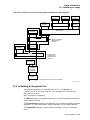
Authorization Database
The authorization database consists of the system authorization file
(SYSUAF.DAT), the network proxy database, and the rights list database
(RIGHTSLISTS.DAT). Note that the network proxy database is called
NETPROXY.DAT on Alpha systems and NET$PROXY.DAT on VAX systems. (The
file NETPROXY.DAT on VAX systems is maintained for platform compatibility,
translation of DECnet Phase IV node names, and layered product support.)
The system rights database is an indexed file consisting of identifier and
holder records. These records define the identifiers and the holders of those
identifiers on a system. When a user logs in to the system, a process is created
and LOGINOUT creates a rights list for the process from the applicable entries
in the rights database. The process rights list contains all the identifiers that
the process holds. A process can be the holder of a number of identifiers. These
identifiers determine the access rights of the list holder. The process rights list
becomes part of the process and is propagated to any created subprocesses.
System Security Services 31–1