1
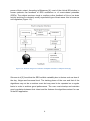
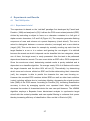
potentials are extracted and passed to translation algorithms for training. After a
training period, the algorithms are able to identify these specific features (data mining
and machine learning) in a subsequent ongoing EEG, which they can classify and
translate into commands (which reflect the user’s intent) to control a simple word
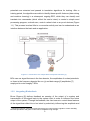
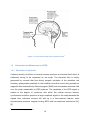
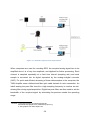
processing program, a robotic arm, control a wheel chair or any such devices (Figure
1.1). This process involves little to no muscular activity and can be understood as an
interface between the brain and an application.
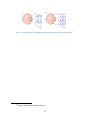
Figure 1.1: Illustration of a simple Brain-Computer Interface [7]
BCIs can use signal features in the time domain, like amplitudes of evoked potentials
or those in the frequency domain like mu (μ) and beta range (β) amplitudes [7]
employed in motor imagery2 BCIs.
1.3.2 Integrating Biofeedback
Bruce Eugene [8] defines feedback as sensing of the output of a system and
transmission of this signal back to the system input in order to influence the future
output of the system. Through biofeedback, the user learns to control those features
of the signal that reflect his or her intent by selectively influencing the amplitude and
2
Imagined movement causes the same brain activity as real movement: signals to control hand/leg
BCIs like prosthetics and game control can be realized through thought.
3