1
1.3.3 History of the BCI
BCI is a relatively new field. Research started several decades after Hans Berger first
discovered the electroencephalogram in the 1920s. In the 1960s, applying easy-touse noninvasive methods, studies were done on the development of neuro-feedback
in which monkeys would learn to voluntarily increase or decrease the power of their
alpha waves, the predominant amplitudes in an EEG. They (monkeys) learnt to
increase or decrease firing rates of the neurons in the motor cortex and could move a
prosthetic arm simply by thinking about it.
In the 1970s, Jacques Vidal published his work on a government sponsored
research in bio cybernetics and human computer interactions, at the University of
California Los Angeles (UCLA) Brain Research Institute. He showed how brain
signals could be used to build up a mental prosthesis [10]. He is also credited with
coining the term Brain-Computer Interfaces3.
Lawrence Farwell and Emanuel Donchin developed an EEG-based BCI. In Talking
off the top of your Head, published in 1988 [11], they outline an algorithm used in the
decision making process of a P300 speller to identify target and non-target potentials
in an ongoing EEG signal. This was the first time event related potentials (ERPs)
were used in a BCI application.
1.3.4 Other Methods of Signal Acquisition
Signal acquisition for BCIs can be grouped into two, depending on whether a surgical
procedure is required to implant electrodes in/on the brain to measure its electrical
activity or not. Non-invasive methods require no surgery. However not all acquisition
procedures involve the use of electrodes; some, like fMRI measure electrical activity
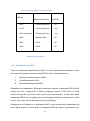
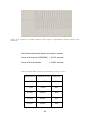
by use of blood oxygenation level dependence (BOLD). The table below summarizes
the different methods
3
. http://www.cs.ucla.edu/~vidal/vidal.html
5