1
care and handling
27
PART B: INSTALLATION
General care, safety and
handling
7.1 Safety
It is commonsense to work safely, protecting yourself and
workmates from accidents on the site. Safety includes the
practices you use; as well as personal protection of eyes and
skin from sunburn, and hearing from noise. Some sunscreens
contain titanatium oxides. These have been shown to break
down some paint compounds and these should be avoided.
Occupational health and safety laws enforce safe working
conditions in most locations. Laws in every state require you
to have fall protection which includes safety mesh, personal
harnesses and perimeter guardrails. We recommend that you
acquaint yourself with all local codes of safe practice and you
adhere strictly to all laws that apply to your site.
7.2 Care and storage before installation
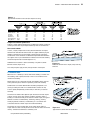
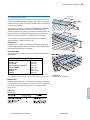
Rain or condensation is easily drawn between the surfaces of
stacked sheets by capillary action, or they can be driven in by
wind. This trapped moisture cannot evaporate easily, so it can
cause deterioration of the coating which may lead to reduced
life-expectancy or poor appearance.
If materials are not required for immediate use, stack them
neatly and clear of the ground. If left in the open, protect them
with waterproof covers.
If stacked or bundled product becomes wet, separate it
without delay, wipe it with a clean cloth and stack it to dry
thoroughly.
7.3 Handling cladding on site
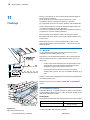
On large building projects you can reduce handling time by
lifting bundles with a crane direct from the delivery truck onto
the roof frame. Use a spreader bar for long sheets. For small to
medium size projects, without mechanical handling facilities,
you can unload sheets by hand and pass them up to the roof
one at a time.
For personal safety, and to protect the surface finish, wear
clean dry gloves. Don’t slide sheets over rough surfaces or
over each other. Always carry tools, don’t drag them.
7.4 Walking on roofs
It is important that you walk on roofing carefully, to avoid
damage to either the roofing or yourself.
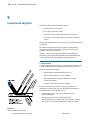
Generally, keep your weight evenly distributed over the soles
of both feet to avoid concentrating your weight on either heels
Using lysaght Roofing and Walling
or toes. Always wear smooth soft-soled shoes; avoid ribbed
soles that pick up and hold small stones, swarf and other
objects.
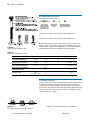
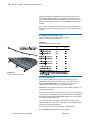
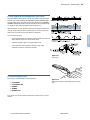
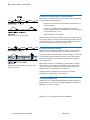
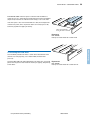
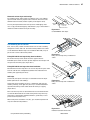
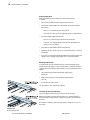
When you walk parallel to the ribs:
• for ribbed roofing walk on at least two ribs or
corrugations (custom orb, custom blue orb
and spandek);
• for pan-type roofing walk in the pans
(longline 305, klip-lok 406, klip-lok 700,
klip-lok 700, trimdek, integrity 820).
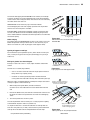
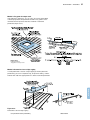
When you walk across the ribs, walk over or close to the
roofing supports.
Be careful when moving between supports. Do not walk in the
pan immediately adjacent to flashings or translucent sheeting.
Walk at least one pan away.
Always take particular care when walking on wet or newly
laid sheets — particularly on steeply pitched roofs.
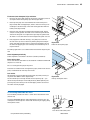
If there will be heavy foot traffic on a roof, provide a temporary
walkway or working platform to minimise damage.
7.5 Marking out, cutting and drilling
Marking out
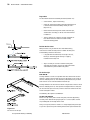
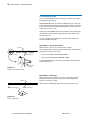
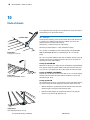
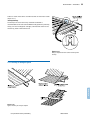
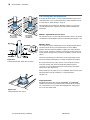
A pencil of any colour may be used except black or so-called
lead pencils. Don’t use black pencils to mark roofing or walling
because the graphite content can create an electric cell when
wet and thus cause deterioration of the finish. You can also
use a string line with chalk dust, or a fine, felt-tipped marker.
Cutting
Where possible, you should minimise site-work by using
sheets cut to length in the factory.
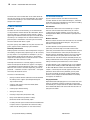
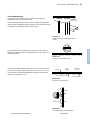
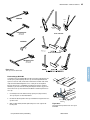
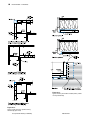
For cutting thin metal on site, we recommend that you use a
power saw with a metal-cutting blade because it produces
fewer damaging hot metal particles and leaves less resultant
burr than does a carborundum disc.
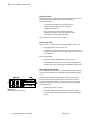
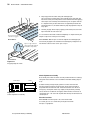
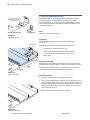
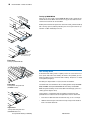
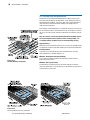
Cut materials over the ground and not over other materials
where hot particles can fall and cause damage to finishes—
especially colorbond® prepainted finishes. It is best to
have the exterior colour finish of a colorbond® prepainted
sheet facing down, however you must then protect the paint
finish from scratching by your work supports.
If you have to cut materials near sheets already installed,
mask them or direct the stream of hot particles away.
2008-9 Edition
7 Care & handling
7