1
44
installation—ends of sheets
10
Ends of sheets
This chapter describes how you can treat the ends of sheets to maximise
waterproofing, or to stop vermin entering.
CUSTOM ORB
10.1 Turn-ups
At the high end of roofing, wind can drive water uphill, under the flashing
or capping, into a building. To minimise this problem, you turn up the
valleys (or pans) at the high end of roofing.
(The process is called turning-up (or stop-ending).
All roofing on slopes below 1 in 2 (25°) should be turned-up.
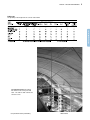
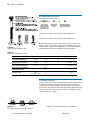
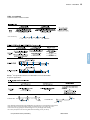
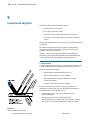
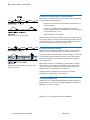
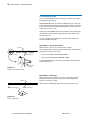
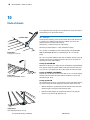
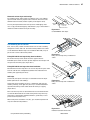
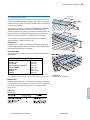
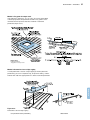
Figure 10.1.2
Turning-up custom orb
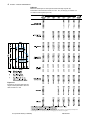
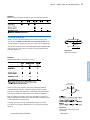
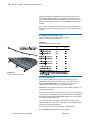
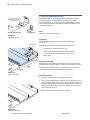
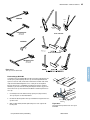
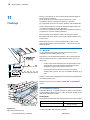
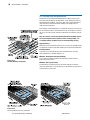
Turn-up tools are available for all our roofing profiles except CUSTOM
ORB and longline 305 when it is tapered (Figure 10.1.1 on the next
page).
You can turn-up sheets before or after they are fixed on the roof. If you do
the latter, you must have sufficient clearance for the turn-up tool at the
top end of the sheets (about 50mm).
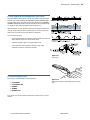
Turning-up custom orb
With pliers, multi-grips or a shifting spanner closed down to approximately
2mm, grip the valley corrugations 20mm in from the end of the sheet and
turn up as far as possible (Figure 10.1.2). Be careful not to tear the sheet.
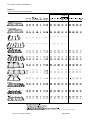
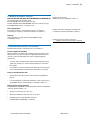
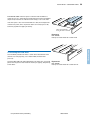
Turning-up trimdek and spandek
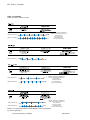
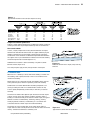
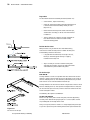
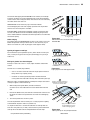
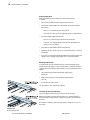
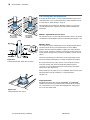
Figure 10.1.3
Turning-up (trimdek shown)
Slide the turn-up tool onto the end of the sheet as far as it will go. Holding
the tool against the end of the sheet, pull the handle to turn up the tray
about 80° (Figure 10.1.3).
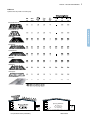
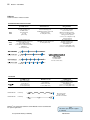
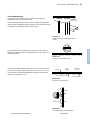
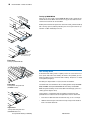
Turning-up klip-lok
You get the best results by first cutting off the corner of the down-pointing
leg of each female rib. Do this before you place the sheets on the roof.
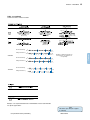
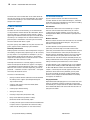
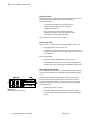
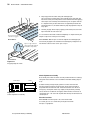
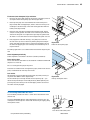
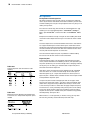
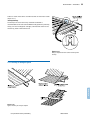
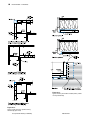
• With the hinged turn-up tool open: position the tool on the sheet with
the locating pins hard against the end of the sheet.
• Hold the handles together to clamp the tool onto the tray, and pull
them to turn-up the tray 90° (Figure 10.1.4).
-ups
ted turn
Comple
Figure 10.1.4
klip-lok tool ready for turn-up
Using lysaght Roofing and Walling
2008-9 Edition