1
Published for SISSA by
Springer
Received: March 6,
Revised: May 2,
Accepted: May 30,
Published: June 17,
2014
2014
2014
2014
Cynthia Keelera and Gim Seng Ngb
a
Michigan Center for Theoretical Physics, Randall Laboratory of Physics,
The University of Michigan,
Ann Arbor, MI 48109-1040, U.S.A.
b
Center for the Fundamental Laws of Nature, Harvard University,
17 Oxford Street, Cambridge, MA 02138, U.S.A.
E-mail: [email protected], [email protected]
Abstract: In this note, we calculate the one-loop determinant for a massive scalar (with
conformal dimension ∆) in even-dimensional AdSd+1 space, using the quasinormal mode
method developed in [1] by Denef, Hartnoll, and Sachdev. Working first in two dimensions
on the related Euclidean hyperbolic plane H2 , we find a series of zero modes for negative
real values of ∆ whose presence indicates a series of poles in the one-loop partition function
Z(∆) in the ∆ complex plane; these poles contribute temperature-independent terms to
the thermal AdS partition function computed in [1]. Our results match those in a series of
papers by Camporesi and Higuchi, as well as Gopakumar et al. [2] and Banerjee et al. [3].
We additionally examine the meaning of these zero modes, finding that they Wick-rotate to
quasinormal modes of the AdS2 black hole. They are also interpretable as matrix elements
of the discrete series representations of SO(2, 1) in the space of smooth functions on S 1 .
We generalize our results to general even dimensional AdS2n , again finding a series of zero
modes which are related to discrete series representations of SO(2n, 1), the motion group
of H2n .
Keywords: Gauge-gravity correspondence, AdS-CFT Correspondence, 1/N Expansion
ArXiv ePrint: 1401.7016
Open Access, c The Authors.
Article funded by SCOAP3 .
doi:10.1007/JHEP06(2014)099
JHEP06(2014)099
Partition functions in even dimensional AdS via
quasinormal mode methods
Contents
1
2 Applying the zero-mode method to AdS2
2.1 Finding the zero modes
2.2 Summing the contributions of the zero modes
2.3 Finding Pol(∆) via local curvature invariants
2.4 Comparison with full eigenfunction heat kernel method
3
5
5
6
8
3 Two interesting properties of AdS2 zero modes
3.1 Zero modes Wick rotate to quasinormal modes
3.2 Zero modes as discrete series representations
10
10
12
4 The thermal partition function on AdS2
4.1 T -dependent portion of Z(∆) in thermal AdS2
4.2 Partition function on thermal AdS via heat kernel on quotient of hyperbolic
space
13
13
5 Extension of story to all even dimensions
5.1 Finding Pol(∆) for d + 1 = 4
5.2 Comparison between thermal partition function in quasinormal mode and
heat-kernel method
14
16
6 Discussions and conclusions
18
A Finding zero modes in AdSd+1 for d + 1 even
19
B Euclidean disc vs. global coordinates
21
1
14
17
Introduction
Quantum effects in AdS spacetimes are of great interest to the theoretical physics community, particularly since the advent of the AdS/CFT correspondence nearly two decades
ago. Even leading one-loop effects can contain important physical results. For example,
quantum corrections to the entropy of black holes can be computed using the quantum
entropy function [3–5], which requires the one-loop effective action due to the matter fields
on an AdS2 × M spacetime.
As such, there is interest in developing efficient methods for various one-loop calculations. Several methods for calculating the one-loop determinant for a particular field fluctuation are already known, mostly based on the heat kernel method (see e.g. [6]). There are
–1–
JHEP06(2014)099
1 Introduction
several known ways to calculate the heat kernel. First, if one is only interested in large mass
behavior (for a massive field of mass m), the curvature expansion in terms of local invariants
is known for many field types up to 10th order [6]. If we wish to know the heat kernel outside
of a 1/m expansion, then we can expand the heat kernel as a sum over normalized eigenfunctions of the Laplacian weighted by their eigenvalues; this is the approach used in the series
of papers [7–10] and again by [3] for AdS2 × S 2 spacetimes. These eigenfunctions are generally special functions and the details, particularly for higher spin fields, can be challenging.
In two papers [1, 12], Denef, Hartnoll and Sachdev developed a method1 not directly
based on the heat kernel approach. In this method, developed from an argument in [15]
(also see [16, 17]), the partition function Z(∆) (of a massive scalar of mass m) is calculated
via a complex analysis trick.2 Rather than specifying a physical mass m (corresponding to
a particular conformal dimensional ∆), and then calculating the partition function at that
mass, this method studies Z(∆) as a function in the complex ∆ plane. If we assume Z(∆) is
a meromorphic function in complex ∆ plane,3 then to find the function completely we need
only the location and multiplicities of its poles and zeros, as well as one (entire) function
which we term exp[Pol(∆)], where Pol(∆) is some polynomial of ∆. In the case of Z(∆),
this extra function is completely constrained by the behavior of the function at large mass;
that is, we can use the heat kernel curvature expansion to completely determine Z(∆).
As shown in [1], for scalars Z(∆) has only poles; these poles are due to zero modes
in Euclidean space, which Wick-rotate to quasinormal modes in Lorentzian signature (or
normal modes in global Lorentzian AdS). As such we will use the term “zero mode method”
when working in Euclidean signature, but “quasinormal mode method” when working in
Lorentzian signature. In fact [1] does provide a formula for thermal AdS using a “normal
mode” method, referencing the global normal modes. For odd-dimensional AdS spacetimes,
these modes are sufficient and, as shown for AdS3 in [1], they correctly reproduce the
partition function in [21].
However, as we will show in this paper, on even-dimensional AdS spacetimes the normal
modes are insufficient. Although the normal modes capture all temperature-dependent
information (which is often the behavior of primary interest), if one wants to obtain the
temperature-independent piece, the normal modes are insufficient. Since the temperature1
Although we will primarily discuss the case of AdS2n in this note, this method actually applies to
the case of de Sitter space as well, as was discussed in the original paper of [1]. It would be interesting
to understand the relations between the interpretation of de Sitter quasinormal modes as highest-weight
representations [13, 14] and their roles in this 1-loop partition function method.
2
This method has been generalized to fields of arbitrary spin on AdS3 in [18–20].
3
This assumption is reasonable; we will apply boundary conditions in terms of ∆, and there is no reason
to expect a branch cut or essential singularity in Z(∆).
–2–
JHEP06(2014)099
Of course these eigenfunctions of the Laplacian themselves arise from the group theory
structure of the spacetime; the Laplacian is the quadratic Casimir for the motion group
of the space. As such Gopakumar et al. developed a method for computing the heat
kernel from group theory characters [11], which they extended to AdSd+1 for d ≥ 2 in [2].
This powerful method works well for spacetimes where we understand the group theory
structure.
2
Applying the zero-mode method to AdS2
In this section, we use the zero-mode method to calculate the 1-loop partition function
for a complex scalar φ with mass m in Euclidean AdS2 with AdS length L. We begin by
setting notation and briefly reviewing the zero-mode method from [1]. We will extend their
method for compact spaces to the non-compact AdS2 .
We work in coordinates
ds2E = L2 dη 2 + sinh2 η dθ2 ,
θ ∼ θ + 2π,
η ≥ 0,
(2.1)
where η → ∞ is the boundary. Writing the partition function in terms of the scalar
determinant we have:
Z
R ∗
1
2
2
,
(2.2)
Z(∆) = Dφ e− φ (−∇ +m )φ ∝
det (−∇2 + m2 )
where ∆ solves (mL)2 = ∆(∆ − 1). Here, we choose the root ∆ according to the standard Dirichlet boundary condition for AdS2 , i.e. we impose the Dirichlet-type boundary
condition
φ ∼ (sinh η)−∆ for η → ∞,
r
1
1
1
∆≡ +
+ m2 L2 ≡ + µ,
2
4
2
at the AdS boundary.
–3–
(2.3)
JHEP06(2014)099
independent piece contains logarithmic behavior, its presence is needed to show Pol(∆)
is truly polynomial. To properly compute this piece, it is necessary to include a set of
modes whose boundary “falloff” is set by ∆. However these modes are nonetheless not
normalizable, because they are located in the complex ∆ plane on the negative real axis. In
the case of AdS2 , we will see that they are still interpretable as a set of quasinormal modes.
In section 2, we apply the zero mode method to compute the scalar one-loop determinant on Euclidean AdS2 , or H2 . In the process we review the details of the method. We
then compare our results to previous results, finding agreement. In section 3, we explore
the physical and mathematical meaning of the novel zero modes we have found, with the
hope of better understanding when such modes might be present in other spacetimes. In
section 4, we study the thermal AdS2 as a quotient space of H2 . We show our results
from section 2 can be combined with those of [1] to match the thermal partition function
as computed via the methods of [2], including the temperature independent piece. In section 5, we extend our analysis to general even-dimensional AdS spaces, again matching
with previous results. In the conclusion, we discuss application of this method to odddimensional AdS spaces, and also highlight important caveats to consider when applying
the zero/quasinormal mode method. The appendix contains further calculational details.
In order to calculate the determinant, we will use the method developed in [1]. If Z is
a meromorphic function of ∆, then we can use the Weierstrass factorization theorem4 from
complex analysis to find the function. Under this theorem, if we know the poles and zeros
(and their multiplicities) of a meromorphic function, then we know the function itself, up
to a factor which is an entire function. The determinant we are interested in will have no
zeros, only poles, so we can write
Z(∆) = ePol(∆)
Y
i
(∆ − ∆i )−di ,
(2.4)
∆⋆ (∆⋆ − 1)
2
φ⋆ = 0,
−∇ +
L2
(2.5)
where φ⋆ is smooth in the interior of the (Euclidean) AdS, and satisfies the boundary
condition (2.3). That is, at these (generally complex) ∆⋆ , φ⋆ is a zero mode. Thus at ∆ =
∆⋆ , Z(∆) has a pole; the degeneracy of this pole is the number of smooth solutions to (2.5)
which also satisfy (2.3). For a spacetime with a compact direction, these ∆⋆ can be labelled
by a discrete index i; we call this set the ∆i . As we will show for AdS2 , even a noncompact
space may have a discrete set of poles, when we choose the appropriate boundary condition.
As shown in [1], for spacetimes which are Euclidean black holes, these zero modes Wick
rotate to become quasinormal modes of the corresponding Lorentzian black holes. We will
discuss the details of this Wick rotation in the Euclidean AdS spacetime in section 3.1
below.
As a preview, the zero-mode method for calculating the 1-loop determinant has three
steps, which we will explain in detail as we proceed:
• Find ∆i where there exists a zero mode φi , and the multiplicities di of these zero
modes.
• Use eq. (2.4) to express Z(∆) in terms of these ∆i and di . Zeta-function regularize
log Z(∆) to perform the infinite sum.
• Find the polynomial Pol(∆) by matching the zeta-function regularization at large ∆
to the local heat kernel curvature expansion expression for log Z(∆).
4
The initial version of the Weierstrass factorization theorem only applies to analytic functions, but it can
be extended to meromorphic functions. Additionally convergence of infinite products will not concern us,
so we do not worry about using the proper Weierstrass factors. If we include information from the growth
behavior at large ∆, which we will have from the heat kernel curvature expansion, we could use instead the
Hadamard factorization theorem; here we will not need these complications.
–4–
JHEP06(2014)099
where the ∆i are poles (of Z(∆)) each with degeneracy di . Importantly, Pol(∆) is a
polynomial in ∆, since ePol(∆) is entire.
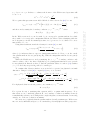
We find the poles in Z(∆) by searching for values of ∆ where det −∇2 + m2 becomes
zero. These ∆⋆ occur whenever there exists a φ⋆ solving
2.1
Finding the zero modes
The first step is to find the zero modes in the complex ∆ plane. Following [10], the solutions
to (2.5) which are regular at η = 0 in Euclidean AdS2 can be written as
h
η i
φ∆l = eilθ (i sinh η)|l| F ∆ + |l|, |l| + 1 − ∆; |l| + 1; − sinh2
,
(2.6)
2
∆⋆ ∈ Z≤0 ,
|l| ≤ −∆⋆ .
(2.7)
In other words, at each nonpositive integer ∆⋆ , we have a zero mode of multiplicity −2∆⋆ +
1. There are no other zero modes for any ∆ in the complex plane. Since these zero modes
occur at integer values ∆⋆ , they are discrete. In order for the zero-mode method to work,
we require a discrete set of poles; if the set of poles had an accumulation point (other than
infinity), the Weierstrass theorem would not apply.
As we will discuss further in section 3 below, these modes have several interesting
physical and mathematical properties. They are the Wick-rotation of quasinormal modes
for AdS2 black holes, as well as the manifestation of the discrete series representation of
the SO(2, 1) symmetry of AdS2 , on the space of smooth functions on the circle S 1 .
2.2
Summing the contributions of the zero modes
For now, as we have found a discrete set of zero modes, we continue our calculation of the
AdS2 complex scalar partition function by evaluating log of (2.4):6
X
(2∆⋆ − 1) log (∆ − ∆⋆ ) ,
log Z(∆) = Pol(∆) +
∆⋆ ∈Z≤0
= Pol(∆) −
∞
X
(2k + 1) log(∆ + k),
k=0
′
= Pol(∆) + 2ζ (−1, ∆) − (2∆ − 1)ζ ′ (0, ∆).
5
(2.8)
We use this boundary condition in accordance with AdS/CFT intuition. We will show in section 2.4
below that this choice agrees with the results from the heat kernel eigenfunction expansion done over deltafunction normalizable modes. The agreement is a consistency check that our boundary condition produces
the same result. It would also be interesting to understand why these two prescriptions are equivalent.
6
One might recognize these expressions as similar to that of the computations of dS2 in [1]. There are
two important differences: first, due to the AdS Dirichlet boundary condition, we are only summing over
the ∆ boundary condition here (and not 1 − ∆). Second, the relationship between ∆ and the mass for AdS
differs by a sign from that for de Sitter.
–5–
JHEP06(2014)099
where F is the hypergeometric function also written 2 F1 . We have already imposed part
of the boundary condition at the origin by choosing the solution of the hypergeometric
equation which is regular at η = 0. To impose that φ∆l be single-valued due to periodicity
of θ ∼ θ + 2π, we additionally impose l ∈ Z.
Now, rather than imposing delta-function normalizability as in [10], we impose the
boundary condition by insisting the modes have only the Dirichlet-like behavior (sinh η)−∆
as η → ∞. That is, we wish to turn the behavior (sinh η)∆−1 off entirely.5 Using the
result (A.8) from appendix A, this is accomplished whenever ∆ = ∆⋆ where
where we have used zeta function regularization as in [1].7 Here ζ(s, x) is the Hurwitz
P
−s
′
zeta function defined by analytic continuation of ζ(s, x) = ∞
k=0 (x + k) , and ζ (s, x) ≡
∂s ζ(s, x), whose large ∆ behavior is given in [1] (which is taken from appendix A of [22]) as:
∞
ζ(s, ∆) ≃
1 X (−1)k Bk Γ(k + s − 1)
,
Γ(s)
k!
∆k+s−1
(2.9)
k=0
where we have replaced Pol(∆) with Pol(µ), as a polynomial in ∆ is also a polynomial in µ.
2.3
Finding Pol(∆) via local curvature invariants
Now we still must compute Pol(∆), which we do by studying the behavior of Z(∆) at large
∆, via a heat kernel curvature expansion. Specifically, we set Pol(∆) by requiring
log Z(∆) = const. + (4π)−
d+1
2
d+1
X
k=0
ak
Z
∞
0
dt k−d−1 −tm2
t 2 e
+ O(m−1 ),
t
(2.11)
where ak are the kernel curvature coefficients, in our case for the operator −∇2 . When
there is no boundary contribution, the curvature invariants ak = 0 for odd k while for even
R
√
k, ak ≡ dd+1 x gak (x) can be expressed following [1] as
a0 (x) = 1,
a2 (x) =
R
,
6
a4 (x) =
1
(12∇2 R + 5R2 − 2Rµν Rµν + 2Rµνρσ Rµνρσ ), (2.12)
360
where we have included a4 for use in future sections.
Setting (2.11) equal to the large µ expansion (2.10), we solve for Pol(∆), which must
be a polynomial. If it is not possible to set these two expressions equal by fixing Pol(∆) to
be a polynomial, than either some zero modes have not been included in the sum, or the
meromorphicity of Z(∆) is suspect. On the other hand, if we can equate these expressions
with a polynomial Pol(∆), then that provides a nontrivial check on our calculation.
7
More complicated spacetimes might require use of a generalized zeta function, such as the multiple
Barnes zeta function, but we will find the Hurwitz function sufficient here.
–6–
JHEP06(2014)099
where Bk ’s are the Bernoulli numbers.
Since we will find Pol(∆) by expanding the expression (2.8) at large ∆ and comparing
to Z(∆) as found from the heat kernel curvature expansion, we now present the expansion
of the zeta-function expression. In order to compare more easily with the heat kernel
expansion, we also expand in terms of µ = ∆ − 1/2 as in (2.3). Expanding eq. (2.8) at
large ∆ in terms of µ, using (2.9), gives
3 2
1
1
1
2
log Z(∆) = Pol(∆) + ∆ − ∆ −
∆ −∆+
log(∆2 ) +
2
2
3
12∆
1
1
−
+ O(∆−4 ),
+
2
120∆
360∆3
3 2 1
1
7 −2
2
= Pol(µ) + µ −
µ +
log µ2 −
µ + O(µ−4 ),
(2.10)
2
2
12
940
where we have dropped an m-independent quadratically divergent term and introduced an
arbitrary renormalization scale ΛRG . As in [1], we recognize the last line here as renormalization of the classical couplings. We can thus account for their effect by using the
logarithmically running couplings in evaluating the classical contribution to the action,
and we do not need to consider these terms further here.
In order to compare the remaining expression with our zero-mode method result in
eq. (2.10), we need to evaluate the volume of the hyperbolic space. Following discussions in
the context of holographic renormalization in AdS/CFT,8 the regularized Euclidean action
involves the regularized volume of H2n , which is given by
1
Volreg (H2n ) ≡ (−L2 )n VS 2n ,
2
1
VS 2n
2π n+ 2
≡
.
Γ(n + 21 )
(2.14)
With the regularized volume Volreg (H2 ) = −2πL2 , the first line in the second equality of
eq. (2.13) evaluates to be
1 2 1
µ −
2
2
1
1
1
µ2 +
log µ2 +
µ2 +
log(LΛRG )2 ,
12
2
12
(2.15)
where we have also used RAdS2 = −2/L2 . Comparing eq. (2.10) and eq. (2.15), we find
Pol(∆) to be
1
log(LΛRG )
12
1
1
Pol(∆) = [−1 + log (LΛRG )] ∆(∆ − 1) + log (LΛRG ) − ,
3
4
Pol(µ) = [−1 + log(LΛRG )] µ2 +
or
(2.16)
where in the second line we have reexpressed the polynomial in terms of ∆. Combining
this result with (2.8), the final expression for Z(∆) becomes
1
1
2
Z(∆) = −∆ + ∆ − + ∆ − ∆ +
log (LΛRG ) + 2ζ ′ (−1, ∆) − (2∆ − 1)ζ ′ (0, ∆). (2.17)
4
3
2
8
See, e.g., [23–25].
–7–
JHEP06(2014)099
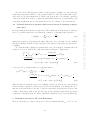
Now we expand log Z(∆) at large mass using the heat kernel curvature expansion in
terms of (2.11) and (2.12). Following [1], we introduce a lower cutoff of e−γ Λ−2 on the heat
kernel integral in (2.11), where γ is the Euler number and Λ labels the IR cut-off. For the
scalar operator we study,
Z ∞
Z
Z
dt −tm2 R ∞
dt −tm2
1
2 √
e
+
e
+ O(m−1 )
d x g
log Z(∆) =
2
4π H2
t
6
t
−γ
−2
−γ
−2
e Λ
e Λ
!
Z
1
2
2
2
µ
−
1
µ
1
R
µ
√
4
=
d2 x g
log
−
− log 2 2
4π H2
L2
e(LΛRG )2 4L2
6
L ΛRG
!
Z
µ2 − 41
Λ2RG R
Λ2RG
1
√
log
−
log
+ O(µ−1 ) ,
(2.13)
d2 x g
+
4π H2
L2
Λ2
6
Λ2
For latter comparison with the heat kernel method, we expand this final Z in terms of µ:
1
1
7 −2
1 2 1
2
2
2
µ +
log µ + µ +
log(LΛRG ) −
Z(µ) = µ −
µ + O(µ−4 ). (2.18)
2
2
12
12
940
2.4
Comparison with full eigenfunction heat kernel method
We now compare our result with previous results for the scalar partition function on AdS
spacetimes. In contrast to the direct computation of the partition function developed in [1]
which we have adapted for Euclidean AdSd+1 , the other methods described here make use
of the heat kernel on Hd+1 . More details about the heat kernel can be found in [6] while
its application to Hd+1 can be found in [10]. The heat kernel satisfies
(∂t − x )K(x, x′ ; t) = 0;
K(x, x′ ; 0) = δ (d+1) (x − x′ ),
(2.19)
where x is the scalar Laplacian acting only on x, where x is a point on AdS. We can
relate this object to the corresponding complex scalar partition function via
Z ∞ X
X
dt
2
log Z(∆) = −
log κn =
e−κn t−m t
(2.20)
t
ǫ
n
n
Z ∞ Z
dt
√
(2.21)
dd+1 x g K(x, x; t).
=
t
ǫ
Here, −κn are the eigenvalues of the scalar Laplacian, and the sum is done over these
eigenvalues for a complete set of (delta-)normalizable modes.
Since the heat kernel satisfying equation (2.19) can be written in terms of an eigenvalueweighted sum over a complete set of normalizable eigenstates, we can use this information
to construct the heat kernel, and thus the partition function. This is the method most
closely followed by Camporesi and Higuchi in their series of papers [7–10]; it is also the
method used in [3].
For later usage, we will briefly generalize to Euclidean AdSd+1 , or Hd+1 . In [10], the
eigenstates for Hd+1 which satisfy
d2
2
φ = − λ +
φ,
(2.22)
4
–8–
JHEP06(2014)099
Before comparing with the full eigenfunction heat kernel computation, let us make
few comments on the nature of our computation. Here we have actually computed the
inverse of the one loop determinant, 1/ det −∇2 + m2 , on Euclidean AdS2 with a Dirichlet
boundary condition. This determinant is equivalent to the partition function for a complex
scalar on the same space, via Gaussian integration, as long as we are evaluating the partition
function away from a zero mode. If we need the value of Z at one of the ∆⋆ , we would
need to more carefully evaluate the path integral.
We also note that our calculation here is not just a direct extension of the prescription
given in [1], since the proper discrete set of modes to sum over in Euclidean AdS2 is not a
priori clear, as the space is non-compact. Here we have provided a prescription for finding
this discrete set of modes.
are written as
d
d
d+1
2 η
φ = (i sinh η) F iλ + + l, −iλ + + l; l +
; − sinh
Yl m
~,
2
2
2
2
l
(2.23)
where F (a, b; c; z) is the hypergeometric function, the Ylm
~ are the orthonormal spherical
d
harmonics on S satisfying
∇2 Y l m
~ = −l(l + d − 1)Ylm
~,
(2.24)
K(x, x; t) =
Z
∞
0
"
!#
2
d
dλ µ̃(λ) exp −t λ2 +
+ m2 ,
2
(2.25)
where µ̃(λ) is given by
For odd d + 1 : µ̃(λ) =
For even d + 1 : µ̃(λ) =
(d−2)/2
1
2d π
d+1
2
Γ
1
2d π
d+1
2
Γ
d+1
2
Y
(λ2 + j 2 )
j=0
× [λ tanh (πλ)] ×
d+1
2
(d−2)/2
Y
(λ2 + j 2 ). (2.26)
j=1/2
When d + 1 = 2, the product should be omitted.
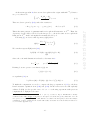
In order to compare with our previous results, we specialize again to the case d+1 = 2,
and use expression (2.21) to find log Z. We obtain
log Z(∆)
(2.27)
−2Volreg (H2 ) 1 2 1
1
1
7 −2
µ −
µ2 +
log µ2 + µ2 +
log(LΛ)−
µ
+O(µ−4 )
=
2
(4πL )
2
2
12
12
960
where we have introduced a lower cutoff of ǫ = e−γ Λ−2 on the heat kernel integral in
eq. (2.21) and ignored a µ-independent but quadratically divergent (in Λ) terms. Under regularization of the AdS2 volume, we indeed find that our expression (2.18) matches this full
eigenfunction-expanded heat kernel result in (2.27). Although we have not shown the calculation here, these two expressions will continue to be equal term by term in powers of 1/µ.
–9–
JHEP06(2014)099
and m
~ is a (d − 1)-dimensional vector of integers distinguishing among distinct harmonics
with the same eigenvalue.
For real λ, these are the only eigenfunctions which are delta-function normalizable, and
thus they can be used to compute the heat kernel via a sum over eigenstates. However, for
real λ these eigenfunctions do not obey the Dirichlet boundary condition at the boundary
Hd+1 , and thus here they are not candidates for the zero modes used in the zero-mode
method of section 2.1.
Since λ is continuous, we must extend the sum over states in (2.20) to an integral; this
is done via the spectral function µ̃(λ). The coincident heat kernel then becomes
3
Two interesting properties of AdS2 zero modes
Before extending our results to other dimensions or to thermally-identified spacetimes, we
pause to study two important properties of the zero modes given by (2.6) and (2.7). First,
these modes have a natural physical interpretation as the Wick rotation of quasinormal
modes of an AdS2 black hole. Second, these modes are manifestations of the discrete series
representations of SO(2, 1) on the space of the S 1 parameterized by θ. For convenience, we
set the AdS length to one in this section.
Zero modes Wick rotate to quasinormal modes
So far we have been working entirely in Euclidean space; we have really calculated the
one-loop determinant for the Euclidean hyperbolic space H2 . If we wish to study the
partition function in the context of a Lorentzian spacetime, we can either first study its
Euclidean section, or we can locate the poles in the partition function in the complex ∆
plane directly in the Lorentzian spacetime. As shown in [1], the zero-mode method Wickrotates to a quasinormal mode method, because the zero modes themselves Wick-rotate
into quasinormal modes.
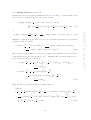
We choose coordinates on Euclidean space so θ ∼ θ + 2π is the Euclidean time circle
and ρ is a radial coordinate such that the time circle shrinks smoothly at the origin ρ = 0.
The zero mode boundary conditions become
φ∗± ∼ ρn e±inθ as ρ → 0,
φ∗± ∼ ρ−∆ as ρ → ∞,
(3.1)
where n is a nonnegative integer. Under Wick-rotation θ → 2πT it, the condition at infinity
does not change. Additionally replacing n = ωn /2πT the condition at ρ → 0 becomes
ωn
φ∗ ∼ ρ 2πT exp [∓ωn t] ,
log ρ
∼ exp ωn
∓t ,
2πT
∗ log ρ
∼ exp −iz
∓t ,
2πT
(3.2)
where in the last line we set ωn = −iz ∗ . We can now recognize z ∗ as the (anti)quasinormal
mode frequencies, since these modes are purely (out)ingoing here. For a black hole spacetime these are true (anti)quasinormal modes as the origin of Euclidean space Wick-rotates
to the horizon of the corresponding black hole spacetime. Whenever the complex conformal dimension is tuned to ∆ = ∆⋆ so that one of the (anti)quasinormal mode frequencies
satisfies
z ∗ = 2πinT,
(3.3)
for integer n, then the Euclidean section will support a zero mode at ∆⋆ , and hence Z(∆)
will have a pole at ∆⋆ .
Specifying to the case of AdS2 , the coordinates ρ = sinh η and θ in (2.1) are in fact
coordinates of the above type for T = 1/2π. We can thus examine the Wick-rotation of the
zero modes in (2.6), under θ → it. We also use the similar coordinate r = cosh η, related
– 10 –
JHEP06(2014)099
3.1
to ρ by r2 = 1 + ρ2 . In these coordinates the horizon of the Wick-rotated spacetime will
be at r = 1:
dr2
ds2 = − r2 − 1 dt2 + 2
.
(3.4)
r −1
We recognize this spacetime as an AdS2 black hole. Here, the modes (2.6) become
1−r
−lt
2 |l|/2
,
(3.5)
φ ∆⋆ l = e
1−r
F ∆⋆ + |l|, |l| + 1 − ∆⋆ ; |l| + 1;
2
and these modes satisfy the boundary condition φ ∼ ρ−∆⋆ , φ ≁ ρ∆⋆ −1 when
|l| ≤ −∆⋆ .
(3.6)
In the Wick rotation above, modes with l ≥ 0 correspond to quasinormal modes, while
those with l < 0 correspond to antiquasinormal modes. Hence when identifying with the
mode frequency ω in the Lorentzian spacetime, for l ≥ 0 we set l = iω, while for l < 0 we
instead have l = −iω.
Using this identification and the identity 15.3.30 in [26], we find
∆ + iω iω + 1 − ∆
∓iωt iω
2
φ∆± ∝ e
ρ F
,
; 1 + iω; −ρ ,
(3.7)
2
2
where (−)+ indicates that we expect a (anti)quasinormal mode. Near ρ = 0, the candidate quasinormal modes are purely ingoing, while the antiquasinormal modes are purely
outgoing.
While the Euclidean zero modes satisfying the φ ∼ ρ−∆⋆ boundary condition only
exist for values of ∆ = ∆⋆ where Z(∆) has a pole, (anti)quasinormal modes are present
for any physical ∆. Instead we have to find the particular values of ω where (3.7) satisfies
φ ∼ ρ−∆ , and only at special ∆⋆ will iω be an integer.
To examine this behavior further, we now fix ∆ be a generic but physical conformal
dimension. Using 15.3.7 in [26] to expand (3.7) as ρ → ∞, we find
Γ(1 + iω)Γ 21 − ∆
−1
∆ + iω ∆ − iω 1
∓iωt −∆
F
φ∆± ∼ e
ρ
,
; + ∆; 2
2
2
2
ρ
Γ 1 + iω−∆
Γ iω+1−∆
2
2
1
1 − ∆ + iω 1 − ∆ − iω 3
−1
∓iωt ∆−1 Γ (1 + iω) Γ ∆ − 2
F
+e
ρ
,
; − ∆; 2 . (3.8)
2
2
2
ρ
Γ 1+iω+∆
Γ ∆+iω
2
2
For ∆ physical, that is real and positive, φ∆± satisfies φ ∼ ρ−∆⋆ when
∆ + iω ∈ Z≤0 .
(3.9)
For a given ∆, any ω satisfying this equation will be a quasinormal frequency. Note
that when we are considering physical ∆, our boundary condition at infinity is merely
normalizability; when we are working in the complex ∆ plane, we instead insist on removing
entirely one of the two behaviors at infinity.
We can now see explicitly that the quasinormal modes in Lorentzian space Wick-rotate
into zero modes in Euclidean space, so we can find the poles in Z(∆) from either perspective.
– 11 –
JHEP06(2014)099
∆⋆ ∈ Z≤0 ,
To find the poles in a Lorentzian spacetime with a horizon, we first fix a physical ∆. We then
find the (anti)quasinormal modes, i.e. modes which are purely (out)ingoing at the horizon
and satisfy Dirichlet boundary condition at infinity. The frequencies of these modes can
be written as function ω(∆), which can then be analytically continued to the complex ∆
plane. Poles in Z(∆) are at ∆ = ∆⋆ such that iω(∆⋆ ) ∈ Z, where the integer is positive
for quasinormal modes and negative for antiquasinormal modes.
3.2
Zero modes as discrete series representations
Since quasinormal modes are related to the group theory structure of a spacetime, we now
consider the group theoretic interpretation of the zero modes (2.6). These modes are manifestations of the discrete series representations of SO(2, 1) on the circle S 1 parameterized by
θ. Rotating the modes in (3.7) back into zero modes in Euclidean AdS2 , or H2 , we obtain
φ∆l
∆ + |l| |l| + 1 − ∆
2
,
; 1 + |l|; − sinh η ,
= e (i sinh η) F
2
2
ilθ
|l|
(3.10)
which can also be interpreted as a matrix element of a representation of SO(2, 1) with
Laplacian eigenvalue set by −∆.
Before we assign a particular value to ∆, we can see this function is quite similar to
a spherical harmonic for SO(3); the θ dependent piece has weight l under transformations
by ∂θ , the generator corresponding to the SO(2) subgroup. ∆ sets the eigenvalue under
the Laplacian, or quadratic Casimir, for the entire SO(2, 1).
Next, for the zero modes, −∆⋆ is restricted to be a positive integer. For the group
SO(2, 1), representations with −∆⋆ ∈ Z≥0 are unitary, but with respect to an unusual
norm.9 These representations are equivalent to the discrete series representations on
SO(2, 1). For physical ∆, that is ∆ real and nonnegative, we would not encounter these
representations, at least not while considering scalars; fields with spin can have these eigenmodes even for physical ∆, as in [10].
In our method, where we have continued ∆ into the complex plane, we must consider these zero modes although they are nonphysical. Even though they are not square
integrable, they do obey our boundary condition φ ∼ sinh−∆ η at η → ∞, and more importantly they do not have any of the behavior sinh∆−1 η. Additionally, they do correspond
to matrix elements of the discrete series unitary representations on SO(2, 1). In evendimensional hyperbolic spaces such as H2 = SO(2, 1)/SO(2), these discrete representations
continue to be present, so we should not be surprised by their appearance at generic ∆ ∈ C.
9
For further details on special functions on homogenous spaces as representations of associated Lie
groups, see [27], especially (12) of 9.4.2 and (4) of 7.4.4.
– 12 –
JHEP06(2014)099
If we instead wish to find the poles in Z(∆) directly from Euclidean space, we allow
∆ to range throughout C from the beginning. We instead fix a boundary condition of
smoothness and singlevaluedness in the interior of the spacetime, and then find the ∆⋆
which satisfy φ ∼ ρ−∆⋆ as we near the boundary ρ → ∞.
4
The thermal partition function on AdS2
We now consider the thermal partition function for Euclidean AdS2 at temperature T ,
where the Euclidean spacetime is constructed from global coordinates
ds2 = cosh σ 2 dτE2 + dσ 2 ,
(4.1)
L cosh η = u = L cosh σ cosh τE ,
(4.2)
L sinh η sin θ = x0 = L cosh σ sinh τE ,
(4.3)
L sinh η cos θ = x1 = L sinh σ.
(4.4)
In both cases, the Lorentzian spacetime is obtained by Wick rotation of x0 → iv. However,
the two rotations are not really equivalent. In the disc coordinates, we rotate θ which
is initially a compact direction. In the global coordinates, we rotate τE = iτ ; global
Lorentzian AdS usually refers to allowing τ to range over all real values.
As the coordinates (4.1) make clear, translations in τE are a Killing symmetry. Thermalizing along this direction is thus quotienting by the subgroup generated by discrete
translations of size T in the τE direction.
4.1
T -dependent portion of Z(∆) in thermal AdS2
Working in global coordinates (4.1), [1] finds the temperature dependent piece of the partition function on general thermal AdS spacetimes by first finding the global normal mode
frequencies in Lorentzian signature. The frequencies are “normal” because there is no
dissipation, so they are purely real:
zn = ±
k+∆
,
L
k ∈ Z≥0 .
(4.5)
These frequencies then correspond to zero modes which manifest as poles in the thermal
partition function. Summing over these poles, [1] propose
X
k+∆
log 1 − e− LT .
log Z(∆)T = Pol(∆) − 2
(4.6)
k=0
Since the thermal identification is global, not local, the curvature expansion of the heat
kernel will not change. In particular this means that the large ∆ behavior of Z(∆) should
be temperature independent; we again expect (2.13), which contains terms of the form
log µ. Z(∆)T in (4.6), however, does not have any logarithmic terms. Pol(∆) cannot
provide these terms, because it must be a polynomial.
– 13 –
JHEP06(2014)099
by identifying the Euclidean time coordinate τE ∼ τE + 1/T .
Some intuition for the relationship between these coordinates and the Euclidean disc
coordinates (2.1) can be gained by relating each to the embedding coordinates of the
hyperboloid H2 in R2,1 . The embedding measure is dx20 + dx21 − du2 , and the two sets of
coordinates are given as
We can resolve this apparent conflict by interpreting log Z(∆)T as only giving the
temperature-dependent behavior of the partition function. Since the temperature dependence here is a global identification, T will not show up in the local curvature expansion
of the heat kernel. If we wish to compute the full partition function on thermal AdS2 , and
verify that Pol(∆) is in fact a polynomial, then we need to include both contributions.
4.2
Partition function on thermal AdS via heat kernel on quotient of hyperbolic space
k=0
which agrees with eq. (4.6) without Pol(∆). Therefore, we see in this concrete example
that the normal mode method as used in [1] provides only the temperature dependent piece
log Z(∆)T .
To obtain the full log Z(∆) via a quasinormal or zero mode method, including the local
behavior, we need to include the temperature-independent piece. This term is
Z ∞ Z
Vol(H2 /Z)
dt
√
d2 x gK H2 (t, x, x) =
log Z H2 (∆)
t H2 /Z
Volreg (H2 )
0
1
1
Vol(H2 /Z)
[−1 + log (LΛRG )] ∆(∆ − 1) + log (LΛRG ) −
=
Volreg (H2 )
3
4
+2ζ ′ (−1, ∆) − (2∆ − 1)ζ ′ (0, ∆) .
(4.8)
So the full 1-loop partition function on thermal AdS2 is:
h
i
X
k+∆
log 1 − e− LT
log Z H2 /Z (∆) = −2
k=0
+
Vol(H2 /Z)
Volreg (H2 )
1
1
[−1 + log (LΛRG )] ∆(∆ − 1) + log (LΛRG ) −
3
4
+2ζ ′ (−1, ∆) − (2∆ − 1)ζ ′ (0, ∆) .
(4.9)
This expression now has the expected logarithmic behavior at large ∆ as seen in the heat
kernel curvature expansion, and as expected from the anomaly in even dimensions. Note
that the new term in the second line of (4.9) is temperature independent (except for the
volume contribution); thus it did not show up in the explicitly temperature-dependent
contribution calculated in [2], nor in the equivalent calculation done for general AdS in [1].
5
Extension of story to all even dimensions
We now extend the procedures of section 2 to all even dimensional AdSd+1 for d + 1 = 2n.
– 14 –
JHEP06(2014)099
From [2], using the heat kernel on a quotient of H2 constructed from the method of images,
the 1-loop partition function for a scalar field of mass m on thermal AdS2 is given by
h
i
X
− k+∆
LT
log Z(∆)T = −2
log 1 − e
(4.7)
As shown in appendix A, there are modes regular at the origin, with sinh−∆ η behavior
at η → ∞, that solve
∆⋆ (∆⋆ − d)
2
φ⋆ = 0.
(5.1)
−∇ +
L2
These modes are given by (A.4), under the restriction
− ∆⋆ ≥ l ≥ md−1 ≥ . . . ≥ m2 ≥ |m1 |,
∆⋆ , l, mi ∈ Z.
(5.2)
k+d−1
d−1
2k + d
Q(k) =
d
!
.
(5.3)
We can then express Z(∆) as in (2.4)
log Z(∆) = Pol(∆) −
X
Q(k) log(k + ∆),
(5.4)
k≥0
where the conformal dimension is related to the mass via10
∆=
d
+ µ,
2
µ≡
p
m2 L2 + (d/2)2 .
(5.5)
Defining δs as an operator on a function f (s) via
δs f (s) ≡ f (s − 1),
(5.6)
log ZAdS2n (∆) = Pol(∆) + Q(−∆ + δs )ζ ′ (s, ∆)|s=0 .
(5.7)
we regularize (5.4) as
To finish the computation, we need to compare the large µ expansion of (5.7) to the heat
kernel curvature expansion as in (2.11) and (2.12). In the next section we will explicitly
evaluate Pol(∆) for the specific cases of d + 1 = 4, showing agreement with previous
computations of Z(∆) in both cases.
10
We only sum over the + solution for ∆ = d/2 ± µ, because we impose Dirichlet-like boundary
conditions at the AdS
p boundary. Conversely, for the sphere case studied in [1], they must sum over both
∆ = d/2 ± iν, ν ≡ (mLdS )2 − (d/2)2 . This difference accounts for the discrepancy between the analytic
continuation of sphere results and the actual AdS results, as studied via a Green function method for
d + 1 = 4 in the appendix of [7].
– 15 –
JHEP06(2014)099
This is the same pattern of quantum numbers for spherical harmonics on S d+1 . Thus, the
degeneracy for the AdSd+1 labeled by the integer k = −∆⋆ is the same as for a spherical
harmonic in S d+1 with total angular momentum labeled by k.
Following [1], we denote this degeneracy Q(k) where
5.1
Finding Pol(∆) for d + 1 = 4
In this subsection, we repeat the analysis in section 2.3 for AdS4 to obtain Pol(∆). From
the zero modes obtained in the previous section, we find:
1
−2∆3 + 9∆2 − 13∆ + 6 ζ ′ (0, ∆)
log Z(∆) = Pol(∆) +
6
13
3
1
2
+ ∆ −3∆+
ζ ′ (−1, ∆)+ −∆+
ζ ′ (−2, ∆)+ ζ ′ (−3, ∆), (5.8)
6
2
3
log Z(µ) = Pol(µ) +
1
25 4 1 2
µ − µ +
−240µ4 + 120µ2 + 17 log µ2 + O(µ−2 ) . (5.9)
144
16
5760
Similarly to what is done for AdS2 in section 2.3, from the heat kernel local curvature
expansion on H4 , we obtain:
log Z(µ) =
1
1
µ4
1 + 4eγ Λ2 L2 µ2 −
−240µ4 + 120µ2 + 17 log Λ2 L2
−
16 48
5760
1
4
2
−240µ + 120µ + 17 log µ2 + O(µ−2 ).
(5.10)
+
5760
Here we have again eliminated a divergent constant term, although we are left with a
polynomially divergent term dependent on µ2 . Matching this expression with the zeromode expression allows us to find Pol:
1
1 2 1
Pol(µ) =
1 − log (LΛRG ) − 2eγ L2 Λ2RG µ2
− + log (LΛRG ) µ4 +
2
9 6
24
17
log(LΛRG ),
−
2880
1
2 1
3 4
⇒ Pol(∆) =
− + log (LΛRG ) ∆ −
2
9 6
2
3 2
1 γ 2 2
1 − log (LΛRG ) − 2e L ΛRG ∆ −
+
24
2
17
log(LΛRG ).
(5.11)
−
2880
Thus, the full 1-loop partition function on H4 is given by
log Z(∆)
3 2
1
2 1
3 4
1 γ 2 2
1 − log (LΛRG ) − 2e L ΛRG ∆ −
=
− + log (LΛRG ) ∆ −
+
2
9 6
2
24
2
17
13
1
ζ ′ (−1, ∆)
−
log(LΛRG )+ −2∆3 +9∆2 −13∆+6 ζ ′ (0, ∆)+ ∆2 −3∆+
2880
6
6
3
1
+ −∆ +
ζ ′ (−2, ∆) + ζ ′ (−3, ∆).
(5.12)
2
3
– 16 –
JHEP06(2014)099
or
5.2
Comparison between thermal partition function in quasinormal mode and
heat-kernel method
Proceeding as in section 4, we now compute the 1-loop partition function on thermal AdS2n .
According to the “quasi”normal mode method, using normal modes on Lorentzian
global AdS4 , the thermal partition function of a complex scalar on thermal AdS4 is given by
h
i
X
2n+l+∆
(2l + 1) log 1 − e− LT
log Z(∆)T − Pol(∆) = −2
n,l≥0
k≥0
i
h
k+∆
(k + 1)(k + 2) log 1 − e− LT .
(5.13)
On the other hand, from [2], the 1-loop partition function of a complex massive scalar on
thermal AdSd+1 using the heat kernel method is
log Z(∆)T =
X
p=1
e
2
1 − p (∆− d )
2 .
p
d e LT
p
e LT − 1
p
−( d2 ) LT
In particular, for d = 3, we obtain
X
log Z(∆)T =
2
p
e− LT )3
p∆
e− LT
p(1 −
X
(k+∆)
=−
(k + 1)(k + 2) log[1 − e− LT ].
p≥1
(5.14)
(5.15)
k≥0
So we see that the temperature-dependent piece of the heat-kernel answer in eq. (5.15)
agrees with the thermal normal mode method answer in eq. (5.13) for AdS4 .
Again, as for AdS2 , if we wish to show Pol(∆) is truly a polynomial, we need to compare
the full partition function for thermal AdS4 , i.e. including the temperature-independent
part. To do this computation, we add to eq. (5.15) the contribution from the zero mode
method on H4 , which is just eq. (5.12) multiplied by Vol(H4 /Z)/Volreg (H4 ).
As a side note, in fact we can show that for general AdSd , the quasinormal mode
computation (including only thermal normal modes) on thermal AdSd agrees with the
heat kernel answer in eq. (5.14):
h
i
X 2l + d − 2 l + d − 3
2p+l+∆
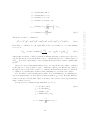
log 1 − e− LT
log Z(∆)T − Pol(∆) = −2
d−3
d−2
p,l≥0
=
X
p=1
e
p
−( d2 ) LT
2
1 − p (∆− d )
2 .
p
d e LT
p
e LT − 1
(5.16)
For odd dimensional AdS, the temperature independent term not computed in [2] is polynomial (see, e.g. ref. [28]). In the even dimensional case, however, it is not a polynomial
and we conjecture that it could be obtained by the zero mode method above (which in the
AdS4 case results in eq. (5.12)). If so, by combining the normal modes on thermal AdS
with the zero modes we have found here, the quasinormal or zero-mode method can be
used to compute the full AdS2n partition function.
– 17 –
JHEP06(2014)099
=−
X
6
Discussions and conclusions
• The boundary condition of normalizability on the zero modes (A.2) may be delicate.
In the AdS2 case, the zero modes appear for ∆ < 0, which means the modes satisfying
φ ∼ sinh−∆ η are not normalizable in the usual sense.
• A Euclidean spacetime may be Wick-rotatable into Lorentzian signature in more
than one way, as we explicitly explored for AdS2 in section 4 and discuss for general
d in the appendix. To capture all possible zero modes from Lorentzian-signature
spacetimes, it may be necessary to consider quasinormal modes visible in each such
Wick rotation, as in the thermal AdS case here.
• We have highlighted the relationship between zero modes and the group structure of
the spacetime.
It turns out in odd dimensions we will need to consider this information.
Thus far we have not discussed odd dimensional AdS. First, in odd dimensions, the
calculation of the thermal partition function follows the (correct) AdS3 case done explicitly
in [1]. As odd dimensional AdS has no logarithmic terms in the large mass expansion of
log Z, the thermal sum as in (4.6) is sufficient in this case. If we wish to compute the
– 18 –
JHEP06(2014)099
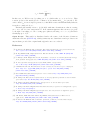
We have calculated the scalar one-loop determinant for even dimensional AdS spacetimes
via a zero-mode method. In the case of AdS2 , these zero modes are the Wick rotation of
quasinormal modes for the AdS2 black hole. In all even dimensions, our results match with
previous results using purely heat kernel methods.
Our method is a nontrivial extension of the zero-mode method developed in [1] to the
case of even-dimensional non-compact spaces. In a compact space such as S 2n , the condition on the zero modes is normalizability via square integrability. Since the condition on the
complete set of eigenmodes used in the heat kernel eigenfunction expansion is the same, the
modes are very similar. Conversely, in the AdS2n case, the eigenmodes used in the heat kernel computation are constrained to be delta-function normalizable, whereas the zero modes
in our zero-mode method are instead constrained by having only −∆ behavior at infinity.
This application of the boundary condition at infinity for a non-compact space is novel.
For thermal AdS in even dimensions, our results augment those of [1], which provided
only the temperature-dependent piece of the partition function. Since the temperatureindependent piece of log Z(∆) has logarithmic components, the polynomial Pol(∆) cannot
account for these terms. Instead, in order to compute the partition function for thermal
AdSd+1 in even dimensions, we should consider both the zero modes of Euclidean Hd+1 as
well as the thermal zero modes arising from compactification in τE . This paper concentrates on the Hd+1 modes, while [1] considered the temperature-dependent thermal modes;
considering both effects together results in a Z(∆) which is meromorphic as expected.
Our interest here is not just in reproducing the AdS even-dimensional calculation, but
instead in further developing the zero/quasinormal mode method, with hopes that it may
be useful for more general spacetimes. This particular case does give a few caveats which
may be of importance for more general applicability.
Acknowledgments
We would like to thank F. Denef, T. Hartman, S. Hartnoll, F. Larsen, P. Lisbão and
J. Maldacena for valuable discussion. C. K. is supported in part by the US Department of
Energy under grant DE-FG02-95ER40899. G. N. was supported by DOE grant DE-FG0291ER40654 and the Fundamental Laws Initiative at Harvard.
A
Finding zero modes in AdSd+1 for d + 1 even
We work in spherical coordinates
ds2E = dη 2 + sinh2 ηdΩ2d ,
(A.1)
where dΩ2d is the line element of S d . We are looking for eigenfunctions of the Laplacian
satisfying
∆(∆ − d)
2
−∇ +
φ = 0,
φ ∼η→∞ sinh−∆ η.
(A.2)
L2
Following [10], the eigenfunctions of the Laplacian regular at the origin are given by
φ = Yl,m
~ ql
(A.3)
– 19 –
JHEP06(2014)099
scalar partition function for H2n+1 without a thermal compactification, the entire result is
in fact polynomial in ∆, and so can be captured just by setting Pol(∆) according to the
heat kernel curvature expansion.
However this means in the odd dimensional case we should not consider the modes in
section 5 to be zero modes. This is at first a bit surprising, because they appear to satisfy
our condition of having only sinh−∆ η behavior (and no sinh∆−d η). As we argue in the
appendix, the distinction between the behaviors is not so clear because they differ by an integer power of sinh2 η. Additionally, the Laplacian equation (5.1) under the restriction (5.2)
has an abelian monodromy group for odd d + 1, but it is nonabelian for even d + 1.
Our most important reason to discount these odd-dimensional modes is group theoretic.
We expect these modes should not be considered because they are matrix elements for a
discrete series representation, but discrete series representations of the motion group for
Hd+1 only exist in even dimensions.
Regardless, the delicacy of deciding what boundary conditions should be applied in
order to determine acceptable zero modes when we consider unphysical general complex ∆
is the most important disadvantage of the zero/quasinormal mode method for computing
partition functions. Moving into the complex ∆ plane means we are away from the physical
∆ > 0 case, and so some of our intuition about which modes to include may break down.
Conversely, the major advantage is that we only require information about the location
and multiplicity of the zero/quasinormal modes in the complex ∆ plane; we do not need
to normalize the modes or provide a complete set of states as in the heat kernel eigenfunction approach of [10], or compute characters of representations as in [2]. We believe this
advantage is sufficient to motivate further study and application of the method in other
spacetimes.
qlλ
d
d+1
d
2 η
; − sinh
.
= (i sinh η) F iλ + + l, −iλ + + l; l +
2
2
2
2
l
Using the quadratic transformation 15.3.30 in [26], we rewrite q (now dropping the Y ) as
l+∆ l+d−∆
d+1
l
2
ql∆ ∝ (i sinh η) F
,
;l +
; − sinh η .
(A.5)
2
2
2
As long as ∆ − d/2 is not an integer, we can use 15.3.7 in [26] to expand q near η → ∞:
d+1
Γ d2 − ∆
l+∆ 1+∆−d−l
d
−2
−∆ Γ l + 2
F
,
; 1+∆− ; − sinh η (A.6)
ql∆ ∼ (sinh η)
2
2
2
Γ l+d+1−∆
Γ l+d−∆
2
2
d+1
d
Γ l+ 2 Γ ∆− 2
l+d−∆ 1−l−∆
d
−2
+ (sinh η)∆−d
F
,
;
1−∆+
;
−
sinh
η
.
l+1+∆
2
2
2
Γ l+∆
Γ
2
2
These modes already satisfy the condition of regularity in the interior of Hd+1 ; this is how
we chose to consider the solution (A.3) to the second-order differential equation in (A.2).
In order to satisfy the η → ∞ boundary condition in (A.2), we must choose ∆ such that
the second line in (A.6) vanishes. This occurs whenever one of the Γ functions in the
denominator has a pole; that is, whenever l + ∆ ∈ Z≤0 . Since l is already restricted to be
a nonnegative integer as it labels the total angular momentum of the spherical harmonic
Yl m
~ in (A.3), this forces ∆ to be a negative integer.
For d + 1 even, ∆ − d/2 is not an integer, and our analysis is complete; there is a zero
mode for ∆⋆ ∈ Z≤0 with degeneracy equal to the sphere degeneracy for a mode on S d+1
with total angular momentum −∆⋆ .
Specifying to the case d + 1 = 2, we find
h
η i
,
(A.7)
φ∆l = eilθ (i sinh η)|l| F ∆ + |l|, |l| + 1 − ∆; |l| + 1; − sinh2
2
has only (sinh η)−∆ (and no (sinh η)1−∆ ) behavior at η → ∞ whenever ∆ = ∆⋆ for
∆⋆ + |l| ∈ Z and ∆⋆ + |l| ≤ 0. Since here we are allowing l ∈ Z to account for both
exp(ilθ) and exp(−ilθ), we can rewrite this requirement as
∆ ∈ Z≤0 ,
l ∈ Z,
|l| ≤ −∆.
(A.8)
The case of odd dimensions is more complicated. d is an even integer, and the analysis
using (A.6) is insufficient because the formula 15.3.7 in [26] is invalid when ∆ − d/2 ∈ Z. In
– 20 –
JHEP06(2014)099
d
where Yl,m
~ is a spherical harmonic on S whose total angular momentum is set by the
nonnegative integer l. m
~ is a set of d − 1 integers with l ≥ md−1 ≥ . . . ≥ |m1 |, m1 ∈ Z.
For the specific case of d + 1 = 2 dimensions, there is no m;
~ instead for every nonnegative
integer l we have two modes: exp (ilθ) and exp (−ilθ).
We want to rewrite the eigenvalue as ∆(∆ − d)/L2 . Reparameterizing the hypergeometric function in terms of ∆, we find
d + 1 1 − cosh η
l
φl∆ ∝ Yl,m
;
.
(A.4)
~ (i sinh η) F l + ∆, l + d − ∆; l +
2
2
B
Euclidean disc vs. global coordinates
We begin with the embedding coordinates for Hd+1 :
d
X
i=1
x2i + x20 − u2 = −L2 ,
with line element
ds2 =
d
X
i=1
(B.1)
dx2i + dx20 − du2 .
(B.2)
To recover the Euclidean disc, we choose
u = L cosh η
(B.3)
x0 = L sinh η sin θ0
x1 = L sinh η cos θ0 cos θ1
x2 = L sinh η cos θ0 sin θ1 cos θ2
...
xd−1 = L sinh η cos θ0
xd = L sinh η cos θ0
d−2
Y
i=1
d−1
Y
sin θi
!
cos θd−1
sin θi .
i=1
To recover the usual measure on dΩ2d , we should additionally take θ0 = π/2 − θ. Wick
rotating θ0 → it produces the black hole coordinates for the case of AdS2 . This rotation
also sets x0 → iv in the embedding coordinates.
For d > 1, there is a bispherical set of coordinates on S d which are useful for Wick
rotation:
u = L cosh η
(B.4)
– 21 –
JHEP06(2014)099
this case, the top line of (A.6) differs from the bottom by an integer power of the argument
of F , − sinh2 η, so we cannot truly separate the two series from each other. The expansion
of the top line can contaminate that of the bottom line.
If we do continue by studying the degenerate hypergeometric equation (see [29, 30]), we
will in fact find that φl∆⋆ as in (A.4) with ∆⋆ + l ∈ Z≤0 become polynomials in sinh2 η with
only positive powers. As such, φl∆⋆ will contain “none” of the behavior sinh∆−d η, which
would have to be a negative power for ∆ ≤ 0. As we argue in the conclusion, we nonetheless
do not need to include these putative zero modes in the sum for odd dimensions.
As further evidence for the difference between even and odd modes, we again mention
that the modes in (A.4) are matrix elements of the discrete series representation for SO(d+
1, 1). These representations should only be unitary in the case of d + 1 even; again for more
details see [27].
x0 = L sinh η sin φ1 sin φ0
x1 = L sinh η sin φ1 cos φ0
x2 = L sinh η cos φ1 cos θ2
x3 = L sinh η cos φ1 sin θ2 cos θ3
...
xd−1 = L sinh η cos φ1
sin θi
i=2
d−1
Y
!
cos θd−1
sin θi .
(B.5)
i=2
The metric for these coordinates is
ds2d+1 = L2 dη 2 + sinh2 ηdφ21 + sinh2 η sin2 φ1 dφ20 + sinh2 η cos2 φ1 dΩ2d−2 .
(B.6)
From these coordinates, we can again Wick rotate, now setting φ0 → it and defining
rdS ≡ cos φ1 :
ds2d+1 = L2 dη 2 + L2 sinh2 η
2
drdS
2
2
2
2
−
(1
−
r
)dt
+
r
dΩ
dS
dS
d−2 ,
2
1 − rdS
(B.7)
which is just a foliation of AdSd+1 with the d-dimensional static de Sitter space. It is very
curious that the modes in (A.4) Wick rotate to “quasinormal modes” of this foliation of
AdSd+1 . It would be interesting to explore further the interpretation of these “quasinormal
modes”.
In fact, for an even-dimensional AdS2n space, we can pair the embedding coordinates
x0 through x2n−1 . It is possible to pick coordinates so that we can Wick-rotate easily by
the angle between each of the n pairs of coordinates. In fact written in these bin spherical
coordinates, we explicitly have written a full commuting set of generators for AdS2n .
For odd AdS2n+1 , such a pairing isn’t possible. To get a maximal set of commuting generators we must include one noncompact generator (such as τE below). It is this difference
between even and odd AdS that causes even AdS to have discrete series representations,
while odd AdS does not.
For the global coordinates in any dimension, we choose
u = L cosh σ cosh τE
x0 = L cosh σ sinh τE
x1 = L sinh σ cos θ1
x2 = L sinh σ sin θ1 cos θ2
...
xd−1 = L sinh σ
d−2
Y
i=1
– 22 –
sin θi cos θd−1
(B.8)
JHEP06(2014)099
xd = L sinh η cos φ1
d−2
Y
xd = L sinh σ
d−1
Y
sin θi .
i=1
Open Access. This article is distributed under the terms of the Creative Commons
Attribution License (CC-BY 4.0), which permits any use, distribution and reproduction in
any medium, provided the original author(s) and source are credited.
References
[1] F. Denef, S.A. Hartnoll and S. Sachdev, Black hole determinants and quasinormal modes,
Class. Quant. Grav. 27 (2010) 125001 [arXiv:0908.2657] [INSPIRE].
[2] R. Gopakumar, R.K. Gupta and S. Lal, The heat kernel on AdS, JHEP 11 (2011) 010
[arXiv:1103.3627] [INSPIRE].
[3] S. Banerjee, R.K. Gupta and A. Sen, Logarithmic corrections to extremal black hole entropy
from quantum entropy function, JHEP 03 (2011) 147 [arXiv:1005.3044] [INSPIRE].
[4] A. Sen, Quantum entropy function from AdS2 /CF T1 correspondence,
Int. J. Mod. Phys. A 24 (2009) 4225 [arXiv:0809.3304] [INSPIRE].
[5] I. Mandal and A. Sen, Black hole microstate counting and its macroscopic counterpart,
Nucl. Phys. Proc. Suppl. 216 (2011) 147 [Class. Quant. Grav. 27 (2010) 214003]
[arXiv:1008.3801] [INSPIRE].
[6] D.V. Vassilevich, Heat kernel expansion: user’s manual, Phys. Rept. 388 (2003) 279
[hep-th/0306138] [INSPIRE].
[7] R. Camporesi, Zeta function regularization of one loop effective potentials in anti-de Sitter
space-time, Phys. Rev. D 43 (1991) 3958 [INSPIRE].
[8] R. Camporesi and A. Higuchi, Stress energy tensors in anti-de Sitter space-time,
Phys. Rev. D 45 (1992) 3591 [INSPIRE].
[9] R. Camporesi and A. Higuchi, The Plancherel measure for p-forms in real hyperbolic spaces,
J. Geom. Phys. 15 (1994) 57.
[10] R. Camporesi and A. Higuchi, Spectral functions and zeta functions in hyperbolic spaces,
J. Math. Phys. 35 (1994) 4217 [INSPIRE].
[11] J.R. David, M.R. Gaberdiel and R. Gopakumar, The heat kernel on AdS3 and its
applications, JHEP 04 (2010) 125 [arXiv:0911.5085] [INSPIRE].
[12] F. Denef, S.A. Hartnoll and S. Sachdev, Quantum oscillations and black hole ringing,
Phys. Rev. D 80 (2009) 126016 [arXiv:0908.1788] [INSPIRE].
– 23 –
JHEP06(2014)099
In this case, we Wick rotate by taking τE → iτ , which takes x0 → iv as before. This
rotation produces the usual global coordinates on Lorentzian AdSd+1 for general d. We
can see that ∂τE is a noncompact generator, so this Wick rotation is fundamentally different
from those considered above.
Thermal AdS usually refers to global AdS with time identification; that is, setting
τE ∼ τE + 1/T for some temperature T . In Lorentzian signature this can more properly
be thought of as taking τ to the covering space (that is, allowing −∞ < τ < ∞) and then
identifying up to 1/T .
[13] G.S. Ng and A. Strominger, State/operator correspondence in higher-spin dS/CFT,
Class. Quant. Grav. 30 (2013) 104002 [arXiv:1204.1057] [INSPIRE].
[14] D.L. Jafferis, A. Lupsasca, V. Lysov, G.S. Ng and A. Strominger, Quasinormal quantization
in de Sitter spacetime, arXiv:1305.5523 [INSPIRE].
[15] S. Coleman, Aspects of symmetry: selected Erice lectures, Cambridge University Press,
Cambridge U.K. (1988).
[16] T. Hartman and L. Rastelli, Double-trace deformations, mixed boundary conditions and
functional determinants in AdS/CFT, JHEP 01 (2008) 019 [hep-th/0602106] [INSPIRE].
[18] S. Datta and J.R. David, Higher spin quasinormal modes and one-loop determinants in the
BTZ black hole, JHEP 03 (2012) 079 [arXiv:1112.4619] [INSPIRE].
[19] S. Datta and J.R. David, Higher spin fermions in the BTZ black hole, JHEP 07 (2012) 079
[arXiv:1202.5831] [INSPIRE].
[20] H.-B. Zhang and X. Zhang, One loop partition function from normal modes for N = 1
supergravity in AdS3 , Class. Quant. Grav. 29 (2012) 145013 [arXiv:1205.3681] [INSPIRE].
[21] S. Giombi, A. Maloney and X. Yin, One-loop partition functions of 3D gravity,
JHEP 08 (2008) 007 [arXiv:0804.1773] [INSPIRE].
[22] C.O. Dib and O.R. Espinosa, The magnetized electron gas in terms of Hurwitz zeta
functions, Nucl. Phys. B 612 (2001) 492 [math-ph/0012010] [INSPIRE].
[23] D.E. Diaz and H. Dorn, Partition functions and double-trace deformations in AdS/CFT,
JHEP 05 (2007) 046 [hep-th/0702163] [INSPIRE].
[24] J. Maldacena and G.L. Pimentel, Entanglement entropy in de Sitter space,
JHEP 02 (2013) 038 [arXiv:1210.7244] [INSPIRE].
[25] S. Giombi, I.R. Klebanov and B.R. Safdi, Higher spin AdSd+1 /CF Td at one loop,
Phys. Rev. D 89 (2014) 084004 [arXiv:1401.0825] [INSPIRE].
[26] M. Abramowitz and I. Stegun, Handbook of mathematical functions, Dover Pub., New York
U.S.A. (1972).
[27] N.J. Valenkin and A. Klimyk, Representation of Lie groups and special functions, vol. 2,
Springer, Germany (1992).
[28] M.M. Caldarelli, Quantum scalar fields on anti-de Sitter space-time,
Nucl. Phys. B 549 (1999) 499 [hep-th/9809144] [INSPIRE].
[29] H. Bateman and A. Erdelyi ed., Higher transcendental functions volume 1, Dover Pub., New
York U.S.A. (2007).
[30] R. Vidunas, Degenerate Gauss hypergeometric functions, Kyushu J. Math. 61 (2007) 109
[math.CA/0407265].
– 24 –
JHEP06(2014)099
[17] R. Aros and D.E. Diaz, Functional determinants, generalized BTZ geometries and Selberg
zeta function, J. Phys. A 43 (2010) 205402 [arXiv:0910.0029] [INSPIRE].