1
3
TECHNICAL ORGANISATION
1. Tournament Director (Promoter)
3.1 Organisational Chart
The Organisational Chart is the framework for all operations.
Organisers must establish an Organisational Chart comprising
the different people performing specific duties, as described in
this chapter. This Chart ensures the running of the competition
and is designed to be consistent for all major FIVB events such
as FIVB Beach Volleyball Senior World Championships and
FIVB Beach Volleyball World Tour events. The form BVB/05
must be submitted by all Organisers to the FIVB Beach
Volleyball Department for approval 120 days before the start
of the event. The FIVB Beach Volleyball Department must be
notified of any changes.
-
-
-
-
-
-
-
-
25
The Tournament Director or promoter must be working
full time at least one year before the event.
The
other
Directors
(Finance,
Administrative,
Competition, Operational, Promotion, PR, etc.) should be
working for the organisation and promotion of the event
120 days before the start of the tournament or in the
case of the Media Operations Director, 90 days before
the start.
Directors cannot have more than one responsibility, with
the exception of the Tournament Director.
All Managers in the technical area work under the
coordination of the Competition Director.
For the FIVB World Championships, it may be required
to set up an organising chart featuring all Directors upon
signature of the FIVB-NF/Promoter agreement.
Each promoter must appoint a person who speaks fluent
English responsible for the master plan, starting from the
end of October of the year preceding the event onwards.
The promoter should nominate a local Media Operations
Director for each FIVB World Tour event by February 1st of
the year of the event.
Six months before the event the promoter should appoint
a person (or agency) responsible for the marketing
regulations laid out in the FIVB/NF/Promoter Agreement.
The Handbook is made available online to the NF Delegate
and all Directors. The Directors should provide each
Manager with the chapter(s) of the Handbook related to
their specific duties.
At the beginning of the season, the FIVB Beach Volleyball
Department appoints FIVB Delegates and Referees for each
FIVB beach volleyball event.
The composition of the Organising Committee (including
the names of the Directors and Managers) is included in
the event’s regulations -21 days before the start of the FIVB
World Tour event.
Upon request, the FIVB may recommend experienced
personnel to fill positions enlisted in the Organising Chart.
The working conditions must be negotiated directly with
the persons concerned.
A. Organising Committee
The Organising Committee is composed of the FIVB
Technical Supervisor, the Tournament Director and the NF
Delegate or Beach Volleyball Coordinator. The FIVB Referee
Delegate, FIVB Media Operations Delegate, FIVB Marketing
Delegate, FIVB TV Coordinator, FIVB Medical Delegate (if
any), or other FIVB representative(s) (if any), will advise
the Organising Committee on matters related to their
responsibilities and may be requested to attend meetings
if deemed necessary by the FIVB Technical Supervisor. The
Organising Committee gathers for meetings to discuss
event’s operations and solves contingencies. The Organising
Committee analyses any critical situations and reports on
any problems (e.g. sanctions to athletes, suspension of the
event due to cases of “force majeure”, etc.) to the FIVB
–Completes and sends the candidature file to the FIVB;
–
Signs the FIVB-NF/Promoter Agreement (incl. the
appendices), undertakes Promoter’s responsibilities and
fulfils Handbook requirements;
–Sets up an organising chart in accordance with the FIVB
requirements;
–Carries out the general coordination of all members of the
Organisational Chart;
–Implements the marketing regulations and respects the
terms of the FIVB-Sponsors agreement (e.g. production
and placement of the FIVB Sponsors material, correct
implementation of the visual, titles, etc.);
–Establishes and follows a financial plan;
–Undersigns an agreement with the hosting city/region
authorities, sponsors, suppliers, etc.,
–Ensures the payment of the license fee, board and lodging,
local transportation, per-diem, etc., as per the agreement
and event’s master plan;
–Consults with the FIVB and the NF Delegate for critical
matters related to the event;
–Implements a venue plan in accordance with the FIVB
requirements;
–Produces a hard copy tool for all FIVB athletes featuring
relevant information about the event;
–Coordinates with the FIVB and the FIVB official suppliers
the delivery of the uniforms, net system, balls, etc.
–Prepares the inspection visit of the TV Coordinator and
the FIVB Technical Supervisor (if any);
–Organises and attends the Preliminary Inquiry and the
Technical Meeting in coordination with the members of
the Organisational Chart;
–Supervises and attends Public Relations, entertainment
and promotional activities and checks the content and
layout of all promotional material;
–Prepares the progress and final reports, fills in official
forms and sends them to the FIVB;
–Ensures that the Host Broadcaster letter of Agreement
(Appendix E) is sent to the FIVB by July 11 preceding year
of the event duly signed;
–Makes sure that the duties included in the Host TV
Broadcaster Letter of Agreement are fulfilled and that
the FIVB TV Coordinator is provided with video tapes
immediately after each recorded match;
–
Maintains efficient communication with all parties
involved in the organisation and promotion of the event;
–Promotes the attendance of celebrities and implements
VIP programs;
–Prepares a final media report including the media value
achieved by the event;
–Sends to the FIVB proposals related to the Promoter’s
responsibilities to be discussed during the Beach Volleyball
Commission and FIVB Beach Volleyball World Tour
Council;
–Attends the FIVB Beach Volleyball World Tour Council.
2
2. National Federation Delegate or Beach
Volleyball Coordinator
–Is appointed by the NF;
–Follows up on the NF/Promoter tasks listed in the FIVB/NF –
Promoter agreement (incl. appendices), fulfils the terms of
the Master Plan and informs the parties concerned if a topic
has not been dealt with in due time;
–Assists the promoter and the FIVB with the appointment of
a Competition Director having experience in running beach
volleyball events;
–Proposes the list of host NF referees for FIVB assignment,
and selects the auxiliary officials (scorers and line judges)
and court personnel (scoreboard operators, ball retrievers,
sand levellers, athletes’ attendants, etc.);
–
Collaborates with the Tournament Director on the
promotion of the event through its Press Department;
–Nominates a Referee Manager responsible for coordinating
the competition duties and submits the respective
name and coordinates to the FIVB Referee Commission
member concerned sixty (60) days prior to the start of the
Tournament together with the names of the ball-checker
and the auxiliary officials;
–Organises with the Tournament Director the Inspection Visit
of the TV Coordinator and the FIVB Technical Supervisor (if
any), clinics and meetings and is available to attend them;
–Prepares the invitation letter and event’s regulations for FIVB
approval (to be sent to the FIVB -30 days prior to the event)
and once approved sends them to the participating NFs,
officials and agencies concerned (-21 days prior to the start
of the event);
–Provides the necessary assistance to the NFs for the issue of
visas for the participating athletes and officials;
–Participates in the press conferences organised before and
during the event;
–Consults the FIVB and the Tournament Director about all
critical matters related to the event;
–
Sends proposals to the FIVB NF’s representative and
other parties to be discussed during the Beach Volleyball
Commission and FIVB Beach Volleyball World Tour Council;
–Implements National team programs and a National Beach
Volleyball Tour with the aim of better promoting beach
volleyball at national level. The hosting NF is required to
homologate the National Tour by sending the necessary
form to the FIVB;
–Secures the presence of a national anti-doping agency
whenever required by the FIVB and ensures all related
correspondence remains confidential.
TECHNICAL ORGANISATION
Beach Volleyball Events Director. If communication between
the Organising Committee and the FIVB is not possible,
the FIVB Technical Supervisor is entitled to make the final
decision.
B. Administrative Area
1. Finance Director
–Is placed under the authority of the Tournament Director;
–Assists the Tournament Director in realizing a financial plan
(expenses and income);
–Follows up on the accounting matters included in the
Master Plan;
–
Provides the athletes on site with the necessary
documentation for any eventual taxes to be deducted from
the Prize Money whenever agreed with the FIVB.
26
2. Administrative Director
–Is placed under the authority of the Finance Director;
–Organises the event’s secretariat;
–Manages the general correspondence and communication
with NFs, FIVB officials and teams;
–Coordinates the organization of the inspection visit of the
TV Coordinator and the FIVB Technical Supervisor (if any);
–Manages the Preliminary Inquiry and the Technical Meeting
and is available to attend them;
–Is responsible for the international transportation of all
FIVB officials and, if needed, coordinates transport with
Promoters of events scheduled before and/or after the
event;
–Coordinates and organizes the local transportation (arrival
and departure);
–Is responsible for organizing accommodation for the FIVB
officials, referees, teams and others and ensures that all
referees are accommodated in the same hotel;
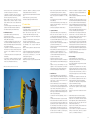
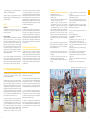
FIVB Referee overviews the action on the court U 19 Porto
C. Technical Area
1. Competition Director
–Is the highest authority at the venue under the FIVB
Technical Supervisor and the Tournament Director;
–Prepares and attends the Inspection Visit of the TV
Coordinator and the FIVB Technical Supervisor (if any);
–Recruits and appoints the Technical Area Managers and
volunteers;
–Coordinates the activities related to the Technical Area of
the members of the Organizational Chart;
–Coordinates with the Operational Director the installation
(and dismantling) of the competition facilities and
equipment;
–Prepares the event’s regulations in collaboration with the
Hosting NF;
–Organizes the Preliminary Inquiry and the Technical Meeting;
–Creates the competition program to satisfy the needs of
onsite spectators, Host Broadcasters, etc., for the FIVB
Technical Supervisor’s approval;
–Coordinates the court personnel’s duties;
–Ensures that the courts are set up in accordance with FIVB
requirements;
–Assigns courts in agreement with the Tournament Director,
the FIVB Technical Supervisor, and the TV Coordinator;
–Coordinates with the Press Director and the Administrative
Director the preparation and distribution of the Daily
Bulletin;
–Gives instructions for the proper update of the competition
brackets billboards;
–Works with the Medical Director, Referee Manager, Court
Manager and Technical Manager to ensure the smooth
running of the event;
–Other duties as required by the Tournament Director.
2. Operational Director
–Is placed under the authority of the Competition Director;
–Decides the location and orientation of the courts in
accordance with the stadium and facilities requirements;
–Liaises with Hutcheson Sand and Mixes to choose the sand
in accordance with FIVB requirements (sand to be approved
by 15 June of year preceding the event);
–Prepares the stadium and facilities layout (including all
operational areas and working rooms);
–Supervises the construction of the venue (and its dismantling
after the competition);
–Ensures the FIVB Sponsors materials are properly set up and
dismantled (e.g. scoreboards, inflatable(s), POS, etc.);
–Prepares and attends the Inspection Visit of the TV
Coordinator and the FIVB Technical Supervisor (if any);
–Sets up the TV and press facilities;
–Organizes the security and access controls;
–Supervises the operation of medical services in collaboration
with the Medical Director and the FIVB Medical Delegate (if
any);
–Supervises the set up (and dismantling) of the court
equipment on all courts (along with two staff members
working exclusively for the scoreboards supplier (if any));
–Other duties as required by the Tournament Director.
3. Medical Director
–Is placed under the authority of the Competition Director;
–Works in collaboration with the FIVB Medical Delegate in
order to provide the athletes and officials with the necessary
onsite assistance, as well as 24-hour assistance at the
athletes’ and officials’ hotels;
–Checks the nutritional aspects of the food and beverages on
site and at the hotel, as well as environmental conditions,
such as the levels of sun exposure, the hydration level and
safety of athletes, officials, volunteers, spectators, etc.;
–Supervises the medical injury time-outs and match forfeits
due to injury, in accordance with the Medical Injury Protocol
and the Competition Regulations;
–Coordinates the medical and physiotherapy services for
athletes;
–Coordinates the first aid assistance for spectators and staff;
–Ensures that the medical staff is available at the venue from
at least one hour before the start of play until the end of
play during the competition (starting from the day when
the official training courts are available as per the Specific
Event’s Regulations) to assist athletes, staff, spectators, etc.;
–Supplies the addresses of the closest hospital(s) and verifies
that these hospitals are available to provide emergency
specialist care in all relevant medical areas;
27
–Verifies that an ambulance and equipment for advanced
cardiopulmonary resuscitation (including defibrillator) are
always available at the venue;
–Verifies that equipment and qualified personnel are always
available at the venue;
–Is responsible for keeping accurate medical records of all
assessments and treatment provided by medical staff during
the event, in accordance with national medical regulations;
–Assists the FIVB Medical Delegate and national anti-doping
organisation in preparing anti-doping controls, including
the preparation of the Doping Test section;
–Assists the relevant FIVB Official in running the alcohol test
for referees and auxiliary officials, when requested.
–The Medical Director must be a physician certified in sports
medicine. His/her CV and contact information must be
received by the FIVB 2 months before the event for approval
by the President of FIVB Medical Commission.
–Confirm the availability of appropriate space to allow for
referee medical controls. This room must be equipped with
a calibrated weight scale, height rod, Snellen vision chart
and blood pressure monitor. The referee examinations must
be conducted by a physician hired by the Organisers who is
licensed to practice medicine in the organising country and
according to the FIVB Medical Regulations. Results should
be recorded on the M-6 form;
–Other duties as required by the Tournament Director.
2
–Organizes the distribution of publications, promotional
material, bulletins and the flow of information;
–Checks that all documents and printed material are available
and;
–Ensures that the photocopy centre is operational,
–Other duties as required by the Tournament Director.
TECHNICAL ORGANISATION
–Verifies that the cash flow is coherent with the financial
commitment of the Organisers to run the event;
–Is responsible for all payments such as those related to
organisational staff members, FIVB officials (if applicable),
and referees’ fees/per diem, hotels, venue, etc.;
–Makes sure that all taxes are paid in due time and a
declaration letter is provided to athletes, for taxation
purposes whenever local taxes are to be deducted from the
Prize Money;
–Secures the necessary approval from the FIVB Sponsors for the
production of the materials and issues the related invoices;
–Other duties as required by the Tournament Director.
4. Referee Manager
–Is under the authority of the Competition Director;
–Instructs and trains local referees, auxiliary officials (scorers
and line judges) and court personnel;
–Acts as a liaison between the Competition Director and the
FIVB Referee Delegate;
–Is responsible for the organisation of the referee clinics to
be held if possible at the referees’ hotel (the room must be
equipped with video Microsoft Power Point Projector and
screen plus a white board with markers), as well as for
ensuring all line judges and scorers attend the mandatory
referee clinic;
–Is responsible for the organisation of the extra referee clinic
for Host NF referees (if applicable) and the extra clinic for
auxiliary officials and key court personnel (if applicable);
–Is responsible for the daily referees’ meetings under the
supervision of the FIVB Referee Delegate;
–Coordinates with the FIVB Referee Delegate all referee
matters such as the assignment of referees, line judges,
scorers, etc.;
–Ensures that court personnel are available at the venue in
due time.
The Referee Manager may have one/several assistant(s) to:
–Prepare the referee clinic(s) and the daily referee meetings;
–Circulate the referee documents and material (Official
Beach Volleyball Rules, Referee Guidelines and Instructions,
timetables, score sheets, referee forms, daily referees’ and
auxiliary officials’ assignments, etc.);
–Assign and train the auxiliary officials (recruitment and
training of the line judges, and scorers);
–Select and train the court personnel (recruitment and
training of the ball retrievers, sand levelers, scoreboard
operators, on-court athletes’ attendants, etc.).
28
He/she is responsible for the “ball checker”, who must
be available on site from the arrival of the FIVB Technical
Supervisor until the end of the tournament. The “ball
checker” works in close coordination with the FIVB Technical
Supervisor and the FIVB Referee Delegate, and is responsible
for handling the Mikasa balls throughout the entire
tournament, including the inflation of the balls at the start
of the event, the inspection and homologation of the balls,
the daily monitoring processes and the overnight storage of
the balls.
The Court Manager must have one assistant for each court
(including warm-up court) to:
–Set up the courts and ensure the operation and maintenance
(sound system, seats, panels, scoreboards, etc.);
–Verify the status of the sand and apply the necessary
measures to improve it;
–Verify the protocols related to areas such as marshalling,
security and access control, couriers, supply of water and
towels, locker rooms, working areas, VIP section and stands,
awarding ceremony, etc.;
–Check the equipment and supplies (availability of poles,
nets, reserve balls, pads and other sports material);
–Check the status of the branding around the courts in line
with the FIVB Marketing checklist;
–Resolve any contingency issues occurring on the competition
courts.
6. Technical Manager
–Is under the authority of the Competition Director;
–Coordinates the IT activities with the Administrative Director.
The Technical Manager must have one/several assistant(s) to:
–Ensure that the necessary hardware is available at the venue
to run the BVIS;
–Ensure the timely recording of the competition data (BVIS);
–Guarantee the distribution of the Daily Bulletin (on site,
at the lobby of the hotel(s) ensuring that the competition
schedule is handed out no later than one hour after the last
match of the day and by fax) in accordance with the local
distribution list;
–Verify the timely update of the overall event information
(e.g. pictures, press releases, results, etc.) on the FIVB
website (www.fivb.org/EN/BeachVolleyball) under the
authority of the FIVB Technical Supervisor.
D. Promotional Area
1. Promotion Director
–Is placed under the authority of the Tournament Director;
–
Collaborates with the Tournament Director, Media
Operations Director and PR Director to prepare a detailed
and effective marketing plan, including promotion, press,
social media engagement and PR actions to be submitted
29
to the FIVB for approval at least four (4) months before the
start of the event;
–Handles all activities related to advertising space in the
media;
–Contacts radio and television stations for all promotion;
–Is responsible for the production and distribution of the
official program, poster, brochures, media kits, etc. in
collaboration with the Administrative and Media Operations
Directors;
–Runs a campaign for the promotion of pre-sale of tickets (if
applicable);
–Coordinates the production of the event at the venue in
collaboration with the Announcer.
2
The Court Manager is under the authority of the Competition
Director and coordinates all activities in connection with the
playing area.
TECHNICAL ORGANISATION
5. Court Manager
2. Media Operations Director
–Is under the authority of the Tournament Director;
–Works with the FIVB Media Operations Delegate during the
event;
–Collaborates with the Tournament Director, Promotion
Director and PR Director to prepare a detailed and effective
marketing plan, including promotion, press, social media
engagement and PR activities, to be submitted at least four
(4) months before the start of the event to the FIVB for its
approval;
–Prepares and communicates information about the event
to the local and national written and online press, TV
broadcasters, radio stations, etc., and the FIVB Press
Department;
–Collects all information on local athletes and prepares
biography info to be sent to the media and the FIVB
Press Department, collects other information on athletes
(biographies, pictures, etc.) from the FIVB Press Department
and on-site from the FIVB Media Operations Delegate;
–Provides the FIVB Press Department at least four months
before the tournament begins with tournament information
detailing key venue info, history of the tournament and
other information unique to the tournament to build up
momentum prior to the event;
–Collaborates with the Promotion Director on the content
of the official program and sends it to the FIVB Press
Department for approval;
–Ensures that the media centre is set up and fully equipped in
accordance with FIVB requirements;
–Organises press conferences in accordance with the press
and marketing regulations and prepares the media kits, a
copy of which must be sent to the FIVB Press Department
for approval before printing;
–Invites local and foreign journalists to the press conferences
and the event itself and organises their accreditations;
–Writes press releases (making sure that the title of the
competition is clearly featured) in the local language for
local press and partners (and in English whenever requested
by the Media Operations Delegate and/or FIVB Press
Department);
–Coordinates the work of volunteers to ensure a smooth
and efficient press operational plan is implemented
providing all round good service to media onsite (taking into
consideration the points above and below) and the Media
Operations Delegate, who is responsible for the provision of
content and information to international media.
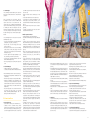
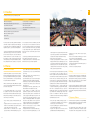
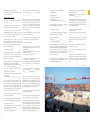
Entrance of the FIVB Transavia Grand Slam
–Ensures that the Daily Bulletin and press releases are sent
to local media (via e-mail) as per a distribution list prepared
previously;
–Provides daily information, notes, flash quotes from the mixed
zone and results to the FIVB Media Operations Delegate (in
the requested/appropriate format) to allow him/her to write
press releases to be sent to the international media list and
uploaded to the FIVB website. This information should also be
readily available for media on site;
–Coordinates interviews with the athletes and VIPs attending
the event;
–Coordinates the work of the local event photographer(s) to
ensure that high-quality pictures are circulated to the media
and uploaded to the FIVB website;
–Ensures that results are constantly updated in the media
centre;
–Collects local and national press cuttings from written and
online press, finalizes the media report and sends them
either on a DVD or USB key to the FIVB Press Department.
3. PR Director
–Is placed under the authority of the Promotion and Media
Operations Directors;
–Collaborates with the Tournament Director, Promotion
Director and Media Operations Director to prepare a detailed
and effective marketing plan, including promotion, press,
social media engagement and PR actions to be submitted
to the FIVB for approval at least four (4) months before the
start of the events;
–Organises a program of side events as well as ensures the
reception and local transportation of VIPs;
–Invites VIPs (sponsors, local authorities, celebrities, etc.) to the
press conferences and to the venue;
– Checks the arrangements for VIPs in terms of accommodation,
receptions, meals, etc.;
–Welcomes the VIP guests and journalists upon their arrival
and accompanies them before their departure;
–Verifies that the international protocol is respected;
–Supervises the tasks of the translators;
–Prepares and attends the rehearsal of the awarding ceremony.
4. Sport Presentation Manager
–Is placed under the authority of the Promotion Director and
works on the event’s sport presentation program;
–Coordinates all personnel involved in this area such as the
announcers, DJs, dancers, mascots, etc;
–Collects general information about the competition and the
athletes from the Press Director;
–Is responsible for entertaining the spectators in accordance
with the Sport Presentation program (chapter 7);
–Coordinates any entertainment activities at the venue
especially on the centre court, with the aim of creating an
enjoyable environment for the spectators;
–Creates editorial content to be used by the announcers.
5. Local Event Photographer(s)
–Is under the authority of the Media Operations Director;
–Complies with the rules applicable for photographers and
30
6. Photo Marshall
–Is under the authority of the Media Operations Director;
–Is responsible for the movement on site of all photographers
and for ensuring that only accredited photographers are in the
designated photographer areas;
–Oversees the presence of photographers on and around the
centre court;
–Ensures TV cameras and photographers do not get in each
other’s way and/or shot;
–Attends to any problems photographers might encounter;
–Supervises the movement of photographers during the
awarding ceremony;
–
Assists the local Event Photographer and/or Official
Photographer with the upload of photos to the FIVB website if
needed.
E. FIVB Officials
1. FIVB Technical Supervisor
–Is appointed by the FIVB and is the highest authority on site for
the FIVB World Tour events;
–Follows up on the preparation of the event in collaboration
with the FIVB Beach Volleyball Department, using the event’s
final reports from the previous season (if any), the Handbook,
the Master Plan (online or Collaborate), the official forms,
the event’s regulations, the technical checklist, all relevant
correspondence exchanged between the FIVB and the
Organisers, and so on;
–Checks together with the FIVB Beach Volleyball Department
that the Master Plan deadlines are met.
–Checks the fulfilment of the FIVB Regulations as per the terms
of the FIVB/NF-Promoter agreement (incl. appendices) and as
per the Handbook;
–Inspects and checks the venue and all facilities to be used for
the event;
–Checks the onsite security plan;
–Verifies that the FIVB officials’ uniforms are distributed and
displayed, that branding is according to the guidelines and that
the Mikasa balls and brandings are used correctly. All of the
above must be in accordance with the Marketing Regulations
included in this Handbook and in the Branding Kit;
–Carries out the yearly inspection visit whenever requested by
the FIVB (approximately 2/3 months before the start of the
event);
–Coordinates with the FIVB Referee Delegate on all activities
related to the referees, court personnel, volunteers, etc.;
–
Implements all necessary security measures to protect
the integrity of the spectators, athletes, officials, media
representatives, sponsors, etc.;
31
–Coordinates all aspects of the event and takes final decisions
in case of protests or complaints about the organisation,
match results, referee and medical issues, after consultation
with the Tournament Director and the National Federation
Delegate;
–
Checks the appropriate placement for scoreboards’
supplier personnel if any (sheltered from bad weather) and
equipped with a table;
–Checks the appropriate placement for the Unas Media
Productions;
–Represents the FIVB during press conferences, meetings,
interviews, etc., whenever required and feasible during his/
her stay on site;
–Ensures the proper running of the awarding ceremony;
–Ensures update of the results in the online VIS system;
–Prepares the relevant reports (inspection, homologation
of the stadium, final report, etc.) in accordance with FIVB
requirements and sends them to the FIVB;
–Organises a meeting at the end of the tournament between
the Promoter, the NF’s representative and the Referee
Delegate to discuss the reports from the event;
–Ensures that the FIVB post event reports (BVB-13, BVB-24;
BVB-25) are signed by the NF and Promoter and sent to the
FIVB the day after the event
–Communicates within 24 hours any remarks, comments
and fines applied to the parties concerned to the Technical
Supervisor/Referee Delegate of the next events in the
calendar, as well as to the FIVB;
–During the preliminary inquiry, provides athletes with a
template to be filled in with local contact information in
case of an emergency.
–A brief summary for the Men’s and Women athletes’
representative must also be provided.
–Ensures that the finance director provides to the athletes
on-site the necessary documentation for the eventual taxes
to be deducted from the Prize Money whenever agreed
with the FIVB.
–He/she is required, during the tournament week, to make
sure that the local Promoter circulates to the scoreboards
supplier (if any), Red Bull Media House (RBMH), Unas
Media Productions, Host Broadcaster, etc. relevant
events/competition information in regards to schedule
announcements, results, changes and athlete information,
etc.
Therefore the local Promoter is requested to provide the
following:
–a printer at the Main Streaming & Production working
area.
–sending of the schedule (fixtures, starting times, court id)
by mail in a .pdf format.
–Access to an online version of the schedule (starting
times, fixtures and court allocation) and the results.
The FIVB may assign a Technical Supervisor Trainee at one
or two FIVB World Tour Event(s) during the season. The
Technical Supervisor Trainee is required to arrive on site and
to leave the event as per the FIVB Technical Supervisor’s
schedule. The cost of accommodation, flights and meals is
covered by the FIVB.
The FIVB will then evaluate the competence of the Technical
Supervisor Trainee based on the comments and evaluation
form submitted by the Technical Supervisor appointed and
discuss during the FIVB Beach Volleyball World Tour Council
his/her possible nomination as FIVB Technical Supervisor for
the following year’s FIVB events.
2
–Coordinates with the TV Coordinator on any broadcasting
matters or acts as TV Coordinator whenever requested by the
FIVB;
–Coordinates with the FIVB Media Operations Delegate to
ensure the smooth running of the local and international press
operations;
–Collaborates with the FIVB Medical Delegate (if any) on
medical issues and doping controls whenever carried out;
–Collaborates with the FIVB Photographer whenever requested;
–Checks the fulfilment of the Promoters’ financial obligations
on site;
–Checks the correct implementation of the Media Plan;
–Ensures that the marketing of the event is in accordance with
the FIVB requirements and whenever the Marketing Delegate
is appointed collaborate with him/her to implement the
branding kit and branding guidelines. The Marketing Delegate
provides constant report on the status of the branding
implementation.
–Ensures the implementation of sponsor servicing and.
–Immediately reports to the FIVB upon his/her arrival in the host
city about the status of the preparation of an event;
–Conducts the Preliminary Inquiry and Technical Meeting;
reminding athletes to submit the NF-Athlete’s Commitment,
BVB/10 form (health certificate), clearing any outstanding
fines and updating accurately the BVIS system with all bank
details (address, account, etc.), biographies, etc.;
–Ensures the smooth running of the event in cooperation with
the organising committee, the FIVB officials, the referees, the
court personnel, the volunteers, etc.;
–Calls the Organising Committee for meetings whenever
necessary;
–Helps to optimize the competition schedule according to the
number of spectators attending and the needs of the media,
Host Broadcaster and International Broadcasters;
–Assigns the courts in coordination with the Competition
Director;
–upon arrival on site: Organises, the accurate levelling of the
sand before the court and tribunes are completely set up,
tests the quality and the overall condition of the sand on all
courts (i.e. main court and outside courts) before and during
the event (at different times of the day and especially in case
of rain, taking into consideration the athletes’ feedback) and
immediately informs the FIVB about any problems;
–Controls the accuracy of all information contained in the
Athletes’ Handbooks or athletes’ event’s information (if any)
upon his/her arrival at the event and guarantees that this
publication is available to all athletes once on site (i.e. at the
airport, in the hotel upon check in, etc.);
–Ensures that the personnel involved in the event fulfil all
assigned duties thoroughly and efficiently;
–Verifies the local transportation plan, accommodation plan
and meal services for the parties concerned;
–Participates in the Technical Supervisors seminar whenever by
the FIVB;
–Assists the FIVB in revising the FIVB Handbook;
–Verifies that the chain of custody of the beach volleyball balls
delivered from Mikasa is correct, and two days ahead of the
arrival of the Referee Delegate supervises the correct inflation
of all Mikasa balls in close coordination with the “ballchecker”;
TECHNICAL ORGANISATION
signs the FIVB Photographer Agreement (BVB/07) 30 days prior
to the start of the event;
–Provides pictures for the FIVB website (whenever needed) as
requested on the BVB/20 form to satisfy the FIVB, sponsors,
media, host city, and Promoter’s needs;
–
The Promoters must hire experienced beach volleyball
photographers. Contact details of professional photographers
can be provided upon request by the FIVB Communications
Department ([email protected]).
2. FIVB Referee Delegate
–Is appointed by the FIVB and assumes all duties related to
the referee aspects of the competition, as specified in the
Referee Delegate’s Manual;
–Is under the authority of the FIVB Technical Supervisor;
–Works in close collaboration with the Referee Manager
and coordinates two (2) months before the competition
all required actions related to the establishment of the
requirements for the standard referee’s clinic, for the extra
clinic for local referees (if applicable), for the extra clinic for
auxiliary officials and key court personnel (if applicable), and
for the recruitment of court personnel;
–Confirms the lists of referees and auxiliary officials and
verifies the availability of the court personnel in accordance
with the list approved by the FIVB Referee Commission
member concerned, two (2) months before the competition
(as per FIVB requirements);
–Conducts the standard referee’s clinic on the day preceding
the Qualification tournament, as well as the extra clinic for
local referees and the extra clinic for auxiliary officials and
key court personnel, both to be staged the preceding day
whenever required by the FIVB;
–In close coordination with the “ball-checker” ensures that
each Mikasa beach volleyball ball to be used during the
competition conforms to FIVB requirements;
–Ensures the smooth running of the competition on the field
of play with referees (neutrality), auxiliary officials (scorers
and line judges) and court personnel (scoreboard operators,
ball retrievers, sand levelers, court athletes’ attendants,
etc.);
–
Observes the referees’ work during the tournament,
evaluates their performance and conducts daily referee
meeting(s) after the last match of the day and before the
start of the first match of the day;
–Ensures that the necessary equipment is provided to allow
the first referee to communicate with the audience and with
the TV Producer to coordinate of the slow motion playbacks;
–Inspects on a daily basis the courts and equipment and
reports any discrepancies to the FIVB Technical Supervisor;
–Participates to the Referee Delegates seminar/workshop
whenever organised by the FIVB;
–Ensures the implementation of the match protocol in
coordination with the refereeing crew and the court
personnel;
–Supervises the procedures related to the implementation of
alcohol tests for referees and auxiliary officials;
–Reviews the score sheets;
–Reports to the FIVB on the referee aspects of the event and
referees’ overall performance;
–Attends the meeting at the end of the tournament between
the Promoter, the National Federation’s representative, and
the Technical Supervisor to discuss the final reports for the
event;
32
3. FIVB TV Coordinator
–Is under the authority of the FIVB Technical Supervisor.
4. FIVB English Language Commentator
–Is under the authority of the FIVB Technical Supervisor.
Note:
For duties and responsibilities, see details in the TV
Broadcasting Guidelines chapter 6.
4. FIVB Media Operations Delegate
–Increases worldwide media awareness for the Men’s and
Women’s FIVB beach volleyball events and promotes the
FIVB sanctioned events;
–Works from his/her facilities on the basis of the information
supplied by the Press Director of each event under the
supervision of the FIVB;
–Is responsible for the preparation, release and distribution
to the media and all entities appearing in the international
media list information concerning the World Ranking,
statistics and results of all international beach volleyball
events;
–Provides information to the Press Director, Host Broadcaster,
scoreboards’ supplier (if any), Unas Media Productions,
the Announcers and accredited media representatives on
historical data, athletes’ biographies, match results, match
schedules, etc.;
–Prepares a report on press operations and match results for
the Beach Volleyball Commission and for the FIVB Beach
Volleyball World Tour Council;
–Assists the Media Operations Director in the fulfilment of
communication plans and checks the implementation of the
FIVB requirements and standards in the press area;
–Collects all relevant data related to the Press of each event
which can be used to produce the FIVB’s final report/Media
Guide for the season;
–Reports back to the onsite FIVB Technical Supervisor on the
smooth functioning of the media information plan;
–Implements special projects whenever agreed with the FIVB.
Note:
For duties and responsibilities,
Communications chapter 5.
33
see
details
in
the
6. FIVB Medical Delegate (if any)
The FIVB Medical Delegate is under the authority of the FIVB
and the Technical Supervisor on site. The responsibility of the
FIVB Medical Delegate is to supervise all medical services and
medical controls, ensuring that the FIVB Medical Regulations
are strictly enforced. The duties of the FIVB Medical Delegate
also include:
–
Checking during the Preliminary Inquiry that Health
Certificates and Anti-doping certificates have been provided
to the FIVB;
–Presenting during the Technical Meeting information about
the FIVB Medical Regulations, the procedures for doping
control sampling and details of the medical assistance
available during the competition;
–Being available to provide advice to athletes regarding the
list of banned substances, therapeutic use exemptions and
medical controls;
–Monitoring the wet bulb globe thermometer (WBGT) data
collected from the FIVB Heat Stress Monitoring Protocol
and keeping the Technical Supervisor and the Tournament
Director informed whenever there is a risk of the WBGT
exceeding 31, while providing medical advice on any
measurements to be taken for the athletes and referees;
–Supervising medical staff and intervening with athletes/
public in case of emergency situations;
–In collaboration with the FIVB Medical Department, ensuring
that the necessary preparations for anti-doping controls are
done prior to his/her arrival on site adhering to the principles
of the FIVB Test Distribution Plan,
–Monitoring that doping control procedures are in strict
compliance with the FIVB Medical regulations.
–Medical Examination (M-6) for each referee must be done
by a local doctor under the supervision of the Medical
Delegate. The material for this examination must be
available.
The FIVB Medical Delegate must be equipped with a cell
phone and/or “walkie-talkie” in order to be reached at any
moment during the event. The FIVB Medical Delegate must
also have access to interpreters if needed.
7. FIVB Marketing Delegate (if any)
–
Checks the correct implementation of the branding
guidelines, branding kit and event’s checklist.
–Reports to the FIVB Technical Supervisor and to the Promoter
any eventual discrepancies with the branding guidelines,
branding kit and event’s checklist.
8. FIVB Photographer (if any)
–Is under the authority of the FIVB Technical Supervisor and
Media Operations Delegate;
–A photographer may be appointed directly by the FIVB for
certain events. He/she will report to the FIVB and will be
responsible to post pictures with captions every day on the
FIVB website. Special assignments may be given by the FIVB
in order to satisfy the needs of the media and/or the FIVB.
Note:
For duties and responsibilities,
Communications chapter 5.
see
details
in
the
3.2 Referees
A. Neutral Quota
–For FIVB World Tour events, the FIVB must appoint minimum
4, maximum 7, International Beach Volleyball Referees under
the NEUTRAL quota. The exact amount will be established
case by case, depending on the number of courts used and/
or on the level of neutrality and quality required.
–All Referees appointed for the FIVB World Tour events in
the Neutral quota must be International Beach Volleyball
Referees.
B. Local Quota
–For FIVB World Tour Grand Slam events and Major Series, the
FIVB must appoint from 7 to 9 International Beach Volleyball
Referees under the LOCAL quota, to complete the referees
assigned under the Neutral quota. The minimum average of
referees per court must be 3 plus 1. This scenario concerns
a competition with 4 courts. For every court added, 3 more
International Beach Volleyball Referees must be assigned – 1
under the NEUTRAL quota and 2 under the LOCAL quota.
–For FIVB World Tour Open events, the FIVB must appoint
from 7 to 9 International Beach Volleyball Referees or
International Beach Volleyball Referee Candidates under
the LOCAL quota, in order that, combined with the referees
assigned under the Neutral quota, the minimum average
of referees per court is 3 plus 1. This scenario applies to a
competition with 4 courts. In line with the above equation,
for every court eventually added, 3 more International
Beach Volleyball Referees or International Beach Volleyball
Referee Candidates must be assigned.
C. General
–A clear protocol of communication must be established
between the FIVB, the FIVB Referee Commission member
concerned and the Organisers (NFs and Promoters). This
protocol of communication must be formally addressed to
the President of the National Federation and must include
a point of contact (with the authority to confirm the
arrangements made with the National Federation and the
Promoter), within an established deadline.
–As in the previous seasons, the FIVB will continue to follow
the assignment policy which combines the top, experienced
referees with a new generation of young, promising
referees.
–For the NEUTRAL quota, whenever possible, the FIVB
appoints referees who live in the same continent as the
event is being held. Only referees of the highest level should
be appointed for intercontinental travel (elite referees and
referees of the utmost quality).
–For the LOCAL quota, priority will be always given to
the host NF International Beach Volleyball Referees or
International Beach Volleyball Referee Candidates, as long
as they are available and endorsed by their NF and their
2
–Ensures that the FIVB Referee Delegate reports are signed
by the National Federation and Promoter and sent to the
FIVB within 7 days after the end of the event, with the
electronic version of the reports sent by email to FIVB Beach
Volleyball Department no later than 12:00 PM (Swiss time)
the following Monday;
–Communicates within 24 hours the remarks and comments
of the attended event to the Technical Supervisor/Referee
Delegate of the next events in the calendar, as well as to the
FIVB.
–Organisers who choose to set up more than one venue or
have a venue layout that is spread out, will be responsible
for covering the costs (travel, board and lodging, per-diem,
etc, same conditions as International referees under the
NEUTRAL quota) of an Assistant Referee Delegate to be
assigned by the FIVB for each existing side court venue.
respective Confederation.
–Whenever the host NF will not have sufficient amount of
qualified referees to complete the LOCAL quota, the FIVB
appoints foreign International Beach Volleyball Referees or
International Beach Volleyball Referee Candidates as much
as possible from nearby countries.
–These foreign referees completing the LOCAL quotas where
required, will be selected from among the International
Beach Volleyball Referees and the International Beach
Volleyball Referee Candidates endorsed by the various FIVB
beach volleyball participating NFs.
Referee Database.
www.beachreferee.org
Username: fivbWTorganizer
Password: fivbbvbreferees
This webpage provides:
––International Beach Volleyball Referees’ and Candidates’
biographies, personal information, contact information
and refereeing experience in FIVB events,
––Official Beach Volleyball rules and regulations
––Delegates contact information
Refereeing Manuals, Guidelines, Casebooks, Rules, Forms,
etc. are available in the following link:
www.fivb.org/EN/BeachVolleyball/Refereeing.asp.
FIVB Referee Database in VIS
The FIVB Online Referee database system (for beach volleyball
and volleyball Referees) allows all international referees to
modify/update their personal profile.
http://www.fivb.org/vis2009/
The page allows access into each user profile and in order to
modify/update all personal information.
D. Host NF Officials (Referees, Line
judges, Scorers, etc.)
The Host NF is responsible for training and selecting
the experienced officials to guarantee the best level of
performance during all FIVB beach volleyball events. The
hosting NF should use video tapes of International matches
in the instruction process which can be made available by the
FIVB.
In order to support the training of referees, Multimedia
Teaching Material will be produced with the supervision of the
FIVB Rules of the Game Commission.
The list of the Host NF officials (referee manager, line judges
and scorers, plus ball checker) must be presented to the
FIVB Technical Supervisor during the yearly inspection visit (if
any) and included in the inspection report. In case no yearly
34
It is a mandatory requirement for all new Promoters/
Organisers of FIVB beach volleyball events (including
Senior World Championships) to organise an Extra Clinic
for auxiliary officials and key Court Staff 2 days before the
start of the event concerned.
FIVB Klagenfurt A1 Grand Slam Centre Court
inspection visit is carried out, the Organisers must submit (two
months before the start of the event at the latest), for the
approval of the FIVB Referee Commission member concerned,
a nominal list of scorers and line judges assigned to the
tournament together with the name of the “ball-checker”
and the name and coordinates of the assigned local Referee
Manager. A copy of this list must also be sent to the FIVB Beach
Volleyball Department for approval two (2) months before the
event. The FIVB Referee Delegate must also receive a copy of
the final lists in order to confirm them before the start of the
event.
According to the FIVB beach volleyball event’s regulations, all
local officials (host NF, referees, line judges, scorers) must be
available throughout the entire tournament.
However, for certain events and in order to optimize the budget
of the Organisers, the Referee Delegate, in agreement with the
Referee Commission member concerned, may agree to release
at his/her discretion some of the referees assigned under the
LOCAL quota, as well as some of the auxiliary officials 1 or 2
days before the end of the tournament. This insertion must be
confirmed by the Organisers latest by the deadline established
for the host National Federation to submit the local officials.
Organisers must recruit the following auxiliary officials:
–Scorers: the overall number of scorers must be equal to 3
times the total number of courts used during the busiest
days of the event (on a rotation basis they will perform scorer,
assistant scorer, reserve);
35
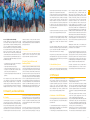
FIVB international referee Pietro Sacco with line judges Gstaad Grand
Slam 2014
–Line judges: the overall number of line judges must be
equal to 3 times the total number of courts used during the
busiest days of the event;
Recruited line judges must be active or former qualified
referees (Beach or Volleyball) for their respective National
Federations. For the Qualification Tournament and the
preliminary matches of the Main Draw, two line judges must
officiate at each game. In the semi-final and final matches
four line judges are mandatory.
For events where more than 10% of the names of the
auxiliary officials (line judges and scorers) officiating at the
event have changed compared to the list submitted for FIVB
approval, or in other extreme circumstances, (e.g. line judges
not meeting quality, age, or referee certification requirements)
the FIVB Referee Delegate can decide not to use local line
judges for the entire event or to implement the appropriate
sanctions (see Chapter 10 for further details). In this case, for
the semi-finals and finals, the Referee Delegate will have to
select line judges among the Referees officiating at the event
concerned.
E. Referee Clinic and Extra Clinic
The Referee Clinic should be set up in a hotel conference
room (if possible in the hotel accommodating the referees)
and should include a projector and screen, plus white board
with markers.
For all new tournaments and tournaments that have been
reported as experiencing problems with the quality of the
refereeing at the preceding edition, the presence of all of
the Host NF referees at an extra day clinic to be staged the
day before the standard referee clinic will be mandatory, (in
due coordination with the Extra Clinic for auxiliary officials
and key court personnel, if applicable).
F. Responsibilities
Referees are responsible for:
–
Checking that the court set up and equipment
corresponds to FIVB requirements;
–Verifying the availability of the required court personnel;
–
Checking that the information included on the
scoreboards is correct;
–Verifying that the field of play does not present any
danger to the athletes;
–Coordinating the proper match protocol procedure;
–Reporting any problems related to athletes’ uniforms to
the relevant FIVB official;
–Officiating their match (es) correctly and apply the
requirements of the Rules of the Game, including all on
court Protocols (e.g. Medical Injury, Ball Mark, Protest
Protocol, etc.);
–Ensuring that the score sheets are delivered to the Referee
Manager at the end of each match or complying with the
e-scoresheet implementation requirements;
–Testing during FIVB beach volleyball events throughout
the season (FIVB World Tour Open events mainly) any
amendments related to the Rules of the Game with the
presence of top ranked athletes and all parties involved;
–Officially implementing changes to the Rules of the
2
Game, as approved by the FIVB governing bodies, at all
FIVB beach volleyball events.
–At FIVB World Championships and FIVB World Tour Grand
Slam and Major events, only on the centre court, the
Referee must implement the procedure for “1st Referee
communication with the audience”.
–At every tournament at FIVB Beach Volleyball events,
only on the centre court, the Referees must implement
the Heat Stress Monitoring Protocol (Wet Bulb Globe
Temperature measurements).
–Referees wishing to withdraw from duty must inform
the FIVB and Referee Commission member concerned
within 48 hours to allow for a decision to be taken as
to whether the reason for withdrawal can be treated as
“force majeure”. If this is not the case, and if they have
already signed an agreement, their future participation in
FIVB tournaments will be restricted for a minimum of one
year. Moreover, last minute withdrawals by any referees
assigned to FIVB World Championships and FIVB World
Tour events, must reimburse the cost of their international
travel (if already issued) and/or any extra costs incurred
by the late issuing of a new ticket for the replacement
referee.
TECHNICAL ORGANISATION
All referees officiating during the competition must attend
the Referee Clinic starting at 08:30 am the day before
the Qualification Tournament. The theoretical training
of auxiliary officials (line judges and scorers) will also be
held during this morning (or half-morning). The Referee
Manager, in conjunction with the FIVB Referee Delegate,
must guarantee that all line judges and scorers attend
the event’s mandatory Referee clinic at 10:30 am the day
before the start of the Qualification tournament. The
theoretical part of these clinics – with the emphasis on
scoring – must be organised in a venue which fit for the
purpose (i.e. rooms equipped with video Microsoft Power
Point projector, plus white board with markers and desk
space for every participant). The practical part of the clinic,
also including the participation of all court personnel, will
be held during the afternoon. Other referees invited by the
National Federation may also participate in this clinic as
observers.
G. Court Personnel
–Organisers must recruit the following, court personnel,
and court maintenance staff in order to properly run the
event:
–Scoreboard operators: 2 scoreboard operators per court
(outside courts and centre court, if applicable) plus 4
reserves in total;
–Ball retrievers: 6 ball retrievers per court plus 3 reserves in
total;
–Sand levellers: 2 to 3 sand levellers per court plus 2
reserves in total. The volunteers selected to act as sand
levellers must be able to meet the demands of their tasks;
–Athletes’ attendants: 2 athletes’ attendants per court
plus 2 reserves in total;
–Organisers must either ensure that 14 years old is the
age limit for recruited volunteers in general, or that the
court rakers will have a dedicated role, that they must be
minimum 3 per competition court, and that they must
not be younger than 14 years old.
Reserve persons must be available especially when all courts
are in use (i.e. Qualification Tournament (if any) and first
days of the Main Draw competition). Organisers who were
given a score below 4 the preceding year by the Referee
Delegate concerned (BVB/24 Section D: Evaluation of
Personnel) on any of the following job role areas: scorers,
line judges, and court personnel (2 items minimum in the
overall court personnel job related areas), will be required
to host a mandatory 1 full day pre-preparation clinic for
auxiliary officials and key Court Staff the day before the
standard Referee Clinic at their own expense.
36
2
3.3 Coaches
Coaching on the field of play is not permitted by the FIVB.
No Coaching Permitted
Coaching Permitted
FIVB World Championships
1st and second phase of Continental Cup
FIVB World Tour (Grand Slam, Major Series & Open)
Age Group World Championships
Swatch FIVB Would Tour Finals
FIVB Continental Cup Final
Continental Cup Final (at Continental level)
Other Continental events at discretion of the
Confederations
FIVB World Continental Cup Olympic Qualification &
FIVB World Continental Cup Final
Olympic Games
Other FIVB events
If coaching of teams is observed by any FVIB official during an
event where coaching is not permitted, sanctions shall apply.
For details please refer to the FIVB Beach Volleyball Sports
Regulations, Chapter 3, Specific Sanctions and Regulations.
Coaches have a designated area (with a chair and an umbrella
outside the field of play) on all venue courts to allow them
to work and follow the game. Coaches and athletes are
allowed in the mixed zone. Coaches will be able to access
the medical area in order to interact with the medical staff
and to help diagnose, manage and rehabilitate the athletes
before, during and after the competition, as long as there
are no catering services in this area. In addition, coaches will
have the right to receive an accreditation for certain areas
of the venue (excluding the catering, roofed VIP stand and
other areas at the discretion of the Promoter), upon sending
a request through their respective National Federation
directly to the Promoter concerned 3 days prior to the start
of the event.
Coaches may use ground transportation and meals (the same
as the athlete) by paying a flat fee to the Promoter.
Coaching at Age Group events or Continental Cup events is
different. Please refer to specific rules & regulations.
3.4 Venue
A. Choice of the Venue
Organisers must guarantee set up of a venue in accordance
with the standard requirements listed in this section and as
per the layout included in the Marketing section. Organisers
must also provide full insurance to cover any risk of damages
in accordance with the terms listed below.
FIVB areas and working areas during FIVB beach volleyball
events are non-smoking and this initiative should be extended
to the entire venue if possible.
To ensure adequate planning and set up of the venue,
the Organisers must consider several important elements
mentioned below. An efficient collaboration between experts
during the venue planning process is absolutely necessary to
ensure the respect of the following:
–Safety of athletes, spectators, media representatives, VIPs,
etc.;
–Strategic location in terms of concentration of people and
amenities. It is recommended to select a popular location in
order to attract as many spectators as possible;
–
Sufficient number of comfortable seats for general
spectators and VIPs (i.e. minimum stadium capacity of 3,500
37
seats for FIVB World Tour Grand Slam and Major Series
events and min 1,500, max 2,000 seats for FIVB World Tour
Open events);
–Evaluate the possibility of using an existing venue (e.g.
Tennis stadium, indoor facility, etc.);
–Space in the bleachers to give access to the athletes’ guests
and athletes taking part in the Qualification Tournament;
–Sufficient space to set up the facilities, the required number
of competition courts, warm-up courts as well as trade
village, parking, etc.;
–Good visibility from all VIP areas, general stands, etc. and
sufficient distance from the bleachers to the court;
–
Correct orientation of the stadium to fulfil the TV
requirements. Organisers and Host TV Broadcaster must
decide on the stadium’s position to ensure that the main
court is properly placed with regards to the position of the
sun in order to avoid TV production problems (see sections
related to “TV Broadcasting Guidelines” and “Competition
Area”) and to reduce shadows as much as possible. The
TV platforms should be foreseen in the planning phase in
accordance with the TV camera position requirements;
–Prevision of the necessary space to set up an artificial
lighting system (if any) and sound system;
–Correct placement of the 2 electronic scoreboards (if any);
–Easy access from the main roads/parking areas, etc. to the
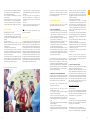
Gstaad Grand Slam men's medal ceremony 2014
venue and proper flow of spectators and personnel. General
access and access gates must be foreseen in sufficient number
according to the local safety and construction measures;
–Distance from the event’s official hotel.
- Providing a good quality Internet connection: to provide
high speed Wi-Fi internet to the stadium guests as a service
to satisfy the increasing demand for digital content and to
attract the people to come to the stadium. Also to provide
a high speed Internet connection at the venue, preferably
wired, or password protected if wireless
–Suggestions for side areas, VIP-areas (boxes, skyboxes,
platforms etc.);
–Provision of a time schedule for different types of venue in
terms of transport, erection and dismantling;
–Conduction of site inspection/performance measurement
during the implementation phase;
–Check the mandate during erection and final acceptance of
the construction work;
–Other services to be agreed by the parties.
The Promoters may use the hotels/structures in close proximity
as event facilities (e.g. press room, athletes’ lounge, etc.)
whenever possible and use permanent facilities which may
offer all amenities. The facilities should be easily accessible at
all times. In the case of the athletes’ lounges, press centre,
coaches mixed zone, etc. being located at a permanent facility
(e.g. host hotel), the Organiser must ensure that the facility’s
operating hours can accommodate the tournament schedule.
The FIVB advises Promoters to contact the FIVB Venue
Construction Consultant (if any), or any other FIVB Consultants,
with a view to contracting their services (at a fee) and to
finalizing their venue plan in accordance with the detailed
layout included in the Marketing chapter and the Venue
sections of this Handbook. The FIVB Venue Construction
Consultant services include various consulting, controlling and
implementation phases as follows:
B. Village
–Venue plan analysis including feasibility, proposals on
cost optimizations, sustainability, security, orientation of
the venue, impact on the environment, etc.;
–Proposals on lighting systems for night televised matches
and on the Public address systems;
–Proposals for the global look of the venue as well as
grandstand structures including internal walkways;
The FIVB asks that the requirements of European Buildings
Standards (or equivalent) are respected in order to guarantee
the compliance with the following obligations:
The Promoter is required to allocate space around the Venue
in a dedicated area for the organisation of side events (with
the participation of celebrities, special guests, local authorities,
athletes, officials, media, sponsors, etc.) and to conduct PR
activities to attract public and media interest.
The Promoter must also guarantee the installation of a Village
(booths) both for International and Local Sponsors and for the
FIVB Beach Volleyball Promoters (or Organisers of upcoming
events) in order to help them best advertise their tournament,
if required.
C. Temporary Tribunes
–The tubular and/or temporary tribunes must be built/
assembled by an authorized local construction company.
These tubular and/or temporary tribunes must be built/
38
Organisers are requested to follow these requirements and
provide the FIVB Technical Supervisor with copies of these
documents as proof that they have fulfilled their obligations
during the onsite inspection visit (if any) or before the start
of the competition during the venue homologation. If
Organisers do not present the insurance and the certification
of correct set up of the structure before the start of the
competition, the FIVB Technical Supervisor has the authority
to suspend the event based on his/her evaluation. In this
case, the Organiser must reimburse all athletes for their
airplane tickets.
2. Athlete’s Lounge
D. Facilities
39
Minimum 50 m2 with air-conditioning and direct access to
the court equipped with:
–20 chairs;
–Tables;
–1 billboard (min. 2m x 1m) displaying competition results;
–Wireless LAN and/or internet connection to be available for
athletes at the venue;
–Water, snacks, fruit and ice available at all times;
–
Wireless connection for the athlete’s computers, 2
mandatory computers for single gender and 4-6 for double
gender events, plus 1 printer.
3. Athletes’ Locker Room
Facilities can either be set up temporarily or use existing
structures located at walking distance from and ideally facing
the venue. If facilities are set up in an existing structure, the
Organiser must ensure that the operating hours are in line
with the tournament schedule, fulfilling the communication
requirements established by the FIVB.
Minimum 30m2 with direct access to the court equipped
with 10 chairs or benches and mandatory lockers.
This area must be located close to the athletes’ lounge but
must not be part of it. In case of a double gender event,
two separate locker rooms must be provided (one for each
gender).
1. VIP Tribune
4. Referees’ and Line Judges’ Lounge
A VIP section for a minimum of 150 or 200 people for an
FIVB World Tour Open Event (single and a double gender
event respectively), a minimum of 350 people for an FIVB
World Tour Grand Slam and Major Series event must be
guaranteed. If necessary the promoter can set up a roof
above the VIP section. However, this is not a requirement
of the FIVB. The FIVB recommends applying the minimum
seating requirements for a single gender FIVB World Tour
Open event as follows:
Minimum 30 m2 with air-conditioning equipped with:
–15/20 chairs;
–1 table;
–1 whiteboard;
–Water, snacks, fruit and ice available at all times.
Referees and auxiliary officials must have separate areas
(meeting rooms, lounge with privacy) in accordance with
capacity, security and comfort requirements.
5. Locker Rooms for Referees and Line Judges
Minimum 30 m2, if possible, with direct access to the court
equipped with:
–10 chairs;
–2 tables;
–Min. 20 lockers (or secure room).
If no locker room is available, Organisers are recommended to
either supply mandatory lockers in another area or specifically
dedicated security for the referees and auxiliary officials’
personal belongings.
information, and announcements;
–Neat and well-presented bar and catering facility.
–Adequate password protected Wi-Fi connection in every
press working room. This Wi-Fi connection must be
available until the final competition day, four hours after
the final match. The bandwidth should be good enough to
allow for efficient uploading requests by all photographers.
2
–VIPs (42);
–FIVB (30);
–Journalists (50);
–Radio & TV commentators (10);
–Athletes and coaches (150);
–Medical personnel (10);
–Guests and sponsors (50);
–Referees (20);
–FIVB International Sponsors and Partners (35);
–Announcer, Producer, and DJ (3).
–The Promoter must provide, whenever possible, a roofed
VIP area and covered seats (rain/sun protected) for the
players (min. 20) at the centre court throughout the two
final days of the competition.
–The gate for the VIP and guests tribune must be clearly
identified with English signage and must be separate from
the main public entrance if possible.
–The area reserved for journalists and TV commentators
must be positioned in line with the net to allow the best
possible view of the competition.
–The athletes’ reserved area must not be adjacent to the
referees’ area.
–A catering facility with fruit and drinks for VIPs, sponsors
and journalists should be provided on each day of the
event.
–In case of a double gender event, the number of seats
allocated to the athletes should be doubled accordingly.
TECHNICAL ORGANISATION
assembled meticulously and an official security certificate
must be delivered;
–The construction company must guarantee that solid and
quality material only is being used for the structure and
that resistance tests are carried-out;
–Competent local authorities must recognize the legality
of the security certificate and carry out the necessary
inspection visits for all tubular structures and supporting
foundations in order to assure that the facilities conform
with the building codes (a written approval must be given
to the FIVB);
–The foundations must be solidly fixed to and firmly support
the body of the structure;
–An insurance policy against accidents must be taken out for
a minimum amount of USD 1,500,000 for the FIVB World
Tour Grand Slam and Major Series events, USD 1,000,000
for FIVB World Tour Open events. The insurance policy
must be sent to the FIVB 60 days before the start of the
event, and it must include details of the construction of the
tribunes to cover any risk of damages and accidents, (e.g.
stands collapsing, faulty or incorrectly installed/torn down
equipment/installations/facilities, damages arising out of
the conditions of the event itself, etc.), with the insurance
certificate provided to the FIVB Technical Supervisor on the
day of venue homologation;
–Certification of the correct set-up of the bleachers and any
other temporary facilities is needed.
For full details of essential equipment for the Press Center
and Interview Room (to be strictly respected) see the
Communications chapter 5.
8. Mixed Zone
6. Catering – Lunch Area
The food and refreshment pavilion must be protected from
wind and sun. Ideally it should be fitted with a floor. The
promoters must carefully check the food quality and quantity
at the hotels and the venue. A basic level of nutrition including
pasta, rice, chicken, vegetables etc. must be available and
comply with certain quality standards to ensure the athletes’
essential needs are met.
7. Press Center
Minimum of 40/150 m2 for FIVB World Tour Open and FIVB
World Tour Grand Slam and Major Series respectively with air
conditioning, located with a view of centre court and with
easy access to the mixed zone and other courts, equipped
with:
–Working tables with chairs to accommodate a minimum
of 50 journalists for FIVB World Tour Open, 100 journalists
for FIVB World Tour Grand Slam and Major Series (tables to
be fitted with two power sockets in front of each chair for
journalists and photographers);
–1 desk with an international landline phone, printer and
dedicated LAN cable internet connection for the FIVB Media
Operations Delegate;
–1 Press Center notice board (min. 2m x 1m) for displaying
competition results;
–1 billboard (min. 2m x 1m) for displaying competition
results;
–Plug sockets (sufficient);
–Access to a fax machine (backup must be available) with an
international line;
–1 or 2 international telephone lines (at the welcome/reception
desk);
–3 to 5 computers (Windows English version, Word, Excel,
Adobe Acrobat Reader software, high speed internet
access);
–A minimum of 3 laser printers;
–Wireless (password protected) high speed internet access
for journalists and LAN cables for photographers;
–Wireless (password protected) high speed internet access
or LAN cable for the Media Operations Delegate;
–Network card for internet access (for the Media Operations
Delegate) if required;
–2 photocopying machines (30 copies per min.);
–Area to display the FIVB Press Kit as well as the FIVB
Sponsors and partners information;
–20 pigeon holes/document trays for duplicate results,
Located next to the main court, outside the competition
area (out of reach from spectators, court personnel and
officials), it must be easily identified with the official mixed
zone backdrop (see marketing Branding Kit). It should be
located close to the exit of the centre court but possibly
not be affected by the sound of the PA system. The public
should not be allowed direct access to the mixed zone area
so that the athlete can be interviewed by the press without
interruption. This area must be used immediately after the
end of a match by the Host Broadcaster or individual media
representatives (e.g. radio stations) wishing to conduct one
to one interviews and discuss post-match analysis with the
athletes. This mandatory area must be supervised by the
Media Operations Director along with the Media Operations
Delegate (if any).
9. Interview Room
The interview room is recommended and if required by the
promoter it should be minimum between 40 and 60 m2
and easily accessible for accredited journalists and athletes
during the entire duration of the event. The interview room
must be located next to the mixed zone and media center,
and equipped as follows:
–Air conditioning
–Tables and chairs for a six-person head table/tribune;
–A minimum of three microphones on the tables;
–1 portable microphone;
–A minimum of 25 chairs for media representatives;
–A backdrop featuring the Title of the FIVB beach volleyball
Event, the local title of the event, the FIVB logo, the FIVB
Sponsors and the local Sponsors as per the guidelines laid
out in the marketing chapter;
–Towels and bottled water should be available for the
athletes at the head table/tribune;
–Water should also be available for the press in the interview
room.
–Speakers should preferably be positioned at the back of
the room to avoid appearing in photos and TV coverage.
10. Working Rooms for Organisers and FIVB (6 total)
Minimum 16 m2 each with air conditioning (or placed in the
shade with umbrella) for security personnel (one room), court
manager (one room), technical control (one room), organising
committee (one room), FIVB Officials (one room). The Technical
Control, Organising Committee and FIVB Officials’ working
rooms must each be equipped with:
40
The FIVB Medical Delegate must have a table in the FIVB official
room to work appropriately.
Technical Term sheet for the Implementation of
Internet Video LIVE Streaming
1. TECHNICAL REQUIREMENTS
1.1. Provision of a dedicated physical internet connection
with a minimum UPLOAD bandwidth of 8 Megabit/sec
Unas media productions requires access to a dedicated physical
internet connection with a minimum UPLOAD and DOWNLOAD
bandwidth of 8 Megabit/sec for Internet Video LIVE Streaming &
LIVE Scoring purposes on site.
As a high amount of data is constantly uploaded to a streaming
server while an Internet Video LIVE Stream is processed, a reliable
high UPLOAD and DOWNLOAD bandwidth – in this case 8
Megabit/sec – is crucial for successful production and broadcast.
The provided internet line may not be shared with any other
party (e.g. Press/Media, tournament office, etc.).
The required physical internet connection with a minimum
UPLOAD and DOWNLOAD of 8 Megabit/sec has to be ordered
by the local Organiser in due time and a written booking
confirmation must be forwarded to Unas Media Productions no
later than 8 weeks prior to the start of the event.
Requirements:
–Provision of a dedicated physical internet connection with a
minimum UPLOAD bandwidth of 8 Megabit/sec
–Flat rate for generated streaming traffic
–Provision of a router with at least 4 Ethernet ports
–Installation on site no later than 3 days prior to the start of the
Main Draw tournament or the day prior to the technical setup
41
In case the local ISP (Internet Service Provider) requests more
specific information, please contact Unas Media Productions
immediately.
1.2. Provision of a main streaming & production working
position
A main streaming and production working position in the centre
court tribune is required.
Please take into consideration that the main streaming and
production working position has to be located in a way that the
cabling distances (to centre court and the “most popular” side
court) do not exceed a distance of 100 meters.
Requirements:
–Access to the dedicated physical internet connection with a
minimum UPLOAD and DOWNLOAD bandwidth of 8 Megabit/
sec (as in 1.1.)
–Constant, reliable power supply (230 V) to the working
position
–Working space for 2 shuttle PCs, 1 Laptop provided by Unas
Media Productions & Audio/Video equipment
–Provision of 2 local SIM Cards (at the expenses of Unas Media
Productions
–Tables & chairs (minimum width: 2.5 meters)
–Weather protection (wind, rain, sun)
–Unobstructed, clear view of centre court (with all court lines
visible), the referee, and the scoreboard
–Collection of the TV feed directly at the working position (as in
2.2.)
–Provision of audio and video cables by the HTVB for all televised
match days ex OB van to Unas Media Productions workstation
As Unas Media Productions will operate a LIVE Scoring System
for internal purposes, a clear and unobstructed view of the court,
the scoreboard & the referee is absolutely crucial (see 1.3.).
1.3. Provision of a LIVE-Scoring Working Position
Unas media productions will operate a LIVE scoring system
on each covered court for internal purposes, which is why a
working position in the stand of centre court and the “most
popular” side court is required. On centre court the provision
of this position will only be necessary if the main streaming &
production working position is not located in the centre court
tribune. Working place should be protected from sunshine and
rain.
Requirements:
–Access to a physical LAN connection or a non-public Wi-Fi
network (in the area of centre court and the “most popular”
side court)
–Working space for 1 ticker operator
–1 table per court
–1 chair per court
–Appropriate/sufficient weather (wind, rain, sun) protection,
e.g. a tent
–Reliable power supply (230 V) to the working position
–Unobstructed, clear view of the court (with all court lines
visible), scoreboard & referee
The data generated by the LIVE Scoring Software is at a
minimal bandwidth, which is why a dedicated internet line
will not be required, but any available non-public Wi-Fi or
LAN connection on site shall be shared with Unas Media
Productions. Please note that the access to a physical LAN
connection or a Wi-Fi network is crucial for the operation of
the LIVE scoring system.
2.3. Production & Broadcasting Setup
2
of Unas Media Productions
If TV production or full coverage (of all matches on centre
court) by the host broadcaster is not available at an event, the
following setup on centre court and the “most popular” side
court has to be ensured.
TECHNICAL ORGANISATION
––1 computer (Windows English version);
––1 laser printer;
––1 photocopying machine;
––1 international telephone/fax connection (with email account);
––Adobe Acrobat Reader software;
––For the results system and files transfer via Internet, Organisers
must install in the Technical Control working room:
––1 computer (Pentium recommended), with an English
keyboard and MS English Windows or later loaded with MS
Word and MS Excel software;
––1 Netscape or MS Explorer software (internet browser);
––1 Eudora (email software);
––1 FTP software (Cute FTP - Freeware or other);
––1 laser printer;
––1 modem (fast 28.8 bps recommended);
––1 modem line;
––1 fax connection and machine;
––4 cellular telephones to be provided to the Technical
Supervisor, Referee Delegate, Media Operations Delegate and
TV Coordinator to allow them to access all communications
relevant to the tournament upon their arrival on site;
––1 Internet Wi-Fi connection.
2.3.1. The Standard Setup – centre court stadium
2. PRODUCTION SETUP
2.1. General Information
Unas media productions will produce and stream ALL matches
scheduled on centre court & the “most popular” side court.
Production start: Qualifications
Production end: Quarter final and/or semi-finals and/or finals
depending on when the start of the HTVB production has
been scheduled.
The local promoter will be informed in due time whether Unas
Media Productions will cover and produce 1, 2 or 3 courts.
In case Unas Media Productions only produces 1 court, the
Sport Presentation will always be set for centre court.
Please inform Unas Media Productions if any internal video
production (VidWall, etc) is planned by the local promoter and
forward the contact details of the people in charge.
As indicated in the above picture, the required camera position
on each court where production will take place is located in
the stand at the end of the court (behind the shorter side of
the court). Unas Media Productions will set up 1 static camera
on each court, which will not be operated manually but set to
automatic operation.
All court lines (on both court sides) have to be visible and
the camera view cannot be obstructed or affected by the
audience.
2.2. Collection of the host broadcaster’s production feed
All matches scheduled on centre court, which are produced
by the host broadcaster will be collected by Unas Media
Productions at the main streaming working position (on
centre court) and processed as Internet Video LIVE Streams.
The host broadcaster shall be informed by the local promoter
that the audio & video cabling from the OB Van (or the closest
production unit) to the main streaming & production working
position has to be secured.
Therefore the host broadcaster is requested to run the cables
to the main streaming and production working position and
provide the full production signal (see below).
Therefore a platform with a minimum area of 1 by 1 meter,
on top of the stand has to be considered.
If a designated TV platform in the stand at the end of the
court is available during the tournament week (before the
production start of the local host broadcaster), Unas Media
Productions will most likely make use of that platform.
The contractual partner/technical director is requested to
provide the best possible camera position as determined
above.
An appropriate solution for a camera set up in the centre
court stand.
2.2.1. Unas Media Productions only processes the following
audio/video signals:
Video format:
–Analogue Composite, PAL or NTSC
–Video cable with BNC or RCA connector
Audio format:
–International sound
–Plus English commentary (if available)
–Analogue, mono or stereo
–Microphone cable with male XLR or RCA connector
42
As in any (static) streaming production, this is the ideal camera
position, especially as it provides the best possible view for the
LIVE Stream customer.
As indicated in the picture below, the pole has to be set up at
a minimum distance of 5-6 meters to the court/baseline and
has to be at a minimum height of 4 meters – the minimum
height has to exceed the height of the security net, in order
to guarantee a clear, unobstructed view from that position of
the court (with all court lines visible).
–Analogue video cable (RG 59) with BNC jack
–Analogue microphone cable with XLR jack male/female
The amount of cable required depends on the individual setup at each tournament, which is why the local promoter is
requested to measure the approx. cabling distances from the
main streaming and production working position to the
1. main camera on centre court
2. main camera on the “most popular” side court
The rental of the required audio and video cables will be at
the expense of Unas Media Productions.
Therefore the local promoter is requested to provide a quote
to Unas Media Productions in advance of the tournament
and wait for an approval of the costs.
3. ORGANISATIONAL REQUIREMENTS
3.1. Main contact of Unas Media Productions
The main camera is set up on a tripod and in static use only, which
is why a camera man will not be on spot during the matches. The
camera should be facing the banner in position 16.
Name: Drazen Josipovic
Department: Production Management
e-mail: [email protected]
office: +4312563141321
mobile: +43664603141321
Requirements:
–Elevated camera platform/camera position in the stand at
the end of the court (behind the shorter side of the court)
–Minimum distance to the baseline 7-8 meters
–Minimum height 5-6 meters
–A direct, unobstructed view of the court (all court lines
visible)
–Reliable power supply (230 V) to the camera position
Drazen Josipovic will be the main contact for any related
issues, both organisational as well as technical.
3.2. Tentative tournament schedule & Entry-list
2.3.2. Advanced Setup – Side court production setup:
If Unas Media Productions plans to cover more than just the
centre court, the tournament office is requested to clearly
define the “most popular” side court (outside centre court)
prior to the tournament start and to prepare all communicated
requirements in due time.
Requirements:
–An extra pole, set up centrically behind the shorter side of
the court
–Minimum distance (to the baseline): 5-6 meters
–Minimum height: 4 meters
–Reliable power supply (230 V) to the camera position
–Clear, unobstructed view of the court (with all court lines
visible)
2.4. Rental of audio and video cables (at the expense of
Unas Media Productions)
Unas Media Productions plans to cover the “most popular”
side court, where most matches (outside of centre court) will
be scheduled.
43
Please note that Unas Media Productions seeks to rent the
required audio and video cables on site, which is why the local
promoter is requested to provide the best possible support,
in order to find and approach TV stations, production
companies, etc.
Please note that the following cables will be required:
As Unas Media Productions always seeks to gain as much
information as possible prior to the tournament, the local
promoter is requested to forward any relevant information to
[email protected] and [email protected] as soon as
it is available.
–Tentative tournament schedule (starting times, number of
matches per day & per court)
–Entry-lists
–Tournament Bulletin
3.3. Schedule communication on-site
During the tournament week, the local promoter is requested
to put the Sport Presentation team on the internal mailing
list for communications regarding schedule announcements,
updates, changes and athlete information.
The local promoter provides all relevant information (schedule,
team information, injuries, etc.) by email and hardcopy print.
All communications related to the schedule must be well
organised and accurate during the entire tournament as
the success of the streaming project depends heavily on the
accuracy of the schedule communication.
Therefore the local promoter is requested to provide the
following:
–Provision of a hard copy print at the Main Streaming &
Production working position
–Sending of the schedule (fixtures, starting times, court id) by
email in a .pdf format
–Access to an online version of the schedule (starting times,
fixtures and court allocation) and the results
2
If the “most popular” side court is not surrounded by tribunes
but only, for example, by security nets, the following setup is
likely.
The local promoter is requested to set up an extra pole in a
central position behind the shorter side of the court. On top
of that pole a static camera will be placed by Unas Media
Productions. The local promoter shall contact the Unas Media
Productions as early as possible to identify the “most popular”
side court as well as to confirm the requirements on the extra
pole needed.
TECHNICAL ORGANISATION
Camera position – “Perfect Shot”:
3.4. Accreditation
The local Organiser is requested to prepare accreditations for
the onsite production team of Unas Media Productions and a
total of 4 people.
As Unas Media Productions in this case is not only the
production company, but also a representative of the rights
holder, access to all areas must be granted.
3.5. Accommodation & Transfer
The local promoter is requested to communicate special room
rates at the official tournament hotel(s) prior to the tournament
start and as soon as relevant information is available.
The local promoter is requested to offer shuttle transfers from
the airport to the hotel, from the hotel to the venue and vice
versa.
3.6. Visa Application
Since Unas Media Productions’ employees may require an
official invitation letter for the visa application (only for
countries outside of Europe), the best possible support from
the local promoter should be assured.
Unas Media Productions will forward all relevant personal
details (name, position, company, passport copy, etc.) to the
local promoter in due time prior to the event if a visa is required.
3.7. Internet and Workplace Setup Costs
It is understood that each promoter will send the detailed
quote for the above services to FIVB eight weeks before the
start of the event at latest. The FIVB will reimburse the promoters up to 4’500 Euro per event and continent (up to 2’000 EUR
in Europe, 3’400 USD in America and up to 4’000 USD in Asia)
only after having approved the costs and upon receiving the
respective invoice for the dedicated internet line and tent (of
minimum 3.0 m X 3.0 m) to accommodate the staff of Unas
Media Productions on the secondary courts.
All related communication has to be addressed to FIVB TV &
Marketing Department at [email protected] copying
[email protected]
11. Coaches Areas and Mixed Zone for Athletes
and Coaches
The Promoters must set up a designated area for coaches at
the venue in the general grand stands and around the playing
area for the outside courts. They also have to provide them a
separate area either under a tent, in a room, in a shaded area
or anywhere else (e.g. at the hotel if in proximity) with plug
sockets, where the coaches can meet with their athletes. Such
areas must be secure and only open to accredited athletes
44
The playing area
2
scheduled or not, to allow for unannounced anti-doping
controls performed by the FIVB or other anti-doping authorities
as provided for in the World Anti-Doping Code.
TECHNICAL ORGANISATION
and coaches. The area must accommodate up to 4 teams and
their respective coach (es) for single gender events and up to 8
teams and their respective coach(es) for double gender events,
as well as include adequate numbers of chairs and tables.
15. Storage Room
The FIVB and the Promoter must strictly follow the requirements
for the coaches’ mixed zone, as well as the coaches’ access to
physiotherapy treatment rooms for consultation with athletes.
12. Medical Services Area
This room with a minimum surface of 25 m2 has to be
secured and locked. Direct and easy access to the court for
all equipment (such as balls, posts, net, lines, scoreboards,
speed ball device, panels, billboards, water pipes, wind sleeves,
towels, rakes, boxes, etc.) is needed.
Minimum of 30 m2 equipped with:
16. Other Facilities
–Bed(s) (at least one);
–Basic medical equipment;
–Basic medications;
–Defibrillator and oxygen;
–Equipment to assess and treat dehydration and hyperthermia
(including electronic rectal thermometer accurate to >44°
and equipment for emergency cooling and intravenous
treatment);
–Stretcher(s);
–Ice machine;
–Telephone;
–Scanner.
In addition, the following is required on site:
An ambulance with defibrillator must always be available.
–Paramedical personnel must be present at the venue during
the entire competition.
–The ambulance shall be parked as close as possible to the
venue, adjacent to the medical area.
13. Massage and Physiotherapy Room
Minimum 30 m2 equipped with:
–2 massage tables for single gender events and 4 massage
tables for double gender events;
–Physiotherapy equipment.
The medical service area and massage/physiotherapy rooms
must be protected and separated from the open air and a
heater must be installed in the rooms, if necessary.
It is recommended that a separate facility is constructed for
team physical therapists and physicians, with a minimum
of two treatment tables. Also, it is recommended that a
procedure is established to ensure that the physical therapists
have the appropriate credentials for accreditation to events.
This accreditation is necessary to allow physical therapists and
physicians court-side and on-court access in case of a medical
time-out during games.
14. Doping Test Section:
Minimum of 25 m2, divided into 3 sections - 10 m2 waitingroom, 10 m2 sampling room, and toilet - equipped with
refrigerator and refreshments and a TV. The waiting room
should be well supplied with refrigerated bottled soft drinks
and water. The refrigerator should be lockable.
The Doping Control Test section must always be prepared as
described, regardless whether doping controls have been
45
–4 Showers for athletes;
–1 Logistic warehouse;
–1 Accreditation Area;
–Platform(s) for TV Cameras (as per the TV Broadcasting
Guidelines, chapter 6);
–English Guide Commentary positions (equipped and located
as per TV Broadcasting Guidelines, chapter 6);
–Mixed zone area for TV interviews immediately after the
matches;
–1 Area for disabled and handicapped people. This area (for
approximately 10 people in wheel chairs and 10 assistants)
must be provided at court level or in the VIP section. A
surface to allow the passage of people in wheel chairs must
be provided from the parking area to the stadium;
–
Sound system and area for players/mixer equipment,
including a wireless switch on/off lapel microphone for the
1st Referee on centre court integrated with the announcer/
DJ mixing table (mandatory for FIVB Beach Volleyball World
Championships and FIVB World Tour Grand Slam and Major
Series, recommended for FIVB World Tour Open events);
–Temporary toilets should be located near the bleachers (10
for the public, 2 for athletes, 4 for VIPs). Toilets for athletes
must be easily accessible from the athletes’ lounge, the locker
room and the playing courts and there has to be a “toilet
wagon” (running water) for each gender in or next to the
athlete’s area and/or at the side court venue. Plastic cabinets
without running water are strongly discouraged;
–Disposal bins for paper, food, empty bottles, etc. (as many as
necessary to keep the area neat and clean during the entire
duration of the event);
–Entrance.
E. Competition Area
Organisers are responsible for ensuring the proper preparation
of the competition area with high quality visual standards and
high technical/safety levels in accordance with the Official
Beach Volleyball Rules. The court layout must respect the FIVB
regulations with regard to the distance between the bleachers
and the panels, etc.
A playing area of min 26 m. - max 28 m. X min 18 m, – max.
20 m. must be set up with the following measurements:
–Court: 8 m X 16 m;
–Free zone: 5 m minimum - 6 m maximum on each side;
–Free passage way: 3 m.
1. Orientation
3. Sand Requirements
Many factors must be evaluated concerning the choice
of the orientation of the long axis of any beach volleyball
court. The angle and the direction of the sun at different
hours during the day and the season are major elements
to be carefully taken into consideration in the planning.
Organisers must study in detail the orientation of the courts
in order to minimize any adverse effects from the sun during
broadcasting time, such as the sun facing both the main TV
cameras, with the aim of reducing shadows during televised
matches.
The VIP tribune must be, if possible, built close to the main
road to allow the athletes, journalists and VIPs to easily
access the stadium.
The stadium’s net line should be oriented towards the
sun especially during the main matches. Outside courts
must be orientated in a similar way to the centre court. In
areas affected by strong wind, the stadium structure must
be oriented in a way that protects the main court and the
outside courts.
Name
Fine gravel
Very Course sand
Coarse sand
Medium sand
Fine sand
Very fine sand
Silt and Clay
2. Dimension
The playing court of FIVB International competitions is a
rectangle measuring 8 m. X 16 m. surrounded by a free zone
of a minimum of 5 m./maximum 6 m. from the end lines and
the side lines, and with a space free from any obstruction up
to a minimum height of 12.5 m from the playing surface.
Particle Diameter
2.0 mm
1.0 mm - 2.0 mm
0.5 mm - 1.0 mm
0.25 mm - 0.5 mm
0.15 mm - 0.25 mm
0.05 mm - 0.15 mm
below 0.05 mm
Spec. (% ret. on sieves)
0%
0%-6%
min of 80%
max of 92%
7%- 18%
not greater than 2.0%
not greater than 0.15%
The above particle size requirements allow for excellent
on-court drainage and are essential if the competition
court is to be able to successfully handle all weather
conditions. It is important that the sand is also free of
any organic material.
Particle Shape:
The recommended sand qualities for beach volleyball court
installations are as follows:
–Physical properties;
–Be naturally weathered;
–Be sub angular/rounded;
–Not be acquired from a crushed rock source.
The selection of the particle size gradation must conform as
closely as possible to the above table.
46
2
Mikasa balls should be provided to the athletes upon request
for the training sessions. Organisers may ask for a deposit
from athletes in exchange for the balls (athletes are also
responsible for the loss of balls during training sessions).
TECHNICAL ORGANISATION
The Sand can make the Difference
secure a minimum of 1 official warm up court for each gender
at the venue (total 2) – minimum 2 official training courts for
each gender (total 4) at the venue or reachable by shuttle
service (provided by the Promoter) at the latest two days prior
to the event.
3. Warm-Up Courts
The FIVB requires that Promoters receive homologation of the
sand from Hutcheson Sand and Mixes, unless they are using
the same sand quality as the previous year. All promoters
hosting an event for the first time, and those events where
the quality of the sand was declared to be of poor quality
must secure the approval of a sand sample from Hutcheson
Sand and Mixes. Each sample, up to 1 kg from different layers
of 40 cm, must be sent to the Hutcheson Sand and Mixes
consultant properly labelled.
FIVB Sand Specifications
Sub-angular particles:
-increase soft texture of sand
-Increased safety for players (less abrasive than angular
particles)
Contamination:
-Sand MUST be free of contaminants i.e. organics, shells,
coral or any other foreign abrasive materials
Contaminants change the physical properties of the playing
surface and potentially results in injury or a non-playable court
surface.
Sample Submission/Packaging:
-Sample should be approximately 0.5kg to ensure a
representative sample
-Place sample in a firm plastic container
-Container must withstand shipping to Hutcheson’s Lab in
Canada
responsibility to check the sand quality together with the
Promoter as soon as possible.
2.Promoters shall maintain safe playing conditions on court
and proper drainage should be utilized throughout the
entire duration of the event.
Organisers must always have machines available to turn the
sand in order to avoid any contingency situations.
The FIVB officials will also monitor the accurate quality, depth
and levelling of the sand on all courts during the inspection
visit on site prior to the event (i.e. before the court and the
tribunes are completely set up) for final approval as well as
during the event (at different times of the day and especially
in wet weather).
–The FIVB will assign Mr. Knapton to all the events where the
sand results were poor. These inspections (a minimum stay
of 2 days plus fee) will be at the Promoter’s expense.
The Technical Supervisor may decide to cancel an event if the
quality of the sand is unacceptable, may lead to injury or if
the deadline to change the sand, as per FIVB regulations, was
not respected. A sanction of up to USD 100,000 may also be
imposed by the FIVB to the Promoter. Should the event be
cancelled due to the above mentioned reason, the promoter
will be solely responsible for any expenses related including
but not limited to the cost of airplane tickets of the teams,
referees, FIVB officials, etc.
5. Service Zone
Submission forms:
-Forms must be completed and included with sample
-Samples without proper documents may be seized and
destroyed
-A Hutcheson Sample Submission Form MUST accompany the
sample and be completed entirely in order for sample to be
processed
-Proper shipping documents for DHL/FED-EX must be included
-Customs will destroy any samples that are not properly I.D.
4. Playing Surface
The court and playing surface must be made of levelled sand
(as flat and uniform as possible) with good drainage and free
of rocks, shells or dangerous particles that may cause cuts or
injuries to the athletes. It is recommended that a tarpaulin
is provided for use as a cover for the central court in rainy
weather conditions. The sand must be sifted prior to the event
whenever a natural beach is used (if deemed necessary).
1. The sand conditions must be the same on the centre court,
side courts and warm up courts. If concerned about the
quality of the sand, the Technical Supervisor must send
a sample to Hutcheson Sand and Mixes. It is the FIVB’s
47
The service zone is the area behind the end line and between
the extensions of the two side lines. In depth, the service zone
extends to the end of the free zone.
A net of a minimum height of 3m must separate all adjacent
courts. Additional courts may be required by the FIVB
depending on daylight hours and weather conditions.
Only the FIVB Beach Volleyball Department or the FIVB
Technical Supervisor may authorize the setup of fewer courts,
in the case of a smaller than expected number of teams
registering for the event.
The Competition Director must ensure an efficient level of
communication between the playing courts and the warm up
court(s) in order to constantly inform the athletes warming
up of the scores on each court and notify them of the start
of their next match. Organisers must appoint one person
responsible for the warm up court area, in regular and direct
contact (by walkie-talkie) with the Court Manager or with the
scorers.
–2 days before the start of the Qualification Tournament: 2
warm up courts from 9.00 am until 6.00 pm must be set up
and available every day of the competition;
–1 day before the start of the Qualification Tournament: All
courts required for the next day of competition, plus one
warm up court per gender, must be set-up from 9.00 am
until 6.00 pm;
–1 day before the start of the Main Draw: 2 courts from
9.00 am till 6.00 pm for the Main Draw teams must be
available (unless the court is required for the Qualification
Tournament);
The Promoter must provide a minimum of 1 official warmup court for each gender at the venue (total 2) - minimum 2
official training courts for each gender (total 4) at the venue
or reachable by shuttle service (provided by the Promoter) at
the latest two days prior to the event.
In case, the side courts are not located within walking
distance, the communication requirements stated in the
Handbook need to be upheld by the Organisers. For a detailed
plan of the use of the competition courts, please refer to the
Chapter 2 of the FIVB Beach Volleyball Sports Regulations.
1. Balls
2. Training Courts
Before the start of the competition, it is mandatory that
the courts are available for the training sessions of the
participating teams (minimum availability for a single gender
event). If men and women events are organised on the same
date and at the same venue, twice as many training courts
must be ready as per the requirements outlined in point 1
above.
G. Sport Equipment
Organisers must choose quality equipment and respect the
FIVB standard requirements.
Four balls must be used on each court (3 playing balls plus 1
reserve). The official ball is the “Mikasa” VLS 300 (leather-like
material 67 ± 1 cm). Mikasa will provide the official balls at
least one month before the event (see details concerning the
quantity in the Marketing Chapter 4). It is strictly forbidden
to add, stick and/or write any special marks, logos and/or
inscriptions of any kind on the official Mikasa balls.
Mikasa should provide every promoter (if not already in
their possession) with a “Ball Inspection Kit” and a “Beach
Volleyball Inspection Manual”. The FIVB Referee Delegate
is required to check whether each ball fulfils the FIVB
requirements.
6. Time-Out Area
The time out area should be located at least 3m away from the
scorer’s table and set up according to the diagram included in
the Marketing chapter.
F. Courts
Two training courts (starting from at least two days before the
start of the event), must be available at each event. Organisers
must also keep all courts available during the competition to
allow athletes to practice or for the organisation of camps,
and/or other activities if previously requested.
If no training court is offered close to the hotel and venue,
courts must then be made available in close proximity and a
shuttle should be provided.
1. Number of Courts
Organisers must set up four (4) courts plus one (1) warm up
court for single gender events, fully equipped as per FIVB
requirements and standards. A minimum of six (6) courts (4
competition and 2 warm up courts) are required if men and
women events are organised at the same time. If a double
gender event (both men and women) is staggered by one day
(e.g. women’s Main Draw starts on Wednesday and men’s
Main Draw starts on Thursday) a minimum of 4 competition
and 2 warm up courts are also required. The Promoter must
One volunteer per court, working under the supervision of the
Court Manager, must be available to coordinate the training
program through the BVB/18 form and to provide athletes
with water, etc. The Court Manager shall work under the
direction of the Competition Director and the FIVB Technical
Supervisor.
Each of the participating teams is entitled to 1 hour’s training
per day upon signing the training session form (teams may be
required to train together in the case of high demand).
2. Handling of the Mikasa VLS 300 balls
The Technical Supervisor in charge at the venue must make
sure the balls are properly inflated and that they have not
been tampered with. the Technical Supervisor must make
sure that the Organisers are well aware of the procedures in
place, including the fact that the balls must not be handled
in any way before his/her arrival on site. The “ball checker”
must be available upon the Technical Supervisor’s arrival (the
designation of a person in charge at the competition site as
the checker is mandatory).
At the venue he/she is responsible for checking the
competition balls as follows:
A. BEFORE THE COMPETITION
1)To meet and debrief the “ball checker” on his/her role
throughout the tournament.
48
must be conducted as per A. 4) above and relevant data
must be collected for the “evaluation sheet for Beach
Volleyball (VLS300)”.
2)Starting the match protocol, Referees assigned to each
match will check the ball pressure of all 4 competition balls
and adjust it if necessary.
Note: the checker must be available for responding to
any calls on the courts whenever a ball is rejected by the
referees or the athletes. This ball should immediately be
checked for pressure, weight and circumference.
3)The Technical Supervisor/Referee Delegate, with the
assistance of the checker, must pay special attention to the
balls when used in rainy weather conditions by replacing
the competition balls as much as possible after each
set/match (if feasible) in order to avoid excessive water
absorption. The balls must also be kept dry by wiping them
with a dry cloth.
5)After the daily final inspection the balls must be stored in
a dry place with none or very low humidity levels. All used
balls must be wiped with a dry cloth before being stored.
C. FINAL DAY OF THE COMPETITION
The Referee Delegate, in coordination with the Technical
Supervisor, must complete the form “evaluation sheet for
Beach Volleyball (VLS300)” and submit it to the FIVB Technical
Department and the Beach Volleyball Events Department as
part of the Technical Reporting process.
3. Net and net system
B. EVERY COMPETITION DAY
3.1 Net system
1)The Referee Delegate and the checker inspect the
competition ball’s pressure, weight and circumference,
including balls from warm up courts, seventy five (75)
minutes before the start of the day/session. This procedure
must be repeated at the end of each competition day
(session). Any ball considered to be over the approved
weight or deformed in shape should be identified and
replaced with a new match ball. The inspection process
Jiangsu JinLing Sports Co., Ltd is the FIVB Official net and net
system supplier for volleyball and beach volleyball. Jiangsu
JinLing Sports Co., Ltd will provide in 2015 for the centre
courts of the FIVB beach volleyball events the following
material:
–One net;
–One set of antennae;
–One referee chair;
2
2)To verify for the correct delivery of beach volleyball balls
delivered from Mikasa. This includes the confirmation of
availability of the “Ball Inspection Kit” as per 3.1 of the
“Beach Volleyball Inspection Manual”, plus the relevant
forms (“check list” and “evaluation sheet”).
3)To ensure that the balls are correctly inflated (0.200Kgf/
cm2 inner pressure – see point 3.2 in the “Beach Volleyball
Inspection Manual”) two days ahead of the arrival of the
Referee Delegate. He/she should also ensure that the balls
are properly stored during the event.
4)The Referee Delegate and the Organiser, including the
ball-checker, must inspect all balls the day before the
competition as follows (beach volleyball standards):
a) Check that the inner pressure of each ball is as described
(0.200 Kg/cm2 inner pressure - see point 3.2. in the
“Beach Volleyball Inspection Manual”);
b) Check that the weight and circumference are as follows:
a. Weight: 260~280g (see point 3.3 in “Beach Volleyball
Inspection Manual”)
b.Circumference: 66~68cm (see point 3.4 in the
“Beach Volleyball Inspection Manual”)
c)While checking the balls, these must be numbered
with very small digits (we recommend to use this same
digits as a code for identifying the balls at each court).
The outcome of the inspection must be filled in on the
form entitled “Beach Volleyball Check List (for the 1st
inspection)”;
d) The same numbering/court code (see above) will serve as
the homologation “signature” confirming that these are
the only approved balls to be used for the competition.
–One set of posts and post pads;
–One set of adjustable court; lines
–One set of post bases.
For detailed instructions please refer to the JinLing Instruction
Manual available on the FIVB website: http://www.fivb.org/
EN/BeachVolleyball/Forms/Organizational/2013_BVB_
InstructionManual.pdf.
Outside courts can be set up with Jiangsu JinLing Sports Co.,
Ltd net system or with net systems from other suppliers.
3.2 Net
The net is usually 8.5m long and 1m (+/- 3cm) wide when
hung taut and placed vertically over the axis of the centre
of the court. The net has a mesh of 10cm x 10cm as the
one used at the 2012 Olympic Games. Two 7 - 10cm wide
horizontal bands, preferably in white made of two-fold canvas
are set at the top and the bottom of the net mesh, and sewn
along the full length of the mesh. A cord goes through the
holes situated at each extremity of the upper band to fasten
the upper band to the posts and keep the top of the net
continually stretched.
For all Major Series events a net with a smaller mesh and a
Swatch branding applied on the mesh is used.
While a flexible cable is located within the upper band, a cord
can be found within the bottom band to fasten the net to the
posts and keep its top and bottom taut.
The height of the net must be of 2.43m for the men and
of 2.24m for the women, measured from the centre of the
playing court with a measuring rod. Both ends of the net
(over the side-lines) must be at the same height (measured
from the playing surface) and may not exceed the official
height by more than 2cm.
Two color bands of 5cm wide and 1m long are fastened
vertically to the net and placed above each side line. They are
considered as part of the net.
Two antennae are fastened at the outer edge of each side
band and placed on the opposite sides of the net. Antennae
are considered as part of the net and delimit laterally the
crossing space. The antenna is a flexible rod of 1.8m long
49
and of 10mm in diameter and is made of fiberglass or similar
material.
The top 80cm of each antenna extends above the net and is
marked with 10cm stripes of contrasting colors, preferably red
and white. The FIVB and its net and net system supplier will
provide the nets, sets of antennae, posts, post pads, referee’s
chair, court lines and post bases. 4 double faced netscapers
featuring the FIVB Sponsors will be displayed (2 on each side)
on each net.
3.3 Posts
The posts supporting the net must be rounded and smooth,
with a height of 2.55m and must preferably be adjustable.
The posts must be fixed to the ground at a distance of 0.7m
-1m from each side line. It is forbidden to fix the posts to
the ground with wires. Any parts considered dangerous or
obstructive must be removed and the posts must be padded.
If men and women events are organised on the same date
and at the same venue, the posts must be easily adjustable to
allow a swift change of the net height between the women’s
and men’s matches.
4. Lines
Two side lines and two end lines mark the playing court. Both
side and end lines are placed inside the limits of the playing
court. There is no centre line. All lines are 5cm wide. The lines
must be of a single color in sharp contrast to the color of the
sand. No advertising or logos are allowed on the lines.
Court lines should be ribbons made of a resistant, nonabrasive material, and they must be held at the four corners
with buried round wood. While metal anchors are forbidden
to fix the lines, any exposed anchor must be made of a soft
and flexible material. The line judges should shake the lines
in order to clean off the sand at each court switch, timeout,
technical timeout or whenever required. It is extremely
important to have adjustable, high quality lines as well as flat
rakes which will prevent problems during the games.
5. Scoreboards
It is compulsory to have at least one (1) scoreboard on each
outside court. On the centre court, the FIVB provides two
(2) electronic scoreboards through FUN ADDICT in order to
display information as per the Marketing chapter.
The two (2) electronic scoreboards must be placed in the
50
TECHNICAL ORGANISATION
2
MODULAR STADIUM
FUN ADDICT electronic scoreboard
position with the best view for the spectators, with the
FIVB’s approval. Whenever possible, the two (2) centre court
scoreboards must be placed diagonally at opposite corners
of the court on specially built platforms. The platform is
placed at ground level with a height from min. 50cm to max.
1m from the sand and the wooden and/or metallic support
hidden from view by means of a cover. When possible, it
should be dressed with a banner featuring the FIVB event
title and the tournament title. In any case, the two (2)
scoreboards must be seen by the spectators and on TV. The
visibility of the scoreboards must not be obstructed by any
advertising material (e.g. sponsor panels). One (1) manual
scoreboard must be placed on the scorer’s table.
6. Live Scoring on the FIVB Website
For the FIVB World Tour events, the Organisers, whenever
required by the FIVB, provide a router with a RJ45 plug
connected to the internet with a DSL line.
Starting from 2014 and onwards Live Scoring is mandatory
at each Grand Slam and Grand Slam Final on all courts
while is recommended at the Open and Age group World
Championships events. At Open and Age Group World
Championships event it is advisable to provide live scoring at
least for the centre court.
Requirements for live scoring:
–The FIVB will provide the application to all promoters and
make sure that live scoring on all courts is featured in FIVB
website. If requested IFVB will provide data feed to the
promoters for the use of live scoring onto the tournament’s
web site;
–The promoter will provide one tablet per court (ipad,
android or any other systems). Also smart phone may be
used but as a secondary option;
–One of the scorers will be in charge of updating live score
information during matches. In case of rain the shelter
used to protect the score sheet should be used also to
protect the tablet.
Technical support: Mr. Alberto Rigamonti, FIVB IT (vis@fivb.
org) .
7. Wet Bulb Globe Thermometer Device
On the centre court, a device to measure the wet bulb
globe temperature (WBGT) (a combined measure taking into
account air temperature, direct sunshine, radiant heat, wind
51
and humidity) is supplied by the FIVB. The Wet Bulb Globe
Temperature must be measured during the FIVB World
Championships, FIVB World Tour Grand Slam and Major
Series as well as Open events. Measurements are made by
the referees 5 minutes before the start of each match on
the centre court from the first match of the day until the last
match in accordance with the FIVB Heat Stress Monitoring
Protocol.
8. Panels
Even though all venues differ in size, both the space
available around the court and the side and backdrop panels
displayed must be of standard dimensions.
Organisers must strictly comply with the advertising panel
layout included in the Marketing chapter and respect the
specifications for panel sizes and numbers around the
court(s). Panels must be made of a rigid material, easy to
clean and must not represent any danger to the athletes.
The second row of panels must be clearly positioned and the
first row should not obstruct the visibility of the second row.
The third row should also be set up at least 1.5 m from the
last row of the bleachers.
If Promoters decide to use, upon approval from the FIVB,
rotating panels in the first rows, these panels must be used
as indicated in the Marketing chapter.
9. Flags
Flags featuring the sponsors’ logos should be set up vertically
and should be placed at least 1.5m above the last row of
the bleachers. The flags of each participating country (to
be displayed in alphabetical order by country code with the
exception of the hosting country which must be placed first
counting from left to right) must be displayed as indicated in
the Marketing chapter.
10. Billboards
Three billboards with the competition brackets and three
billboards with the court assignments must be located at the
entrance of the stadium for spectators (min. 4 m x 2 m), in
the press centre (min. 2 m x 1 m), and in the athletes’ lounge
(min. 2 m x 1 m) and must be constantly updated with match
results and with details of the next matches. The information
displayed on the billboards should, if possible, also be
printed.
52
Referee’s chair pads
In accordance with FIVB require.
1 set (centre court) + 3/5 sets (outside courts)
It is not mandatory for the promoter to provide towels, but
may be possible for the event’s sponsors to provide this
material. If athletes are authorized to use their own towels,
they will be responsible for bringing them to the venue and
will have to respect the sponsor’s size regulations.
Promoters are required to provide small towels for line judges
and ball retrievers. In case of rain, bigger towels for the ball
retrievers should be provided.
Net camera
(when requested by HTVB)
1 for centre court only
Net microphone
(when requested by HTVB)
1 for centre court only
Net measuring rod
2.5 m. long
1 per court + 1 (reserve)
Panels (static)
1 m. x 3.50m
As per agreement
Sound system
5000 watts
1 for centre court
Wireless lapel/off. microphone for
1st Ref.
(integrated with the announcer/DJ)
1 or 2 (centre court: FIVB World Tour Grand Slam &
Major Series)
The lighting system should be ready for the appropriate
testing and homologation by the FIVB Technical Supervisor
and a Host TV Broadcaster representative at least 3 days prior
to the start of the event.
The FIVB will provide, upon request, the complete guidelines
(in addition to the minimum required 1500 lux.) for the
lighting setup, including the number of towers needed for
the lights, their height and position, the number of lights and
wattage of each light, etc. Venue Consultants can also advise
the parties concerned on such technicalities. The promoter
must follow these guidelines and consider and adapt to local
conditions in order to meet the competition requirements
or, alternatively, employ a lighting engineer 60 days prior to
the event to provide the FIVB with the lighting plans for the
event’s venue. The lighting systems must be directed partially
on the audience for entertainment and TV purposes.
12. Water Pipes
Courts must be watered before every match and during the
games whenever necessary. In high temperature conditions,
hoses should be provided to water the courts’ surfaces.
In case neither a high pressure water system nor hoses are
available to water the sand, additional personnel may be
needed to water the sand between matches with manual
sprinklers (or water canisters) without delaying the start of the
matches.
13. Rototiller Machine
A minimum of one (1) rototiller machine must be provided
and available during the entire duration of the event to
improve the quality of the sand (especially in wet weather
conditions).
14. Wind Sleeves
A wind sleeve and an anemometer should be available in
order to constantly monitor wind speed and direction.
53
H. Homologation of Stadium and
Facilities
An inspection visit must be carried out by the FIVB Technical
Supervisor three (3) days before the start of the Qualification
Tournament in order to check that the stadium structure,
the courts and the sport material provided follows the FIVB
requirements.
The stadium and facilities must be ready (including panels,
flags of participating countries, FIVB Beach Volleyball Event’s
Flag, FIVB Flag etc.) for an accurate inspection by the FIVB
Technical Supervisor at the very latest the day before the start
of the Qualification Tournament no later than 2:00 pm. The
FIVB Technical Supervisor is responsible for verifying that all
required courts, including the warm up court(s) are set up
according to the FIVB requirements.
Scoreboards
2 electronic centre court/1-2 manual outside courts
Video Board
1 (centre court: FIVB World Tour Grand Slam &
Major Series)
Wet Bulb Globe Thermometer
1 for centre court only
Manual scoreboard (table flip chart) In accordance with FIVB require.
1 per court + 1 (reserve)
Sport equipment holder
(balls, LJ flags, paddles, gauge, etc.) 1 per court + 1 (reserve)
Scorers’ table
2 x 0.6 x 0.7 m.
1 per court
Scorers’ chairs
2 per court + umbrella for scorers
1 per court
Electric Buzzer
placed on the scorer’s table
1 on centre court
Paddles numbered 1 & 2
(scorer to control service order)
1 set per court + 1 set (reserve)
Lines judges’ red flags
30 x 30 cm.
4 per court
Athletes’ chairs
4 per court
Umbrella for athletes’ area
2 per court
Ice chest
Capacity for 12 l. (min)
3 per court
Towels for the athletes
1 per Main Draw athlete at least
The FIVB Referee Delegate, Tournament Director, Competition
Director and Operational Director must attend the inspection
visit.
Towels for the line judges
1 per line judge + double quantities allowing daily
washing
Towels for the ball retrievers
30 x 40 cm/bigger for rainy days
4 per court + double quantities allowing daily
washing
Only the FIVB Technical Supervisor is authorized to
homologate the courts. Should a venue not be homologated
by the FIVB Technical Supervisor in due time, he/she can then
decide to postpone the start of an event until all measures of
security are guaranteed and the requirements are deemed to
have been fulfilled by the promoter.
Levelling rakes
Flat/1 meter
2 per court + 2 reserve
The FIVB Technical Supervisor must fill out the Stadium and
Facilities Homologation Checklist (BVB/29 form) and email it
to the FIVB Beach Volleyball Department before the start of
the Qualification Tournament. The court equipment checklist
(BVB/30 form) must also be verified.
Hand pump
1 per court + 1 (reserve)
Electric inflator
1 + 1 (reserve)
Ball pressure gauge
Units in mbar or hPa
1 per court + 1 (reserve)
Ball Circumference Device
Mikasa
1 for all courts
Ball weighing scale
Mikasa
1
Anemometer
1
Wind sleeve
1
Rototiller machine
available during the entire event
2
15. Towels
For tournaments organising night sessions or whenever
needed or requested, the lighting system must provide a
minimum of 1500 lux, equalling illuminated measuring 1
meter above the sand. Night matches and lighting systems
must only be considered in certain countries where a full
stadium during night matches can be guaranteed.
TECHNICAL ORGANISATION
11. Lighting System
1 minimum
System for watering the court
1 water pipe or 6 manual sprinklers/court
Sand
as required by the FIVB (depth min. 40 cm
In accordance with FIVB require. and sand composition as per FIVB
requirements)
Walkie-talkie
1 per court + Officials as required
Cellular telephone for FIVB officials
1 per FIVB Official as required
Balls
MIKASA VLS-300
50 for single gender /80 for double gender
Medical First aid set
(placed at the scorers table)
1 per court + 1 (reserve)
Posts
In accordance with FIVB require.
1 set (centre court) + 3/5 sets (outside courts)
+ 1/2 sets for warm-up courts
Billboard (brackets and court ass.)
In accordance with FIVB require.
3 each (Stadium entrance/Press Center/athletes’
lounge)
Post pads
In accordance with FIVB require.
1 set (centre court) + 3/5 sets (outside courts)
+ 1/2 sets for warm-up courts
Optional: Lighting system
(measured 1m. above court surf.)
min. 1500 lux. for centre court, min 1000 lux. for
other courts
Net/Net antennae
In accordance with FIVB require.
1 (centre court) + 3/5 (outside courts) + 2 (reserve)
+ 2 for FIVB World Tour Grand Slam & Major Series
Alcohol test device/digital
(recommended)
enough tests (or mouth pieces)
Lines (5cm)
In accordance with FIVB require.
1 set (centre court) + 3/5 sets (outside courts)
+ 2 for FIVB World Tour Grand Slam
Doping Control whenever required
by the FIVB
N/A
Referee’s chair (adjustable height)
In accordance with FIVB require.
1 set (centre court) + 3/5 sets (outside courts)
* Further details on how to inflate the Mikasa balls are enclosed in the Mikasa handling VLS 300 Mikasa kit
as per FIVB-Organisers agreement
54
A. International Transportation
The host city of any FIVB beach volleyball event must be
located close to an international airport or, alternatively,
the distance between the international airport and the
competition venue must, not exceed 1 hour by bus or train.
International transportation plans and itineraries for the
FIVB officials/consultants, and International Referees (when
applicable) must be provided by the Organisers. If possible,
final confirmation of the travel itineraries should be sent by
the Organisers one month before the event. The Organisers,
in collaboration with their Travel Agency, must coordinate the
travel arrangements directly with the people concerned.
1. FIVB President
The FIVB, in collaboration with its Travel Agency must
coordinate the FIVB President’s travel arrangements (whenever
required).
2. FIVB Officials
The Promoter of the event must provide a roundtrip airplane
ticket (economy class) for the FIVB TV Coordinator for a yearly
TV inspection visit to be carried out at least 2-3 months before
an event
The Promoter is responsible for providing a roundtrip airplane
ticket (economy class) for the FIVB Technical Supervisor
inspection visit, to be carried out at least 2-3 months before
an event if deemed necessary. If a TV inspection visit is also
carried out, the FIVB will cover the roundtrip airplane ticket
(economy class) for the FIVB TV Coordinator.
The Promoter must provide a roundtrip airplane ticket
(economy class) for each event for the FIVB Technical
Supervisor, the FIVB Referee Delegate, the FIVB Media
Operations Delegate, the FIVB TV Coordinator(s), the FIVB
Marketing Delegate (if any) and the FIVB Medical Delegate
(whenever required). The promoter is also responsible for
providing a roundtrip airplane ticket(s) (economy class) to the
Assistant Referee Delegate(s) if the event will take place in
more than one venue or if courts are located far apart from
one another. The breakdown for the arrival and departure
time of each official is as follows:
–The FIVB Technical Supervisor must arrive on site three (3)
days before the start of the Qualification Tournament for
FIVB World Tour events.
–The FIVB Referee Delegate and the Assistant Referee
Delegate (if necessary) must arrive on site two (2) days
before the QT (at the latest at 2:00 pm), and three (3) days
in case pre-preparation clinics for Host NF Referees and
auxiliary officials for FIVB World Tour event will take place.
–The Media Operations Delegate is required to arrive 1 day
before the start of the Qualification Tournament.
–The TV Coordinator(s) must arrive on site one day before
the start of the TV Production. One TV Coordinators and
one TV Highlight program producer will attend the FIVB
World Championships, while one TV Coordinator only will
officiate during the FIVB World Tour events. The Highlights
55
2
Crew must in principle arrive on site one day before the
start of the Main Draw.
–The FIVB Medical Delegate (if any) is normally required
to arrive one (1) day before the start of the Main Draw.
However, this may be adjusted according to the FIVB Test
Distribution Plan (without increasing in any way the cost
for the Organisers). If doping controls are to be carried out
during the Qualification Tournament, earlier arrival may
be necessary. All communications related to the Medical
Delegate transportation must remain strictly confidential.
–The FIVB Photographer (if any) is required to arrive on site
one (1) day before the start of the Qualification Tournament.
–All FIVB Officials must leave the day after the conclusion of
the tournament or as the number in courts in use reduces
and their presence is no longer needed.
TECHNICAL ORGANISATION
An ideal venue layout featuring
all courts in the same direction,
facilities nearly and easy access
for the spectators
3.5 Transportation
The FIVB officials are responsible for paying their own
transportation costs from their home to the airport of
departure (and vice versa), any passport and visa-related
costs, parking fees and/or any personal travel or medical
insurance, etc. If different conditions than those laid out
above are required (e.g. FIVB Official to pay for their own
ticket, different conditions for reimbursement etc.), the FIVB
Official concerned must receive written agreement from the
FIVB.
3. International Referees and International
Referee Candidates
3.1 FIVB World Tour Grand Slam events and Major
Series
For FIVB World Tour Grand Slam events and Major Series, the
Organisers, in collaboration with their Travel Agency, must
coordinate all International Referees’ travel arrangements
directly with the people concerned.
The Organisers must provide a roundtrip airplane ticket
(economy class) for each of the International referees assigned
by the FIVB under the NEUTRAL quota plus a roundtrip
airplane ticket (economy class) or a roundtrip train ticket (if
the referee lives in the host or nearby countries) for each of
the International referees assigned by the FIVB under the
LOCAL quota.
3.2 FIVB World Tour Open events
For FIVB World Tour Open events, the Organisers, in
collaboration with their Travel Agency, must directly coordinate
with the people concerned, the travel arrangements for the
International referees assigned under the NEUTRAL quota.
The Organisers must provide a roundtrip airplane ticket
(economy class) for each of the referees.
Travel (international where applicable) for the International
Referees or Candidates assigned under Local Quota shall be
paid by the Organisers, the FIVB and the Confederation of
the Referee depending on the circumstances. The following
procedure applies:
→*1 For a standard tournament with four (4) competition
courts, the first four (4) vacancies for the “local quota”, must
56
3.3 General
Referees are required to arrive on site two (2) days before the
start of the Qualification Tournament and must be available
starting from 08:30 am the day before the Qualification
Tournament to attend the mandatory Referee Clinic.
The International Referees are responsible for paying the costs
related to their domestic transportation including airfares
for internal flights, train tickets to the airport of departure,
parking fees and/or any personal travel or medical insurance.
If different conditions than those laid out above are required
(e.g. FIVB Official to pay for their own ticket, different
conditions for reimbursement etc.), the International Referee
concerned must receive written agreement from the FIVB.
If any of the above conditions are not adhered to by the
referee, including non-respect of dates of travel as stated in
the agreement signed with the FIVB or as otherwise informed
by the FIVB Beach Department and/or the Refereeing
Commissioner, (e.g. early release of referees requested by the
Organisers, etc.), they will no longer be assigned to the event
concerned and will be expected to reimburse any travel costs
(if tickets have already been issued by the Organisers), or any
other related costs that may result from their late replacement.
4. FIVB Sponsors, Partners and Media
Representatives
The FIVB Sponsors and partners as well as media
representatives are responsible for coordinating their own
international travel arrangements.
B. Visas and Passports
1. FIVB President (if required), FIVB officials, FIVB
Neutral International Referees, FIVB Sponsors/
partners and media representatives
Organisers must provide an invitation letter to the FIVB
President (if required), FIVB officials, foreign Referees, FIVB
Sponsors and partners, as well as media representatives, in
order to assist with the process of obtaining visas.
The above parties are responsible for paying any costs related
to passport and visa administration processes.
2
for their teams. The host National Federation is required to
promptly issue an invitation letter duly signed and sealed
for the people concerned upon receipt of an official request
from a foreign National Federation. The National Federations
and/or the athletes are responsible for paying any costs
related to passport and visa administration processes.
TECHNICAL ORGANISATION
be filled in by eligible referees registered with the host NF.
In case the host NF does not have eligible referee available
to fill in such vacancies, the FIVB will then assign foreign
referees from the nearest possible countries, depending on
availability. In any of the two cases above, the Organisers
are responsible to cover the costs of the respective travel.
→*2 For the reminder of the referees assigned under the
“local quota” – foreign referees in case the host NF has
no eligible referees to fill in such vacancies – the FIVB and
the Confederation of the assigned referee will share 50/50
of the international travel. The Confederations can choose
their travel agency and issue 50% of the total cost of the
tickets to the FIVB.
C. Local Transportation
1. General
The planning for local transportation (to/from the airporthotel-venue-side events, etc.) must be presented to the FIVB
Technical Supervisor during the yearly inspection visit (if
any). Organisers must send their local transportation plan to
the FIVB two (2) months before the start of the event.
Organisers bear all costs related to local transportation for
the FIVB President, FIVB officials, Referees and Main Draw
teams. Assistance should be given to the FIVB Sponsors,
partners and media representatives. Detailed Information
must be included in the event’s regulations (BVB/06 form).
In case local transportation is required from the hotel to the
venue, a shuttle bus service must be provided at 30 minute
intervals. A minimum of two minibuses should be available
starting from 5 days before the beginning of an event until 2
days after the end of an event. The capacity of each minibus
must be in accordance with the needs of each tournament.
2. FIVB President
Organisers are responsible for welcoming the FIVB President
upon his arrival at the airport, as well as for accompanying
him back to the airport upon his departure (whenever
required).
3. FIVB Officials
Organisers must welcome the FIVB officials (including the
English TV Commentator) upon their arrival at the airport
and arrange transportation between airport, hotel and
venue including every other activity. The Technical Supervisor
must verify upon arrival that the transportation plan is in
accordance with the Referees schedule.
4. Referees
The Organisers must welcome the Referees upon arrival at
the airport/train station and organise local transportation to
the hotel and back.
Organisers must ensure that the Host National Federation
referees arrive in due time at the competition site for the
Referee Clinic (08:30 am the day before the Qualification
Tournament), or for the extra local referee clinic (09:00 am
the day before the standard referee clinic). When needed,
the Organisers must provide local transportation from
the hotel to the venue and including side activities, etc. (if
requested) for all referees officiating at the event.
2. Athletes
MODULAR STADIA
57
The respective National Federations of the participating
athletes are responsible for obtaining all appropriate visas
5. Athletes
Organisers must welcome and provide local transportation,
58
6. Media Representatives (Journalists,
Photographers, etc.), FIVB Sponsors and Partners
A shuttle service is recommended for media representatives
from the hotel to the Press Center, to the competition site and
to side activities.
Fair Play needs to be Promoted
to all Citizens in a Comprehensive Manner
3.6 Board and Lodging
A. Hotels
1. General
Four months before the beginning of the event, the FIVB should
receive for approval: information related to board and lodging
(in hotels with air conditioning) for the FIVB President (when
requested), FIVB officials, Referees, Main Draw teams, as well
as recommended hotels for Qualification Tournament teams
(with breakfast, lunch and dinner in camp sites, hostels, 2, 3
or 4 star hotels), including addresses, telephone/fax numbers,
email addresses, websites and rates,. This information will be
published in FIVB website and must be included in the event’s
regulations sent to the participating National Federations 21
days before the start of the event.
2. FIVB President
The Organisers must provide first class accommodation (1
presidential suite) whenever the FIVB President is invited to
attend the event.
3. FIVB Officials
In accordance with the arrival and departure requirements as
mentioned in point 3.5 in the transportation section, the FIVB
Delegates must be accommodated as follows:
- FIVB Technical Supervisor, FIVB Media Operations Delegate,
FIVB TV Coordinator, FIVB Photographer, FIVB Marketing
Delegate must be lodged in the same hotel as the Main Draw
teams and, if possible, with other FIVB officials.
- FIVB Referee Delegate must be lodged in the same hotel as all
referees and, if possible, in a different hotel than the athletes.
The same applies for the Assistant Referee Delegate (if assigned
by the FIVB).
59
- FIVB Medical Delegate (if assigned) must be lodged in the
same hotel as the Main Draw teams. All correspondence related
to his/her accommodation must remain strictly confidential.
-The FIVB English Commentator must be lodged in the same
hotel as the Main Draw teams and, if possible, with other
FIVB officials. The English TV Commentator’s accommodation
expenses will be paid by the FIVB. A flat fee depending on
the region of the event applies for the international travel and
board and lodging. See Chapter 2.
-All FIVB officials must leave the day after the conclusion of the
tournament, if not requested the leave beforehand at the end
of their duties.
-All board and lodging costs (single room) for the FIVB Technical
Supervisor, FIVB Referee Delegate, FIVB Referee Delegate
Assistant, FIVB Media Operations Delegate, FIVB Photographer,
FIVB Medical Delegate, FIVB Marketing Delegate and FIVB TV
Coordinator(s) must be paid by the Promoter.
4. Referees
Organisers must provide hotel accommodation (usually no less
than a 3 star rating) in double rooms for all referees assigned to
the competition. Referees must be lodged in a different hotel
to the Main Draw athletes. The Promoter must do its utmost to
lodge all referees in the same hotel.
Unless an early release has been approved in advance, the
amount of referees assigned to the event will not change. All
board and lodging costs (double room) for the Referees must
be paid by the Promoter.
5. Athletes
Organisers must provide, at their own charge hotel
accommodation (usually no less than a 3 star rating) in double
rooms for the 32 teams participating in the Main Draw (per
gender).
For FIVB World Tour events, accommodation for all Main
Draw teams must be paid by the Promoter only until the day
after their elimination from each event (breakfast). Teams are
requested to arrive one day before the Main Draw (checkin) and leave the day after their elimination from each event
(check-out).
The promoter will also pay for an additional night’s
accommodation for the finalist teams on Saturday for the
women and on Sunday for the men. The hotel should be
located, if possible, within walking distance of the venue
(max. 1000m.). All athletes should be lodged at the same
hotel. The rooms must be large enough for 2 people and
have separate beds with firm mattresses and solid frames.
The rooms must be available at 12:00 pm at the latest on the
day of the athletes’ arrival. The Promoter should agree with
the hotel to have 4 or 5 rooms available for early check-in for
athletes arriving early in the morning. After the publication of
the official list of room assignments, the Promoter is not held
responsible for any modifications made directly by athletes to
the hotel reservations.
Promoters should reserve 20 extra rooms in the Main Draw
hotel from the Monday of the week the event will take
place, which can be released 21 days prior to the event if not
reserved by the athletes.
6. Others
–The Promoters are requested to assist the FIVB Sponsors and
partners, as well as the media representatives, with their
hotel room bookings, if possible, in the same hotel as the
Main Draw teams.
–FIVB Partners or Suppliers have the right to reserve a number
of first class Hotel Rooms in the Official FIVB Hotel at FIVB
family rates.
–
FIVB Sponsors and partners, as well as the media
representatives, are responsible for all costs related to their
rooms and meals.
–Organisers must place an information board in the hotel
lobby and another one in the athletes’ area at the venue.
The boards should regularly be updated with the following
information:
–Current event: technical meeting and preliminary inquiry
programs (place and time), competition program,
information on board and lodging, shuttle bus service
timetable (whenever needed), Daily Bulletin of the previous
competition days, Organising Committee members’
telephone and fax numbers, etc.
–Next events: event’s regulations as sent by the National
Federations (entry, airport, competition program, etc.), entry
list and wild cards, etc.
–All extra costs related to telephone calls, additional days for
personal reasons and/or meals, mini-bar, laundry, etc. must
be charged directly to the guests concerned (prior to their
departure from the hotel).
–If these guests leave the hotel without paying their personal
bills, the Organisers should contact the corresponding
National Federation. The FIVB should only be contacted
if a National Federation refuses to assist the Organisers in
obtaining a reimbursement for the costs incurred by the
FIVB officials, Referees and/or athletes. The payment of
the athletes’ Prize Money, as well as the Per Diem for FIVB
officials and Referees will immediately be held until the
athletes, FIVB officials and Referees reimburse these costs.
–In case of severe weather conditions, the FIVB officials,
Referees and athletes may be asked to stay an additional
day to play the final matches. The Organisers are then
responsible for paying the costs related to the additional day
of board and lodging for the parties concerned.
2
Transportation vehicles must be air conditioned and of a good
standard with sufficient space for the luggage. The Organisers
must also provide transportation from the hotel to the airport
for Main Draw athletes departing before the end of the
competition, and side events, Organisers are not responsible
for the local transportation of coaches, teams’ physiotherapists,
athletes’ guests and athletes’ family members.
TECHNICAL ORGANISATION
starting five (5) days before the beginning of the Main Draw,
exclusively for the Main Draw athletes who have informed
through the BVB/31 form their travel schedule at least three
(3) days before the start of the event. A person (fluent in
English) and easily to spot with the FIVB beach volleyball
event’s logo must welcome the athletes upon their arrival
at the airport. This person is responsible for providing the
Qualification Tournament athletes with information about
local transportation from the airport to the competition site
(e.g. bus numbers, underground transportation, prices, etc.),
as well as for informing the Main Draw athletes about the
local transportation to be provided by the Organisers from
the airport to the hotel and back.
B. Meals
Food in sufficient quantities and quality must be guaranteed
by the Promoter for the FIVB officials, Referees and athletes
according to the FIVB Medical Regulations. Menus must
be designed to be nutritious, tasty and of excellent quality
including hot and cold food.
The Promoter should offer a catering service at the venue for
FIVB officials, Referees, Main Draw athletes and guests. Three
basic meals must be served each day, plus a snack, as follows:
–Breakfast: cereals, bread, yogurt, honey, fruit and fruit juice,
marmalade, eggs, skimmed milk, coffee, tea, etc.
–Lunch and Dinner: carbohydrates (pasta, potatoes, rice,
etc.), proteins (red and white meat, fish, tofu, eggs, etc.)
vegetables, salads, fruit, cheese, etc.
Menus must be approved by the FIVB Beach Volleyball
Department (-30 days) and by the Technical Supervisor before
the start of the event.
Fruit, sandwiches, coffee, tea and energy drinks must also
be available in sufficient quantities for the athletes at the
competition site.
Still mineral water contained in sealed plastic ¼ or ½ liter
bottles must be available at the venue at all times for the
athletes, staff, officials and volunteers. Catering services must
be available at the venue from 11 am until 3 pm. Opening
hours should be extended to cater for athletes, court staff and
officials on days when night matches will be held. The same
policy applies to meals served at the hotel if adjacent to the
venue and used instead of a catering service.
During the competition, fruit, snacks and drinks must be
available at all times in the athletes’ lounge, press center and
referees’ and lines judges’ lounges.
Food and drinks must be replenished regularly on the courts;
in the VIP area and in the athletes’, referees’ and line judges’
lounges.
The time of meals should meet the needs of the officials’
daily schedule and must be coordinated by the FIVB Technical
Supervisors upon their arrival on site.
Finally, a consistent and flexible nutrition policy must also
be available for Referees and auxiliary officials (food and
refreshments must be available for them at any time).
The Promoter is not responsible for the meals of coaches,
team’s physiotherapists, athletes’ guests and athletes’ family
members.
60
The Technical Meeting must be organised according to the
following agenda:
If, due to exceptional circumstances, an athlete cannot
participate in the Preliminary Inquiry and/or Technical Meeting
(Qualification or Main Draw) for the event he/she is taking
part in, he/she may be excused by the FIVB or the Technical
Supervisor on site.
B. Preliminary Inquiry
Two Preliminary Inquiries are held, the first one the day
before the Qualification Tournament and the second one the
day before the Main Draw. These Preliminary Inquiries are
conducted by the FIVB Technical Supervisor in collaboration
with the Organisers, before the Technical Meeting
The purpose is to check:
–Eligibility of each athlete
- That the athlete is present
–The identity of the athletes through their FIVB ID cards
or passports. If an athlete does not have an FIVB ID Card
number or passport, he/she must provide the FIVB Technical
Supervisor with the official 2015-2016 NF-Athlete’s
Commitment;
–The conformity of the athletes’ uniforms and accessories, if
required by the FIVB Technical Supervisor;
–That the FIVB Number 1 or 2 assigned through the BVIS
corresponds to the numbers on the uniforms;
–The FIVB World Ranking points and seeding;
–The athletes’ travel itinerary for the next FIVB beach
volleyball events in the calendar submitting the BVB-31
form (to inform Organisers of the next events);
–
Any other information about the athletes’ eligibility
and participation, upon request from the FIVB Technical
Supervisor.
Preliminary Inquiry is usually held at the athletes’ hotel, and
should finish one hour before the Technical Meeting to
allow the Technical Supervisor to prepare the all information
needed. The meeting room should be located close to the
Technical Meeting room. Athletes confirm to the Technical
Meeting by signing in a form during the preliminary inquiry.
This will give the Organiser and the Technical Supervisor time
to make adjustments to the seeding and match schedule and
make sure that everything is ready for the Technical Meeting.
At the end of the Preliminary Inquiry, the FIVB Technical
Supervisor must approve the final list of eligible participating
teams and attend the Technical Meeting. The attendance of
all athletes at the technical meeting is mandatory even if they
attended the Preliminary Inquiry from 12:00 to 18:00.
C. Technical Meeting
Two Technical Meetings are held, the first one the day before
the Qualification Tournament and the second one the day
before the Main Draw. These meetings are conducted by the
FIVB Technical Supervisor in collaboration with the Organisers.
The Technical Meeting must take place at the Main Draw
athletes’ hotel and last no more than 30 minutes.
The FIVB Technical Supervisor chairing the meeting provides
athletes with technical information about the competition
and gives the floor to one Promoter’s representative, one host
National Federation Delegate, and the FIVB Referee Delegate.
The FIVB Technical Supervisor may allow sponsors, Host
TV Broadcasters, journalists, authorities, etc. to attend the
Technical Meetings as observers upon request. In principle,
neither local authorities nor sponsors’ representatives should
be involved in the Technical Meeting.
–
Welcome by the FIVB Technical Supervisor, NF and
Promoter’s representative;
–Athlete list of attendance;
–Report on the results of the Preliminary Inquiry;
–Drawing of lots;
–Technical aspects of the competition;
–Competition program;
–Lay out of the stadium and athletes’ access to the facilities;
–Training schedule;
–Board and lodging;
–Meals;
–Transportation;
–Accreditation (ID cards and security procedures);
–Uniform distribution procedure;
–Media activities;
–Involvement of athletes in special promotional programs;
–Information on doping controls (when applicable) and court
medical assistance;
–Ranking criteria;
–Prize money and bonus pool breakdown and payment
procedure;
–Press interviews procedure and availability to be interviewed
by the FIVB Highlights Crew (if any);
–Match protocol;
2
A. General Principles
–Awarding ceremony protocol;
–Eventual side events;
–Reminder to athletes concerning the communication of
their travel schedule to the Organisers of the next FIVB
Beach Volleyball event(s) in the calendar;
–
Information on the Rules of the Game, refereeing
instructions, interpretation of the Rules;
–Any other useful information;
–Any eventual communications from the FIVB to the athletes;
–Questions from the athletes.
TECHNICAL ORGANISATION
1. Technical Meeting Agenda
The athletes’ attendance to the Preliminary Inquiry and at the
Technical Meeting (Qualification and Main Draw) is mandatory.
All relevant information concerning the place and time of the
Preliminary Inquiry and the Technical Meeting (Qualification
and Main Draw) must be included in the competition
regulations sent by the Hosting NF to the participating
National Federations and the FIVB officials no later than
21 days before the start of the FIVB World Tour event. This
information will also be posted on the FIVB website. Athletes
are responsible for obtaining the information on the location
and the dates of the meetings from their respective National
Federations and/or by consulting the FIVB website.
61
information (e.g. match schedule, Daily Bulletin), having
direct contact information for the athletes can be useful.
3.7 Preliminary Inquiry Meeting and Technical
Meeting
An information kit, including general information about the
tournament and the FIVB Regulations related to the event,
must be distributed to all participating athletes.
The FIVB may require the duration of the Technical Meeting
to be extended in order to provide athletes with information
about TV distribution, FIVB Sponsors demands, medical
controls, FIVB media activities, etc.
All athletes will be required to attend at least one of the media
training seminars every year held at the Technical Meeting
before the Main Draw of each event by the Media Operations
Delegate.
2. Drawing of Lots
The drawing of lots must take place during the Technical
Meeting and must be conducted by the FIVB Technical
Supervisor. The drawing of lots will determine the seeding of
some of the tied teams and of the host country teams. The
drawing must if possible be made by one or more athlete(s)
but not by any member of the Organising Committee.
Tecnical Meeting Qualification Women, Organiser Siegbert Brutschin Berlin Grand Slam 20145
Athletes who do not attend the Technical Meeting may not be
permitted by the FIVB to participate in the competition. Under
special circumstances, exceptions may be considered by the
FIVB Technical Supervisor, if the respective National Federation/
athletes send in writing and in due time valid, documented
explanations for the non-attendance of the athletes to the
Organisers and the FIVB Beach Volleyball Department.
At the end of the Technical Meeting, Organisers must ensure
that the Daily Bulletin is distributed to all participating teams.
The match schedule must be given either at the end of the
Technical meeting or within maximum 1 hour from the end of
the Technical Meeting.
During the Preliminary Inquiry (Qualification and/or Main
Draw), the Technical Supervisor shall provide each athlete
with a form to be filled out with the following information:
–Local contact information (e.g. hotel room no., mobile
phone, email) in case the athlete is not staying at the official
hotel, so that athletes may be informed by the Promoter or
Technical Supervisor about any emergency or contingency
situations, such as changes to the competition schedule
due to weather conditions or other force major situations.
Although it is also the athletes’ responsibility to obtain this
62
–Conference room with sufficient capacity;
–Translator English/local language whenever required;
–Adequate sound system;
–Computer and printer to issue the Daily Bulletin;
–Urns for the drawing of lots with eggs containing the team
names and country codes printed on paper;
–Board showing the first round of the draw;
–Blank bracket forms (same as the billboards) to be printed
and distributed to the athletes immediately upon the
conclusion of the draw;
–Court Assignment table;
–Printed official program;
–Billboard with competition brackets and court assignment
table (positioned to be visible to all participants).
An information kit including general information about the
tournament and the FIVB Regulations related to international
participation and social activities must be distributed to
athletes along with the following items if possible:
–Participating teams/countries;
–Athletes’ eligibility;
–Accreditations;
–Regulations related to coaches;
–Regulations related to team physiotherapists;
–Sanctions and withdrawals;
–Prize Money and Bonus Pool payment procedure and
breakdown;
–FIVB Entry/Seeding Points;
–Competition schedule and program;
–Stadium and facilities layout;
–Specific competition regulations for all participants;
–Information on board and lodging;
–Information on meals;
–Information on medical services and doping controls, if any;
–Information on transportation for officials, referees, heads
of delegation, athletes, Organising Committee members
and, if possible, FIVB Sponsors and partners as well as media
representatives;
–Uniform distribution procedures;
–Protocol for the awarding ceremony;
–Organising Committee members (BVB/05 form);
–Useful telephone and fax numbers (hotels, Organising
Committee, stadium, event office, Embassies, etc.).
–Tourist information including city maps;
–List of the tournament’s sponsors;
–Name of the Host TV Broadcaster;
–Insurance;
–Other useful information.
3.8 Medical Services and Controls
A. Medical Assistance
Please refer to the FIVB Medical Regulations in force. During
the competition, Organisers must provide medical assistance
for athletes, including:
–A medical services area at the venue with at least two
doctors on duty whenever there is a training session or
during the competition;
1. The FIVB believes that it is vital that its athletes are aware
of their rights when it comes to Anti-Doping. Therefore
the FIVB develops, maintains and distributes an AntiDoping educational program. The e-learning platform
“We play it clean!” teaches athletes about their rights and
responsibilities, gives advice on healthy lifestyle practices
aimed at averting them from doping. Athletes, who
successfully complete this educational program, will be
granted an Anti-Doping certificate.
2. Athletes who want to enter in an FIVB Beach Volleyball
event (FIVB World Tour Grand Slam, Open and FIVB World
Championships) must acquire an Anti-Doping certificate
first.
3. The FIVB Anti-Doping education program can be accessed
at www.fivb.org/RealWinner/.
–For events with more than one venue, it is required to have
at least one doctor and one physiotherapist available at all
courts;
–A doctor on 24-hour duty at the athletes’ hotel with first aid
medical supplies;
63
–Assigning hospitals near the venue for emergency specialist
care and hospitalization, if needed;
–Massage room with at least 2 physiotherapists for single
gender events and 4 physiotherapists for double gender
events located close to the athletes’ lounge;
–An ambulance equipped for advanced cardiopulmonary
resuscitation (including defibrillator) must always be
available, parked as close as possible to the venue, nearby
the medical area.
–First aid room at the venue with a doctor on duty (the first
aid room must be equipped with all necessary instruments
and medicine);
–Tables for first aid as close as possible to the playing area
with a Red Cross sign and a doctor on duty;
–Immediate medical assistance to be provided to the athletes
on court whenever a medical time-out is called.
The first aid and ambulance service must also be available
to help officials, referees, heads of delegation, spectators,
Organising Committee members, FIVB Sponsors and partners,
as well as media representatives whenever needed.
B. Anti-doping
All athletes are subject to in-competition testing by the FIVB,
the athlete’s national federation, and any other anti-doping
organisation authorized for testing at the FIVB Beach Volleyball event in which they participate under the World Anti-Dop-
ing Code. All athletes are also subject to out-of-competition
testing at any time or place, with or without advance notice,
by the FIVB, WADA, the athlete’s national federation, the
athlete’s national anti-doping organisation, or the IOC during the Olympic Games. All controls must strictly follow the
FIVB Medical Regulations and World Anti-Doping Code. The
procedures for anti-doping controls are detailed in the FIVB
Medical Regulations. The controls should be conducted under
the supervision of the FIVB Medical Delegate and/or the FIVB
Technical Supervisor.
As specified in the FIVB Medical Regulations, the FIVB has
adopted the World Anti-Doping Code and the WADA List of
Prohibited Substances. Note that this list is not exhaustive and
is intended to serve only as an example of the types of substances and methods that are restricted. Any modification of
the Prohibited List by WADA becomes effective for all FIVB
purposes three months after publication by WADA without
requiring any further action by the FIVB. The Code and Prohibited List in force are available online at the FIVB and WADA
websites (www.wada-ama.org).
Before the start of the season, the FIVB Beach Volleyball Department must collect from the participants a valid Health Certificate for the season.
The in-competition schedule is decided by the Medical Commission President, and the FIVB Medical Department. The FIVB
Medical Department will make all necessary arrangements
with the national anti-doping agency (or other appropriate
agency) to conduct testing on behalf of the FIVB, and organise appropriate staff on site and the equipment required for
testing according to the anti-doping test plan for the event.
The appropriate time to sign this agreement is at least 60 days
prior to the event.
C. Heat Prevention Measures
2
The Organisers must provide the following:
The FIVB Heat Stress Monitoring Protocol consists of
three elements; 1) Wet Bulb Globe Temperature (WBGT)
measurements on centre court during all FIVB beach volleyball
events, 2) Continuous data collection covering all events, and 3)
systematic recording of any heat-related medical forfeits at FIVB
beach volleyball events. The data collection and reporting is the
responsibility of the FIVB Referee Delegate (and FIVB Medical
Delegate, if present).
TECHNICAL ORGANISATION
3. Requirements for the Technical Meetings
WBGT Measurements
Temperature measurements are to be taken on the centre court
5 minutes before the start of each game in front of the scorers’
table, approximately 1.5m above the sand level. If the scorers’
table is in the shade, the measurement must be made in a sunny
area closer to the court or even on the court. No measurements
are necessary from the outside courts.
The measurements are to be taken by a reserve referee (or the
referee from the previous match). The data collection procedures
must be outlined at the referee clinic before each tournament.
The following data should be recorded on the Heat Stress
Monitoring Form: Wet Bulb Globe Temperature (WBGT), Air
Temperature (TA), Black Globe Temperature (TG) and Relative
Humidity (RH).
The data are recorded using a Heat Stress WBGT Meter (Model
HT30, Extech Technology). Please see the User’s Manual for
detailed instructions on how to operate the meter. It is important
to note the following important points: First, the protective
sliding cover must be open to allow air (wind) to flow through
the meter. Second, the meter should always be set to outside
(OUT) mode, regardless if there is direct sun exposure or not. The
alarm settings should be disabled by setting it to the maximum
limit.
WBGT Data Reporting
During the competition, anti-doping controls are performed
according to a schedule that is agreed upon by the FIVB Medical Delegate and the FIVB Technical Supervisor. Athletes are
normally tested only after their last match of the day. However,
athletes may be selected for doping control at any moment of
the day and the FIVB Medical Delegate can decide to submit
one or several extra athletes for testing at any time during
the tournament. This includes athletes withdrawing from the
competition. If a team withdraws from a match because of
injury or illness or for other reasons, both athletes must report
to the scorers’ table to be available for doping control. Failure
to report may be prosecuted as a missed test.
The routine selection of athletes from a chosen match should
be performed by a drawing of lots immediately upon conclusion of the match, usually by the team captain. However,
the drawing of lots may also be undertaken by the Medical
Delegate or by an authorized member of the doping control
team under the Medical Delegate’s supervision. Athletes are
not allowed to leave the court area until the draw has been
completed.
Sanctions for a positive case will be applied according to the
FIVB Medical Regulations.
An Excel reporting file has been created to enter the data
collected. Daily printouts of the Heat Stress Monitoring Form
should be used on center court to enter the data collected.
Daily averages and peak values will be calculated automatically.
Printouts must be checked and signed by the Referee Delegate
(or Medical Delegate, if present) against the original paper
record.
Recording of heat-related medical forfeits
If a medical forfeit occurs, the referee will ask the injured athlete
if this is due to heat exhaustion and/or dehydration. If this is
the case, the athlete is also asked, if he/she has suffered from
diarrhoea during the past five days. The Referee Delegate must
include the medical forfeit in the final report.
At the end of the tournament
The Technical Supervisor will send the signed printouts to the FIVB
along with score sheets and other information after the event
through post mail and by e-mail to [email protected]. The
Referee Delegate is responsible for sending the Excel file with all
data to the Commission member concerned, Mr. José Casanova
([email protected]) and to the FIVB Medical Commission’s member in charge of the “FIVB Heat Illness Surveillance”,
Dr. Roald Bahr ([email protected]).
64
German team and referees attand an awarding ceremony Stare Jablonski Grand Slam 2014
In case of high heat and/or humidity
Weather conditions can not represent any danger of injury
to the athletes. FIVB beach volleyball events are regularly
played in conditions of high heat and humidity, which may
pose a risk of dehydration and heat exhaustion. Deciding if
weather conditions are proper for playing each match during
the competition should be based on the WBGT. Continuing
with the match should be carefully considered if the
WBGT index exceeds 31. Whenever the prevailing weather
conditions indicate that the WBGT index will exceed 31, the
decision should be taken by the FIVB Technical Supervisor, in
consultation with the FIVB Medical Delegate (if present) and
the FIVB Referee Delegate:
–To schedule matches in the morning and the evening to
avoid the heat of the middle of the day
–To permit quick water breaks at side changes
–To increase the time between rallies from 12 sec to 15 sec
–To assign an extra technical time-out when the sum of
points scored by the teams equals 42 points
–To require electrolyte rehydration fluids to be available (not
just water)
Before starting the season, athletes should be informed
of the importance of getting used to heat and humidity
through training, including methods for avoiding heat
exhaustion symptoms. Tournament medical personnel must
be competent and equipped for treating of heat exhaustion,
including intravenous treatment. However, if emergency
intravenous treatment is needed, the athlete should be
transferred to a hospital for further assessment and treatment.
Athletes requiring intravenous treatment must withdraw from
participating in the event.
D. Insurance
All athletes must have their own liability and medical
insurance. The FIVB is not responsible for any medical
expenses incurred while competing in a tournament.
E. Alcohol Tests for Referees and
Auxiliary Officials
During the competition, the FIVB will be entitled to randomly
select Referees and auxiliary officials to undergo blood alcohol
tests at any given moment before each session. The medical
control for the Referees and the Auxiliary Officials must be
performed at each event in a separate room (if possible in the
referee’s locker room). It is the responsibility of the Organisers
to provide the test device, such as an electronic breathalyser,
as well as any disposable equipment needed to perform at
least 30 tests during the competition. The blood alcohol tests
are run by the Medical Director of the tournament under the
supervision of the FIVB Medical Delegate (if present). If the
FIVB Medical Delegate is absent, the Medical Director of the
tournament will run the daily blood alcohol test procedure.
3.9 Security and Accreditation
A. Security
The FIVB requires each promoter to correctly implement
all necessary security measures to guarantee the safety of
the FIVB President (when visiting the event), FIVB officials,
referees, heads of delegation, athletes, spectators, Organising
Committee members, FIVB Sponsors and partners, media
representatives etc. at the venue and at the official hotels.
The Technical Supervisor must check that before the start of
65
each event, the local authorities have been informed by the
Promoter about the need to secure the venue and the hotel
with exclusive security detail. The security staff hired by the
Promoter is responsible for implementing the best possible
security arrangements and facilities onsite before, during, and
after the event.
The Promoter must inform the local police well in advance
about for preventing in advance any security and/or traffic
problems at the venue and the parking space. A strict policy
Security measures should also be put in place to protect the
security of sponsors’ signage and FIVB Sponsor’s material.
All security people must be identified by uniforms differing
from those of the other Organising Committee members,
technical personnel or court personnel, in order to be easily
identified and to facilitate their intervention whenever
needed.
The people managing the different areas must be familiar
with the various accreditation categories and the numbering
system of the stands in the stadium. A walkie-talkie system
must be used to intervene in case of contingency.
Finally, the necessary security measures must also be studied
and arranged in due time to stop spectators from entering the
playing area at the end of the final match, as well as during
the awarding ceremony.
B. Accreditation System
Organisers must provide the FIVB President (when required),
FIVB Sponsors (as per agreement), FIVB officials, referees,
2
heads of delegation, athletes (Qualification Tournament
and Main Draw), spectators, Committee members, staff,
FIVB partners, media representatives, athletes’ coaches,
physiotherapists, VIPs, guests, technical staff, court personnel,
volunteers, medical staff, journalists, etc. with an official
ID card and ensure that only people with appropriate
accreditation are allowed to access certain areas of the
venue. An accreditation plan must be developed by the
Promoter regarding access and circulation to all areas
including parking availability. Different types of accreditations
(cards or tickets) should be able to be distinguished easily in
plain sight. Well identified and easy access accreditation area
should be placed at the stadium and at the hotels if possible
ID cards are also needed for the bleachers section reserved for
athletes taking part in the Qualification Tournament, guests,
family members etc. The Promoter must provide vests to all
accredited photographers and TV crew authorized to access
reserved court areas and all court personnel must wear their
official uniforms.
TECHNICAL ORGANISATION
must be implemented from the first day of the competition to
regulate the flow of the public in the restricted areas.
Security personnel must also be present in sufficient numbers
at the venue car park, entrance and other areas to maintain
order and guarantee assistance, surveillance, and adequate
security. The security staff must be professional and well
trained, and must be on duty at least one hour before the
start of each competition each day. A security meeting should
be held at the end of each competition day between the
security staff and the Promoter’s representative to discuss and
fix any possible problems.
Individual photos with the name of the accredited person
should, if possible, be included on the ID cards in order to
prevent abuse of use of accreditations.
Promoters must grant the FIVB and each of its Sponsors the
opportunity to purchase, if applicable and at face value, first
class category tickets for each day of the event, provided that
these tickets are granted or sold to the parties concerned for
promotional purposes only and not for resale. Please refer to
the Marketing chapter for FIVB requirements concerning the
printing of accreditation cards and the printing of tickets.
The athlete’s representatives must be provided with an
accreditation granting them access to all areas for them to
contact all delegates from the FIVB and the event Promoter.
3.10 Protocol
Protocol is a well-established and time-honoured set of
rules, procedures, conventions and ceremonies that relate
to relations between parties. The protocol represents the
recognized and generally accepted system of international
courtesy for the smooth and respectful handling of
international guests. Guests must feel welcome, comfortable
and safe during their stay. Therefore, Organisers should
express courtesy in a universally understood manner.
A. Invitation of the FIVB President
The following guidelines must be carefully studied in situations
where the Organisers wish to invite the FIVB President to
attend their event:
1. The official invitation should come from the City Mayor, the
National Federation or the Minister of Sport, and should be
addressed directly to the FIVB President.
2. The following protocol should be adhered to when issuing
an official invitation:
Information about travel and accommodation should be
included, detailing the following:
–Welcome of the FIVB President at the airport, including
the name of the Organising Committee member who will
greet the President. This person should be knowledgeable
about the organisational details of the event and will be
responsible for accompanying the FIVB President during his
stay;
–Name, address, telephone and fax numbers of the bests
hotels in the city/town, equipped with a suite for two
people (a well-lit working area must be installed).
–Propose and agenda during the FIVB President’s stay, which
should include a courtesy visit to the highest authority in
the country, a meeting with the President and the members
of the Board of the National Federation, a meeting with
Promoters, sponsors, Host TV Broadcasters, etc.;
–Ensure that a press conference is organized, preferably in
the FIVB President’s hotel or at the venue, and that the
TV Host Broadcasters and international press agencies are
66
1. Welcome
3. Side Events
The Organisers must prepare a welcome note, as well as an
event program, for the VIP guests to be delivered to their
hotel prior to their arrival.
If an authority or sponsor decides to organise a reception or a
party, Promoters must determine a VIP guest list in advance.
The VIP area officer is required to inform the guest list and
the FIVB representatives attending the event at least two days
in advance. The authority or sponsor offering the reception
or party must welcome the VIP guests at the entrance of the
venue where the event is taking place. The PR Director must
inform the VIP guests about the dress code (formal, business
or informal attire).
Organisers are asked to contact the President’s Secretariat in
Lausanne headquarters for any additional information before
sending their invitation.
2. At the Stadium
Signs should clearly indicate the seating areas for VIPs, FIVB,
sponsors, promoters, partners, etc. The Promoter must
provide space at the venue together with access to electricity,
water and toilet installation facilities to enable the VIPs,
FIVB, sponsors, promoters, partners, etc. to create hospitality
areas for their invited guests and staff. The costs related to
the decoration and operation of the infrastructure of the
hospitality areas shall be the responsibility of the VIPs, FIVB,
sponsors, promoters, partners, etc. The VIP section must be
tidy and equipped with chairs.
The area should be thoroughly monitored and inspected
prior to the arrival of the guests in order to ensure that it is
in good conditions. Organisers must appoint two people (one
manager and one assistant) to welcome VIPs, FIVB, sponsors,
promoters, partners, etc. and to show them to their seats.
C. Official Opening of the Event
Opening ceremonies are not mandatory for FIVB Beach
Volleyball events. Nevertheless, a welcoming cocktail party
could be organised the day before the start of the competition
(e.g. after the end of the Technical Meeting) for the FIVB
President (when attending), FIVB officials, referees, heads
of delegation, athletes, spectators, Organising Committee
members, FIVB Sponsors and partners, media representatives,
local authorities, etc.
The awarding ceremony creates a memorable and magical
moment that can be shared by athletes, spectators, officials,
media, sponsors, celebrities, volunteers, etc., and can serve to
celebrate the winning teams and the end of the event itself.
The preparation for the awarding ceremony should not be
underestimated and all elements listed below are important
for staging a successful closure for the event. It is critical that
each person playing a role in the awarding ceremony is aware
of all of the details of his/her responsibilities and the exact
timing of his/her involvement in the ceremony.
It is strongly recommended to produce a schedule well in
advance, (including a final version customized with the names
of the dignitaries and athletes after the final rally), as well
as a layout of awarding ceremony area to be circulated to
the key people involved, such as the Master of ceremonies,
chief of protocol, Technical Supervisor, Tournament Director,
TV coordinator, Media Operations Delegate, Official
Photographer, Media Operations Director, announcers,
67
–1 awarding ceremony backdrop.
–2 red carpets (one 3m x 18m, one 5m x 2m);
–3 podiums as follows:
–Podium No. 1 at the centre (for team finishing in 1st place),
1.50m long x 0.60m wide x 0.70m high;
–Podium No. 2 to the left of the centre podium (for the
team finishing in 2nd place), 1.50m x 0.60m x 0.55m high;
–Podium No. 3 to the right of the centre podium (for the
team finishing in 3rd place), 1.50m x 0.60m x 0.40m high;
–3 poles of a minimum of 8m high each (or mobile hangers)
for the winners’ flags, outside the competition area and no
further than the axis of the court. These poles should be
different from the ones used for the FIVB beach volleyball
event’s flag, FIVB Flag, Eco Flag, and the country flags,
and should be placed on the side of the court, preferably
midway.
The use of removable poles that can be set up in a few minutes
just before the end of the gold medal match is recommended
to avoid blocking the view of spectators, photographers,
HTVB, etc. during the matches.
–Two or three flags (same size) available for the top beach
volleyball nations (e.g. Brazil, USA, Germany, China,
Switzerland);
–A complete set of medals for the winners (2 gold, 2 silver
and 2 bronze per gender) provided by the FIVB;
–A trophy to be presented to the athlete voted best player at
the event;
–3 cheques containing the prize money amounts for the
three teams;
–The awards table and the necessary cushions or trays to
display and present the medals;
–The cup for the winners and the trophy cups for the 2nd
and 3rd place teams (whenever awarded) offered by local
sponsors or Organisers;
When granting awards like trophies or cups, the organizer
must supply two (2) units (one for each athlete) and engrave
the winner’s names on the awards.
–other cups or trophies offered by the city, promoters, local
sponsors, etc.;
–3 bottles of champagne (if any).
–The national anthem of the winning team;
–The FIVB anthem;
–The national flags of the first three teams (3m x 2m
horizontal or vertical according to the system used);
–3 name boards (0.70m x 0.30m) with the name of the
country of the winning teams (letters minimum 10cm high)
for the parade;
–The necessary uniforms for all persons involved (hostesses,
medal carriers, etc.);
–A set of clean athletes’ tank tops/tops for the top 3 teams of
the same colours as the ones used for the final games;
–A raised platform with microphones connected to a public
speaker system;
–One table (2m x 1m) to display the cups and/or trophies and
the medals;
–Rope and poles to cordon off the photographers’ area;
FIVB Klagenfurt A1 Grand Slam Awarding ceremony - podium
3.11 Awarding Ceremony
The awarding ceremony is part of each FIVB Beach Volleyball
event and it must be organised in accordance with the
procedure featured in this section.
A. Material
2
B. VIPs
The Promoter must install tables and chairs in the hospitality
area to allow VIPs, FIVB, sponsors, promoters, partners, etc.
to sit while eating. Hospitality areas providing food and drinks
during the matches must be clean at all times. One VIP table
must be prepared with a table cloth and napkins to allow
the highest authority to invite prestigious VIP guests. Two
additional staff members should be in charge of the catering
table and ensure the highest standards of hygiene. Staff could
be assigned to tidy up the VIP stands.
TECHNICAL ORGANISATION
invited and represented (a list of invited media should be
submitted to the FIVB well in advance).
hostesses, and so on. This written schedule should also
include the script for the announcer.
The schedule and materials used for the awarding ceremonies
must be organised in accordance with the FIVB Regulations
and presented well in advance to the FIVB Technical
Supervisor for his/her approval. The Technical Supervisor must
check before the start of the competition that all materials
are available and duly stored in a secured facility at the venue.
It is also the responsibility of the Technical Supervisor to
check the layout of the court including all materials and
personnel before the rehearsal. It is also his/her responsibility
to agree with the Tournament Director the list of dignitaries
participating in the awarding ceremony.
The planning of the awarding ceremony should detail all
actions of each person participating on it, starting when the
last match ends until the ending of the awarding ceremony. It
has to be submitted in advance for the approval of the FIVB
Technical Supervisor.
68
All options for the anthems must be prepared in advance
(lasting between 1 minute and 1 minute 30 seconds) and
the hoisting of the flags must be rehearsed at least one day
before the awarding ceremony.
B. The Personnel
Note:
Officials, Staff and volunteers may be allowed to line up
around the competition area.
1. Before the Final Match (es):
The following personnel are needed:
–
One experienced Master of Ceremonies with perfect
command of English and the language of the host country;
–An announcer able to speak English and the host country
language;
–Three name board carriers;
–Minimum four hostesses (ideally 6) trained to carry and
present the cups and/or trophies and the cushions or trays
holding the medals;
–Honorary platoon to manoeuvre the flags;
–One professionally trained chief of protocol to guide and
coordinate the various dignitaries in their movements during
the ceremony, as well as an assistant chief of protocol to be
in charge of the medal bearers;
–The Court Manager and at least 8 additional staff assisting
him/her to quickly remove the sport equipment such as the
net poles, padding, net camera, referee chair, etc. and set
up the carpets, podium, backdrop, table, etc.;
USA's Sean Rosenthal is interviewed in the mixed zone
C. Rehearsal
The relevant personnel must perform a full rehearsal the day
preceding the awarding ceremony. All personnel listed above
should be involved, as well as the FIVB Technical Supervisor,
FIVB TV Coordinator and the director designated by the Host
TV Broadcaster. Reserve personnel for each function must
also be trained as back up staff in case of any last minute
contingencies. Organisers should inform the teams concerned
about their role the day before the finals and arrange rehearsals
with the relevant personnel to ensure that the ceremony is run
according to the previously prepared schedule. Participation at
the awarding ceremony is compulsory and sanctions will be
given by the FIVB to teams arriving late or leaving the host city
without authorization in writing from the FIVB.
D. Awarding Ceremony
The awarding ceremony takes place in the stadium
immediately after the last whistle of the final match.
–PR Director checks that all the necessary materials are ready;
–Court Manager ensures that the necessary personnel are
ready to dismantle the equipment and put the various
elements of the awarding ceremony in place;
–Assistant to the PR Director checks the flags, awards, cups,
trophies, cushions, etc. with the hostesses;
–FIVB Technical Supervisor checks the availability of clean
tank tops/tops for the athletes of the three teams;
–Court Manager checks that the masts (or mobile hangers)
are in the right position and work properly;
–PR Director checks with the FIVB President (or with the
FIVB Technical Supervisor if the President is not attending
the event) the list of the dignitaries invited to present the
awards and verifies their respective tasks. He then ensures
that the announcer receives this list.
The FIVB President or the FIVB Technical Supervisor, in
agreement with the National Federation Delegate and the
Tournament Director, designates the officials or guests
responsible for presenting the awards (BVB-32 form). Priority
must be given to the FIVB President, Governmental authorities,
hosting city representatives, sponsors, etc. The FIVB President
may ask governmental authorities or other personalities to
accompany him to award the prizes.
2. Immediately after the Gold Medal Match:
Immediately after the Gold Medal Match final whistle is
blown and the athletes leave the playing area, the announcer
informs the audience that the awarding ceremony is about to
take place and asks spectators to remain in their seats.
The technical area staff (Court Manager and assistants)
implements the following actions:
–Dismantle and remove poles, net, referee’s chair and
umbrellas in the time-out areas;
–Open a passage, if necessary, by spreading out (without
removing) some advertising panels;
–Position the red carpets and the three podiums as per the
layout plan, facing the VIP tribune as follows: podium No.1
in the middle, podium No.2 to its left, podium No.3 to its
right;
–Position the table on which medals, trophies, and individuals
awards are displayed;
–Set up the 3 poles if not already in place;
–Arrange ropes to define the area reserved for photographers;
–Install and equip the area reserved for orchestra or fanfare,
if any;
69
–Lower the ropes of the masts in order to properly fix the
flags (or lower the mobile hangers to a reachable height).
–The security staff members take their position in the
photographers’ restricted area. The photographers are then
allowed to take their places;
–The photographers take their position;
–An honorary platoon (or members of the organising
committee) makes its entrance and fixes the flags of the first
three countries at the foot of the three masts as follows: (a)
flag of the first placed team in the centre (highest mast), (b)
flag of the second placed team to the right of the winners’
podium, (c) flag of the third placed team to the left of the
winners’ podium;
–The hostesses in uniform make their entrance and take their
previously designated position near the awards table. They
then wait to hand the awards to the dignitary assigned to
present them;
–The name board carriers of the winning teams assemble at
the entrance, out of public view;
–The athletes of the 3 winning teams march in and line up
behind the name board carrier of their country according
to the order of their respective podium positions, in an area
with direct access to the court;
–The dignitaries march in and stop on the red carpet to the
side of the podium.
2
–Security staff responsible for ensuring that photographers
and authorized hand held TV cameramen stays within their
restricted area;
–One person for each team (3 in total) responsible for
directing the 3 winning teams to the holding and for
providing them with the new tops to be worn during the
ceremony;
–The mascot;
–The dancers to entertain the spectators while the court
manager and his assistant are setting up all materials.
TECHNICAL ORGANISATION
–The official backdrop with the FIVB Beach Volleyball Title,
logo and Tournament Title and its supporting structure;
–The form designating the dignitaries;
–Possibly one orchestra (or fanfare/music) plus appropriate
musical recordings;
–Walkie-talkie with earphone for the key staff members
such as the Master of Ceremonies, Assistant Master of
Ceremonies, Technical Supervisor and the Court Manager to
facilitate coordination of the awarding ceremony schedule.
The athletes must wear clean tank tops/tops and no
accessories or uniform items other than those authorized
for the competition must be worn, with the exception of the
athlete’s own country flag.
3. Start of the Official Ceremony:
The Master of Ceremonies checks that all personnel, athletes,
dignitaries, etc. and the materials are all in place.
If everything is ready he/she authorizes the start of the
ceremony. Throughout the whole presentation, the chief of
protocol remains on the red carpet with the other VIPs so that
he can verify that the right people are performing their duties.
The assistant chief of protocol standing near the awards
table is responsible for checking that the hostesses take the
right cups/trophies, medals and awards, and proceed to their
places in time without delaying the ceremony.
End of Final Match Announcement:
“Ladies and Gentlemen,
Please remain in your seats; we will shortly begin the Awards
and Closing Ceremony for the FIVB Beach Volleyball World
Tour Grand Slam/ Swatch Beach Volleyball Major Series part
of FIVB World Tour + Year + Tournament Title”.
“Ladies and Gentlemen,
Please remain in your seats; we will shortly begin the Awards
and Closing Ceremony for the FIVB Beach Volleyball World
Tour Open + Year + Tournament Title”.
–Teams return to locker rooms for changing uniforms.
–On court staff to set up the Closing Ceremony court layout.
–Entrance of the entertainment group and photographers
70
START OF THE OFFICIAL CEREMONY
–Short Fanfare (CD) (15 sec.) or FIVB official anthem start
to be played.
The official speaker announces the start of the ceremony in
the language of the host country and in English:
–Closing and awards ceremonies of the FIVB Beach
Volleyball World Tour Grand Slam/ Major Series or Open
+ Year + Tournament Title organised by the Name of the
promoter’s company and hosting NF.
The FIVB President or his/her representative or the guest
of honour, the President of the Organising Committee and
any other VIPs appear, led by the chief of protocol, and
line up on the red carpet (including all VIPs presenting an
award, also for individual prizes).
–March music CD to be played
The country name board carrier, flag bearer and athletes
(headed by the captain) of each of the first three teams (no
officials, no coaches) make their entrance and take position
behind their respective podiums.
The official speaker makes the following announcements in
the language of the host country, then in English
–FIVB Beach Volleyball World Tour Grand Slam/ Major
Series or Open + Year (Tournament Title_____________)
Third
place
and
bronze
medal
winner
is:
____________________.
–3rd place team step onto the podium.
–The Silver plate (or cups or trophies) and the medals will
be presented by ______________________________,
accompanied by ________________________________.
While the official speaker makes the presentations, the
hostesses bearing the Silver plate and bronze medals
approaches the designated person and accompanies him
to the front left side of podium 3 (team captain). The
designated person presents the team captain with the Silver
Plate, following which he returns to his initial position,
accompanied by the hostess and the VIP, if any.
The dignitary accompanying the President may then give
the cheques and any other prizes.
Once the distribution of the third place medals is finished,
the VIPs and hostesses return to their original positions.
The official speaker announces:
–FIVB Beach Volleyball World Tour Grand Slam/ Major
Series or Open + Year (Tournament Title_____________)
silver medal winner is: ____________________.
–2nd place team step onto the podium.
71
While the official speaker makes the presentations, the
hostesses bearing the silver plates (or cups) and silver medals
approaches the designated person and accompanies him
to the front left side of podium 2. The designated person
presents the team captain with the Silver Plate, following
which he returns to his initial position, accompanied by the
hostess and the VIP, if any.
Award Ceremony of the best individual athlete:
–Short Fanfare (CD).
The speaker announces:
–Award ceremony of the Best Player.
–Best athlete: Name_____________, from_____.
–The Award will be presented by______________________.
The person designated comes with the hostess bearing the
award and presents the prize to the athlete.
The official speaker asks the spectators to stand up for the
anthem of the winning team:
–Ladies and Gentlemen, please rise for the playing of the
National Anthem of ___________________.
The national anthem of the winning team is played, while
the flags of the first three teams are hoisted to the top of the
poles. The flag of the winner must be hoisted higher than
the two other flags. The athletes must remove their caps and
face the flags during the anthem.
The dignitary accompanying the President may then give
the cheques and any eventual prize.
The person designated comes with the hostess bearing the
award and presents the prize to the athlete.
–Playing of the Champions’ National Anthem.
–Hoisting of the 3 flags.
–After the playing of the Anthem the athletes salute the
public.
Once the distribution of the second place medals is finished,
the VIPs and hostesses return to their original positions.
The official speaker continues:
–Fastest Server: __________________ from __________.
–The Award will be presented by ___________________.
This concludes the award and closing ceremony of the FIVB
Beach Volleyball World Tour Grand Slam/ Major Series or
Open +Year.
After the award of the fastest server a short session of pictures
takes place firstly with athletes and dignitaries, followed by
athletes only. After a few moments when the dignitaries have
left the court all athletes may open the bottle of champagne
and still remain on the podium for some pictures. Then they
can step down from the podium and eventually make a
complete tour of the court.
Thank you very much for your presence and we hope to see
you again next year on... (date).
The official speaker continues:
2
–The Silver plate (or cups or trophies) and the medals
will be presented by:_____________, accompanied by
_____________________.
TECHNICAL ORGANISATION
with the guidance of the photo marshal.
–Positioning and short briefing of the Authorities that will
take part in the ceremony.
The official speaker announces:
–Awards and Closing Ceremony for the FIVB Beach
Volleyball World Tour Grand Slam/ Major Series or Open –
Tournament Title in __________.
–FIVB World Tour Grand Slam/ Major Series or Open + Year
Champion and Gold medal: ___________________.
–1st place team step onto the podium.
The FIVB World Tour Grand Slam/ Major Series or Open
+ Year Champion – (Tournament Title_____________)
Trophy and medals, will be presented by the FIVB President
Graça, (whenever attending an event) accompanied by
_____________________________.
The chief of protocol will invite the dignitaries to make
pictures standing in front of the podium. After 20/30 seconds
the dignitaries are invited to leave the area.
Only at this moment the photographers are allowed to
operate freely.
On the completion of the photographs session, athletes may
open the bottles of Champagne remaining on the podium
for further pictures. The athletes are then allowed to walk
freely around the court to greet the public, before leaving
the area.
Xiamen 2014
–The winner’s cup and the medals will be presented by
the FIVB President Graça:__________, accompanied by
Messrs.’ __________ (names and titles).
While the official speaker makes the presentations, the
hostesses bearing the cups and gold medals approach
FIVB President Graça and accompanies him to the front
left side of podium 1, accompanied by another VIP (if any),
who takes up position on his right. FIVB President Graça
presents the athletes with the 2 cups and gold medals,
following which he returns to his initial position.
The dignitary accompanying the President may then give
the cheques and any other prizes.
Once the distribution of the first place medals is finished,
the VIPs and hostesses return to their original positions.
Throughout the whole presentation, the chief of protocol
remains standing on the red carpet with the other VIPs,
so he can verify that the right people are performing their
duties. The assistant chief of protocol standing near the
awards table is responsible for checking that the hostesses
take the right cups/trophies, medals and awards, and return
to their places in time without delaying the ceremony.
72