1
IEEE 802.11a/g
17.1.2.1
WinIQSIM
OFDM Modulation
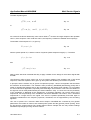
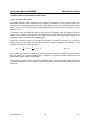
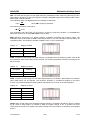
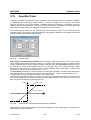
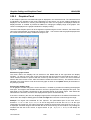
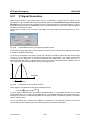
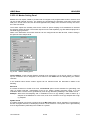
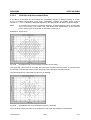
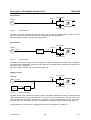
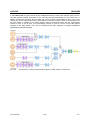
The standard defines OFDM (orthogonal frequency division multiplex) with 52 carriers as transmission
method. The symbol rate of the modulation on the individual carriers is 250 kHz. A user data rate of up to 54
Mbps at a channel bandwidth of 20 MHz can be obtained by combining 48 useful carriers for data
transmission (4 carriers are used for pilots) and using 64QAM for subcarrier modulation. With OFDM, the
individual carriers are superimposed mutually orthogonal, which, in the ideal case, does not cause any
intercarrier interference (ICI).
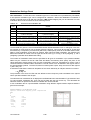
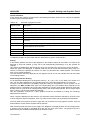
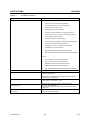
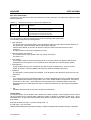
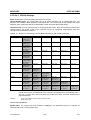
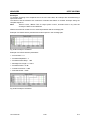
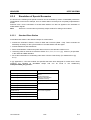
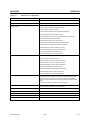
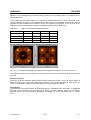
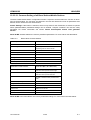
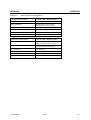
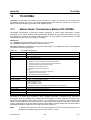
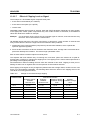
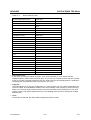
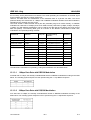
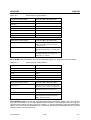
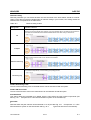
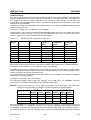
Table 17-1
Parameters of 802.11a/g OFDM modulation
Parameters
Value
Number of data subcarriers
48
Number of pilot subcarriers
4
Total of subcarriers used
52
Subcarrier frequency spacing
0.3125 MHz (= 20 MHz/64)
IFFT/FFT period
3.2 µs
Guard interval duration
0.8 µs (TFFT /4)
Symbol interval
4 µs (TGI + TFFT )
PLCP preamble duration
16 µs
Subcarrier modulation
BPSK OFDM
QPSK OFDM
16QAM OFDM
64QAM OFDM
Error correction code
K = 7 (64 states) convolutional code
Code rates
1/2, 2/3, 3/4
Occupied bandwidth
16.6 MHz
Channel spacing
20 MHz
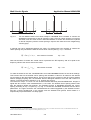
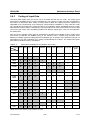
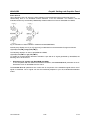
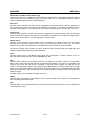
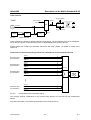
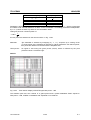
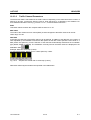
Table 17-1 Parameters of 802.11a OFDM modulation shows the main parameters of OFDM. 64-point IFFT is
used to generate the 52 subcarriers. 12 of the 64 possible carriers are not used. One is the carrier in the
middle of the band, which would otherwise be impaired by the carrier leakage of the I/Q modulator, the others
are the remaining carriers at the upper and lower end of the spectrum. The required subcarrier offset of 312.5
kHz is implicitly observed when the time signal generated by the IFFT with a sampling rate of 20 MHz is
output. These 20 MHz are also called 'kernel sample rate'. An OFDM symbol generated in this way would
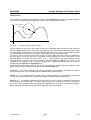
have a period of 3.2 µs. To compensate for multipath propagation, a so-called guard interval with a duration of
0.8 µs is attached to each symbol so that a total symbol interval of 4 µs is obtained.
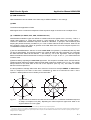
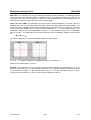
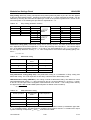
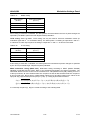
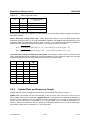
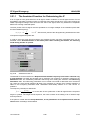
Either BPSK, QPSK, 16QAM or 64QAM modulation can be used on the subcarriers. Prior to the
modulation, the raw data are convolutionally coded with code rates of ½ to ¾ being possible.
17.1.2.2
PLCP Format
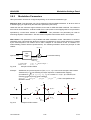
The physical layer convergence protocol (PLCP) is a protocol layer between medium access control and the
actual physical transmission layer (PHY). It is mainly used to adapt the different transmission formats of the
802.11 standards to the MAC layer which is identical for all transmission methods. Moreover, this protocol
informs the receiver on the type of signal sent to allow for a correct demodulation.
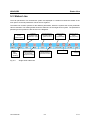
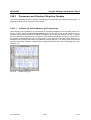
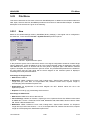
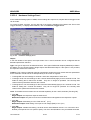
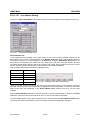
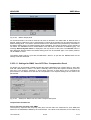
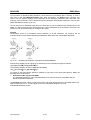
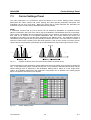
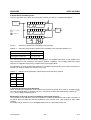
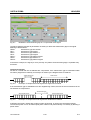
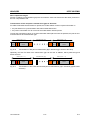
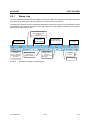
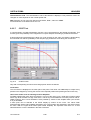
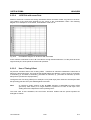
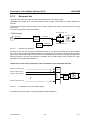
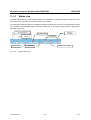
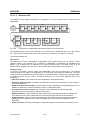
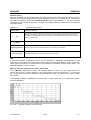
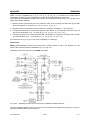
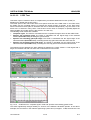
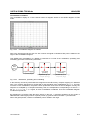
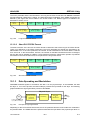
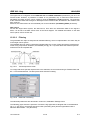
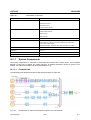
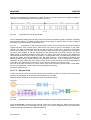
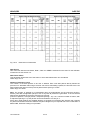
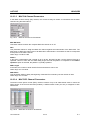
The PLCP generates the PLCP protocol data unit (PPDU) frames which are physically transmitted. The
frame structure can be seen in the figure below:
1013.1642.02
17-2
E-2