1
Chapter 4: Tasks
Total Recall clone profile task
4.12.2
Total Recall clone profile task
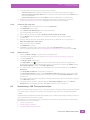
This task is used to download, and to deploy, a Total Recall clone profile to several devices. More
information is available on Ingenuity Working at community.psion.com/tags/a.r.c./total recall/upload
Basically the process is as follows:
1.
2.
3.
4.
5.
6.
7.
8.
4.13
A device is configured as you want all the other devices configured.
On the device, create the clone profile using Total Recall (version 5.0 or later).
This profile does not include device-dependent network settings, such as IP addresses, or security settings, such as passwords.
Device settings, such as device name, are cloned.
Upload the clone profile to the A.R.C. Server, using the upload service or any other method.
For details of the upload service see Section 4.13 Upload Service on page 27.
On the A.R.C. Server, create the Total Recall clone profile task.
Assign the Total Recall clone profile task, to a device group that contains the devices that are to
receive the clone profile.
Create tasks for configuring parameters—such as device name—that should be unique on
each device.
Assign the tasks created in step 6, to the same device group that contains the devices that are to
receive the clone profile.
Deploy the tasks.
Upload Service
The upload service is primarily used by the Total Recall clone profile task. This service receives a file that
has been uploaded by the A.R.C. client on a mobile device.
Before you can upload a clone profile, you must start the upload service on the Connection Settings
screen on the A.R.C. Server. The instructions for configuring the service, and starting it are in the
online help.
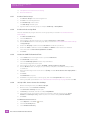
On the device, after configuring the Total Recall clone profile, do the following:
1.
2.
3.
4.
5.
Ensure that Total Recall is running.
Click Manage Profile.
Select the profile for uploading; then click Next.
Click Upload to A.R.C.
Enter the name, or the IP address, of the A.R.C. Server, as well as the listening port number on the
A.R.C. Server.
Note: When entering this information, ensure that you do not delete the http:// at the beginning of
the string.
On the A.R.C. Server, when the upload service receives the clone profile, it prompts for the filename and
location where the clone profile is to be stored. It then asks if you want to create a Total Recall clone
profile task, and if you want to assign the task to a device group.
Important: Once the upload service is started, it continues to run, even when the A.R.C. Server is
not running. It can only be stopped on the Connection Settings screen.
In order to receive and store an uploaded file, the A.R.C. Server must also be running.
4.14
Auto-Increment Properties
Auto-increment device properties—such as device ID, and static IP address—take values that are unique for
each device. These values can be automatically incremented and assigned to each device by A.R.C., or you
can assign a specific value to each device.
A.R.C. can control the incrementing of auto-increment properties. You define a range of values that are
assigned by A.R.C. starting with the lowest number and increasing by one for each succeeding device
updated. The assignment of values starts with the device at the top of the Device Group List on the
Devices Tab and continues sequentially down the list. This list can be sorted before you define
auto-increment properties.
27
Psion A.R.C. Administrators Guide