1
1.5 What are uninterpreted function symbols ?
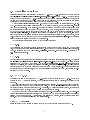
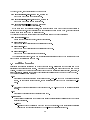
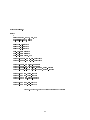
Presburger arithmetic can be extended to allow uninterpreted function symbols. Formulas in this extended
class may contain terms representing the application of a function to a list of argument terms. For example,
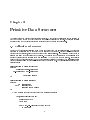
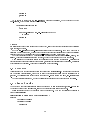
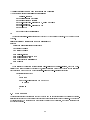
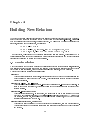
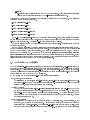
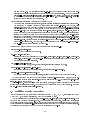
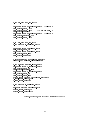
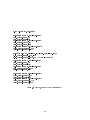
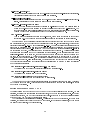
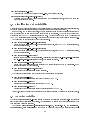
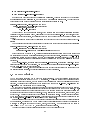
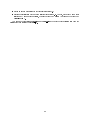
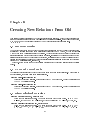
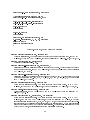
the following extended presburger formula contains an uninterpreted function symbol F: 1 i i n ^ F(i) 6= F(i ) ^ 1 j j m The functions are termed \uninterpreted" because the only thing we know
about them is that they are functions: two applications of a function to the same arguments will produce
the same value.
Applications of function symbols can be used to represent values that vary with the values of certain
other variables. For example, when we perform dependence analysis with the Omega Library, we would use
a scalar global variables to represent the value of a symbolic constant in the program, and a function of arity
2 to represent the values taken on by a non-linear expression nested in two loops (see PW94] for a more
detailed discussion of, and examples of, the use of function symbols to represent non-linear terms).
Downey (Dow72]) proved that full Presburger arithmetic with uninterpreted function symbols is undecidable. We therefore restrict our attention to a subclass of the general problem, and produce approximations
whenever a formula is outside of the subclass. Whenever an approximation is produced, it is marked as
either an upper bound or lower bound as appropriate. We currently restrict our attention to formulas in
which all function symbols are free, and functions are only applied to a prex of the input or output tuple.
For example, a binary function could be applied to the rst two input or the rst two output variables of a
Relation (or the rst two variables of a set's tuple).
0
0
0
1.6 What is the UNKNOWN constraint?
A conjunction may contain the constraint UNKNOWN. UNKNOWN indicates the existence of one or more
other constraints in the Presburger formula that aren't known. Such constraints could arise from the need
to approximate (as from some cases of uninterpreted function symbols or transitive closure), or because the
user added it to the formula. A relation which includes the UNKNOWN constraint is said to be inexact.
Inexactness can be removed by taking an upper or lower bound on the inexact relation. Inexactness is
discussed further in sections 4.4, 5.3 and 5.6, and creating upper and lower bounds is discussed in section
6.2.
1.7 Manipulating integer tuple relations and sets
A common way to use the library is to build relations and/or sets describing your particular problem, perhaps
combine them using the relational operators, and then query them in some way (checking information about
a particular variable, checking to see if its formula is satisable, or just printing them to the screen.)
In Chapter 4, we describe how to build new relations and sets. In Chapter 5,we describe how to examine
existing relations. This includes generating a user readable string representation of a set or relation, and examining the conjuncts and constraints of a relation once it has been simplied and converted into disjunctive
normal form (DNF). In Chapter 6, we describe how to create new relations from old relations by applying
relational operations such as intersection, union, domain, range, and composition.
In Chapter 2, we discuss some issues related to the compilation of the Omega Library and programs that
use it. In Chapter 3, we describe some of the primitive data structures used in the library (such as strings
and tuples).
5