1
BT RULES WHITE PAPER
automation layer, using simple metaphors targeted to nonprogrammers.
A very large number of ‘mash-up’ systems have been
launched by both start ups and major players in the IT industry
in recent years. These include Yahoo Pipes[14], Microsoft
Popfly[7], Tarpipe, IBM Mashup Centre[15]. These initiatives
aim to provide authoring environments enabling their users to
combine system functions from multiple different providers
to create personalised applications which are ‘greater than the
sum of their parts’.
In common with the BT Rules project, some provide graphical tools with simple metaphors to construct orchestrations of
those systems and orchestrations are hosted on the company’s
infrastructure. Also in common with our project, many are
predicated on the exposure of system functions through public
APIs and other standards, although it is worth noting that BT
Rules is not restricted merely to control domains exposed
through web-based eventing, since our imperative programming tools also allow the behaviour of a user’s devices and
software to be controlled.
Simpler propositions are available from Google App
Engine[16], Heroku[17] and AppJet[18], who offer to host
scripts for networked interactions, but without providing a
graphical authoring environment, falling back on conventional
programming approaches.
At first glance, it seems simple to define combinations of
services using these tools. Many of these services offer a
wiring metaphor which allows you to connect the output of
one module to the input of another module. From the point of
view of a user-programmer this dataflow is easy to construct
and easy to comprehend. However, in practice, it is the logic
hidden inside the individual blocks which provides the core
functionality. It is a testament to the unwieldiness [2] of the
data-flow programming approach that even in systems where
the user is permitted to author the blocks themselves, they are
invited to use a full-fledged programming language to do so.
A mashup system has a richer palette than the individual
systems themselves provide. Data-flow relationships can combine behavioural blocks through instantaneous event passing
rather than persistent parameterisation (see Section IV-A for
more on this). However, in the final analysis, these mash-up
providers face the same limitations as regular integrators that skilled programmers must anticipate and implement the
imperatively defined event-driven behaviours made available
to users.
BT Rules aims to eliminate the dependence on traditional programming languages to define imperative behaviours,
making it possible to extend true personalisation to nonprogrammers. This personalisation extends beyond web-based
services to include direct control of the user’s devices.
IV. A DVANTAGES OF THE APPROACH
The BT Rules infrastructure incorporates a wide variety of
innovative technologies for managing user data, managing and
hosting scripts at scale, but the primary focus of the project
is the authoring facility.
Inspired by the Scratch programming language, our team
has developed a novel form of programming infrastructure
3
which allows an ordinary user to describe their preferred
digital behaviour in plain English through a conventional web
browser, then immediately deploy this ’program’ directly to
their chosen device, software or service within seconds.
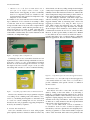
Figure 2. BT Rules user authoring an email handling program, showing
script composed of tiles by drag and drop from a tabbed palette
In common with Scratch, the editing facility has been
conceived to provide cues for valid program construction
which are cognitively matched to the capabilities of everyday
users.
The elements which authors use to create programs are
graphical tiles annotated with English phrase fragments, whose
shape corresponds with the shape of the slots where they
may be used. Once all slots have been filled, the program
is complete and valid and the phrases on each tile can be read
from top left to bottom right to form an English sentence.
The completed sentence describes the behaviour in human
comprehensible terms.
The authoring environment is backed by a script hosting
infrastructure. A version of the script is compiled from the
sentence of graphical tiles into a suitable object language, such
as JavaScript or Python. This compiled script is delivered to
the target execution environment using the XMPP protocol.
BT Rules scripts deploy to a variety of targets. In some
cases, the environment itself has the ability to host a scripting
environment, such as the Microsoft Windows desktop, Firefox
web browser or Symbian 60 Mobile phones. In other cases
such as RSS, IMAP email, Google Calendar[19] and Google
Translate[20], hosting resources for a script interpreter have
to be centrally provisioned for that user, and the authored
behaviour orchestrates a networked protocol. In a third case, a
script interpreter installed on the user’s own device acts as the
orchestration engine, manipulating a locally installed device
which cannot itself host code. This approach has been used
to command a PC to issue control messages over a locally
installed gateway to passive devices supporting the X10 home
automation protocol [21] and is suitable for manipulating con-