1
Rev 1/04 - 03
C.
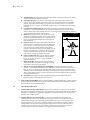
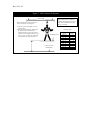
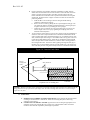
HAZARDOUS SITUATIONS: Do not take unnecessary risks, such as jumping or reaching too
far from the edge of the working surface. Do not allow the connecting subsystem to pass under
arms or between feet. To avoid inadequate clearance, do not climb above the HLL. To avoid swing
fall hazards, do not work too far from either side of the HLL.
D. TWO PERSONS CONNECTED TO EACH HLL: When a person falls while connected to the
HLL, the system will deflect. If two persons are connected to the same HLL, and one person falls,
the second person may be pulled off the working surface due to deflection. The potential for the
second person falling increases as the HLL span length increases. The use of independent HLL
systems for each person, or shorter span length, is recommended to minimize the potential of the
second person falling.
E. FREE FALL: The personal fall arrest system must be rigged so that the SRL or shock absorbing
lanyard is overhead and without slack, according to OSHA requirements.
F. SHARP EDGES: Avoid working where the connecting subsystem or other system components
will be in contact with, or abrade against, unprotected sharp edges. If working around sharp edges
is unavoidable, a protective cover must be used to prevent cutting of the PFAS components.
G. IN THE EVENT OF A FALL: The responsible party must have a rescue plan and the ability to
implement a rescue. Tolerable suspension time in a full body harness is limited, so a prompt rescue
is critical.
IMPORTANT: Use care when handling an expended energy absorber. The tearing of the energy absorber
material produces extremely sharp edges. Handle the expended energy absorber per the HLL manufacturer’s
instructions
H. RESCUE: With the number of potential scenarios for a worker requiring rescue, an on site rescue
team is beneficial. The rescue team is given the tools, both in equipment and techniques, so it can
perform a successful rescue. Training should be provided on a periodic basis to ensure rescuers
proficiency.
3.4 DISASSEMBLY OF THE SYSTEM: When dismantling the Safety Pole System the following steps
are recommended.
A. TIE-OFF TO PERMENTALLY INSTALLED ROOF ANCHORS: When standing on the roof
of the structure and disassembling the Safety Pole System it is strongly recommended that the
worker wear a fall protection full body harness that meets OSHA requirements and anchor to a
permanently installed roof anchor with a shock absorbing lifeline.
B. DISASSEMBLING THE HLL: Disassemble the HLL’s, by reducing the tension on the back
steadying cable and unclipping the carabineers from the Safety Pole System.
C. REMOVE THE T- SECTION(S) AND THE FIVE FOOT SECTION: Continue the
disassembly process by lifting the Safety Pole T-section(s) (Section 4) and the five foot section(s)
out of the ten foot Safety Pole sections (Part Number 2 or 1). The simplest way to lift these sections
is by the lifting D-Ring on the five foot section (Section 3) with a fork lift. Lower the sections to
the ground.
D. REMOVE THE TENSIONING CABLES: From inside the structure, continue the disassembly
process by removing the tensioning cables and attachment brackets.
E. REMOVE THE TEN FOOT SECTIONS: From inside the structure continue the disassembly of
the ten foot sections by sliding them apart.
F. REMOVE THE BASE: Loosen the nuts from the bolts around the base and remove the base. If
you used permanent anchor bolts, cut the bolts off flush with the surface of the structure.
4.0 TRAINING:
4.1 It is the responsibility of all users of this equipment to understand these instructions and be trained in the
correct installation, use, and maintenance of this equipment. These individuals must be aware of the
consequences of improper installation or use of this equipment. This user’s manual is not a substitute for
a comprehensive training program. Training must be provided on a periodic basis to ensure proficiency
of the users.
5.0 INSPECTION:
5.1 BEFORE EACH INSTALLATION: Inspect the HLL energy absorber, kit components, and other
system components according to these and other manufacturer’s instructions. System components must
be formally inspected by a qualified person (other than the user) at least annually. Formal inspection