1
Rev 1/04 - 03
C.
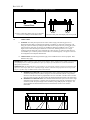
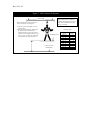
ANCHORAGES: The Safety Pole System must be installed on anchorages that meet the strength
and size requirements as illustrated in figure 3.
D. SYSTEM CAPACITY: The capacity of the single safety pole system is three workers. The
capacity of the single span HLL system is two workers per HLL when the HLL’s are installed
properly. The capacity of the multiple span system is up to 2 workers per line / per span with a
maximum of up to six workers. The maximum weight of each person including tools and clothing
is 310 lbs.
E. CONNECTING SUBSYSTEM: Read and follow the connecting subsystem manufacturer’s
instructions. A self retracting lifeline is to be used with the Safety Pole System to limit freefall
distances and provide worker mobility. Each user’s connecting subsystem must limit the fall arrest
forces to a maximum of 900 lbs. See section 2.4.
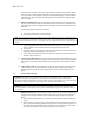
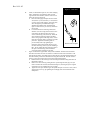
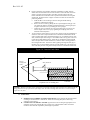
Figure 5 – Swing Fall Hazard
F. FREE FALL: Rig and use the personal fall arrest system
such that the potential free fall does not exceed government
Anchorage point
regulatory and subsystem manufacturer’s requirements. See
section 3.0 and subsystem manufacturer’s instructions for
more information.
G. SWING FALLS: See Figure 5. Swing falls occur when the
anchorage point is not directly above the point where a fall
occurs. The force of striking an object in a swing fall may
cause serious injury or death. Minimize swing falls by
working as close to the anchorage point as possible. Do not
permit a swing fall if injury could occur. When protecting
workers over interior two story openings, use the interior
catch cable per section 3 to minimize swing falls.
H. FALL CLEARANCE: There must be sufficient clearance
below the worker to arrest a fall before striking a lower
level or obstruction. See section 3.0 for required fall
clearance information.
I. BODY SUPPORT: This equipment must only be used
with personal fall arrest systems incorporating a full body
harness and a self retracting cable lifeline.
J. PHYSICAL AND ENVIORNMENTAL HAZARDS: Use of this equipment in areas with
physical or environmental hazards may require additional precautions to reduce the possibility of
injury to the user or damage to the equipment. Hazards may include, but are not limited to; heat,
chemicals, corrosive environments, high voltage power lines, gases, moving machinery, and sharp
edges. Contact Safety Pole Inc. if you have questions about using this equipment where physical or
environmental hazards exist.
K. TRAINING: This equipment must be installed and used by persons trained in the correct
application and use of this equipment. See section 4.0.
1.3 APPLICABLE STANDARDS: Refer to national standards, including ANSI Z359.1, ANSI A10.14 and
local, state and federal (OSHA 1910.66 and 1926.502) requirements for more information on personal
fall arrest systems and associated components.
2.0
SYSTEM REQUIREMENTS
2.1 COMPATIBILITY OF COMPONENTS: Safety Pole Inc equipment is designed for use with Safety
Pole approved components and subsystems only. Substitutions or replacements made with non-approved
components or subsystems may jeopardize compatibility of equipment and may affect the safety and
reliability of the complete system.
2.2 COMPATIBILTIY OF CONNECTORS: Connectors are considered to be compatible with
connecting elements when they are designed to work together in such a way that their sizes do not
cause their gate mechanisms to inadvertently open regardless of how they become oriented. If the
connecting element that a snap hook or carabineer attaches to is undersized or irregular in shape, a
situation could occur where the connecting element applies a force to the gate of the snap hook or
carabineer. This force may cause the gate (of either a self-locking or a non-locking snap hook) to
open, allowing the snap hook or carabineer to disengage from the connecting point.