1
iTeach
Lessons Learned
This project has provided a wonderful plethora of lessons for us thus far. These lessons
have definitely made us better engineers and better team players. We had to obtain more
knowledge and practice new techniques in order to accomplish our achievements. The following
are among important lessons that we learned while working on the iTeach project:
A. Software Engineering
While developing a sophisticated system that consists of nearly 6,000 lines of code,
we learned that there is no or negligible participation of software engineering in webbased systems engineering. No or very inadequate trade off studies are meant to reduce
the risk of high-risk, and in our case, the high-risk of software requirements. Moreover,
we learned that there is no modeling and simulation of the system architecture to verify
that the architecture will support system requirements for security, performance, safety,
reliability, and fault tolerance. Perhaps the most valuable lesson that we learned while
working on the software side of this project is that there is no systematic and rigorous
approach to making requirements consistent and that the evolutionary design of system
architecture greatly increases the risk of excessive rework.
B. Risk Management
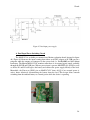
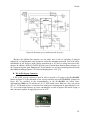
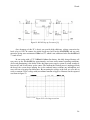
While developing our dual input power supply, we had the chance to learn that we
needed an effective risk management plan. The fact that we had limited experience
developing a custom power supply forced us to seek for information from all possible
places. Eventually, we were able to come up with a solution that perfectly satisfied our
requirements.
C. Planning & Tracking
This project gave us the opportunity to learn that the visibility of cost and schedule
status of the hardware and software development is important but is often neglected.
During first several months, our solution of developing iTeach was divided into hardware
and software part and each member was responsible for only one. Therefore, weekly
meetings had to be arranged in order to keep all team members updated on different
aspects of our project. During each meeting, all members reported the progress that they
made in one week and how their contribution affected the overall progress.
37