1
iTeach
the database. The socket also allows the PHP file to send SQL statements in order to
collect data. For instance, the PHP file sends the unique identification number of
instructor A and the keyword “classes” in order to get a list of classes that are taught by
this instructor.
Information in the database is sorted into tables. The job of the PHP file is to
gather information from the database and connect them together. For instance, the table
called Assignments holds the name of each assignment, starting time, ending time,
maximum possible grade, and assignment description. Another table called submissions
holds students submissions. When a student submits an assignment, PHP saves it in the
submissions table and then link it to the original assignment in the Assignments table.
B. Entity-Relationship Model (ERM) and Logical Design
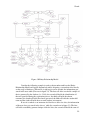
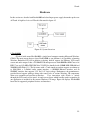
The following figure shows an abstract and conceptual representation of the datapath in the database. This modeling method produces a type of conceptual schema or
semantic data model of our system. The first stage of our software design required this
model. It describes the type of information that is to be stored in the database. The data
modeling technique was used to describe any ontology for a certain area of interest. The
conceptual data model was later mapped to a logical data model (Figure 31) in order to
design the actual database. An entity may be defined as a thing which is recognized as
being capable of an independent existence and which can be uniquely identified. An
entity is an abstraction from the complexities of some domain. An example of an entity in
our design is the user. In the Model, each entity is represented by a square.
A relationship captures how two or more entities are related to one another.
Relationships can be thought of as verbs, linking two or more nouns. For instance an
owns relationship between a user and a class. Relationships in the Model are represented
by rhombuses. While a single rhombus means a weak relationship, double rhombuses
mean a strong relationship. Circles are used to represent attributes. Each entity has to
have at least one attribute.
While a double line indicates a participation constraint, an arrow from entity set to
relationship set indicates a key constraint. Each entity in the entity set is involved in
exactly one relationship and an underlined name of an attribute indicates that it is a key.
Two different entities or relationships with this attribute always have different values for
this attribute.
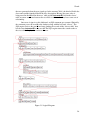
Figure 31 shows the process of producing a detailed data model of a database.
This logical data model contains all the needed logical and physical design choices and
physical storage parameters needed to generate a design in a Data Definition Language,
which was used to create the actual database. Each row in the model represents an actual
table in the database. Each row within any table has a unique id. This unique id is called
a key. PHP uses the keys to lookup the designated record.
22