1
CFHT Observatory Manual - Observatory (Sec.5)
http://www.cfht.hawaii.edu/Instruments/ObservatoryManual/CFH...
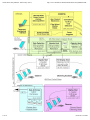
At login the Session Manager and the Feed Back windows appear
automatically. The Session Manager window contains a set of buttons
which has been tuned to the particular instrument configuration. When
an item has been selected (click) a "forms" window will appear.
Forms are the main way to communicate with a program. They, for
instance, allow writing parameters in text input fields (such as the
integration time for a CCD exposure) and deciding actions through
checked boxes (e.g., click the ACCEPT push button will to begin a CCD
exposure). For actions that take a long time (CCD integration, filter
wheel movement, etc.) a visual icon will appear on the screen to identify
the state of that resource or program. These icons go away when the
action is completed.
The "feedback" window contains a stream of output messages from the
action taking place, each action being a separate program which starts
up, does its work, and then dies. This allows writing UNIX or IRAF
scripts to manage sophisticated observing situations. It is also possible to
use normal UNIX command interpreters to run any of our programs
providing terminal access as well as our normal windowed environment.
Instruments
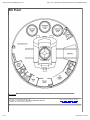
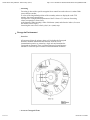
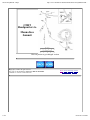
Prime Focus Environment with the WFC and MegaCam - MegaPrime
The new prime focus upper end (PFUE) has been designed at CFHT with the help of
INSU-Division Technique: a new base ring, a new set of spiders, and a prime focus
base which will receive all the other components of MegaPrime. The PFUE has been
built on the West Coast of the USA by L&F Ind.
In addition to its basic structure, the PFUE provides a temperature controlled
environment for MegaCam and its readout electronics. A temperature controlled
enclosure for the electronics of MegaPrime is installed on the telescope "caisson
central" .
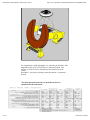
The Wide Field Corrector (WFC)
The parabolic main mirror of the telescope alone does not produce a
good image of the whole field of view, and so a WideField Corrector
(WFC) is installed in front of the camera.
The WFC has been designed at HIA (Victoria, Canada). The lenses have
been fabricated by SAGEM/REOSC, which also built the mechanical
structure of the WFC and coated the lenses.
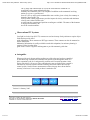
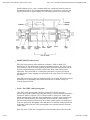
A succession of lenses and baffling rings ultimately extends to the
mosaic of MegaCam.
The Focus Stage Assembly
4 of 10
08/07/04 11:26 PM