1
ESPaDOnS: instrument details and configurations
http://webast.ast.obs-mip.fr/magnetisme/espadons_new/configs.html
ESPaDOnS
Instrument details and configurations
Overview
ESPaDOnS is a bench-mounted high-resolution echelle spectrograph/spectropolarimeter fibre-fed from a Cassegrain module
including calibration and guiding facilities, as well as an optional polarisation analyser. It can deliver:
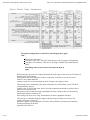
a complete optical spectrum (from 370 to 1,050 nm) in a single exposure with a resolving power of about 68,000 (in
spectropolarimetric and ’object+sky’ spectroscopic mode) and up to 81,000 (in ’object only’ spectroscopic mode); with a
79 gr/mm grating and a 2kx4.5k ccd detector, the full spectrum spans 40 grating orders (from order #61 in the blue to
order #22 in the red);
15% to 20% peak throughput (telescope and detector included); this performance is obtained thanks to the very
efficient dual pupil design of Baranne (along which many modern spectrographs such as uves, feros and harps were
designed) as well as to the most recent advances in glass and coating technologies (allowing to produce large dioptric
optics with low reflectance and absorption as well as high efficiency optical fibres and image slicers);
continuum subtracted linear and circular polarisation spectra of the stellar light (in polarimetric mode); using
Fresnel rhombs instead of standard cristalline plates suppresses the usual problems of interference patterns in the
collected spectra, with the additional advantage of being much more achromatic.
Main scientific drivers
With ESPaDOnS, astronomers can now address with unprecedented detail
a broad range of important issues in stellar physics, from stellar magnetic
fields to extrasolar planets, from stellar surface inhomogeneities and surface
differential rotation to activity cycles and magnetic braking, from
microscopic diffusion to turbulence, convection and circulation in stellar
interiors, from abundances and pulsations in stellar atmospheres to stellar
winds and accretion discs, from the early phases of stellar formation to the
late stages of stellar evolution, from extended circumstellar environments to
distant interstellar medium.
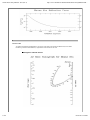
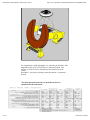
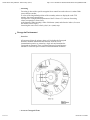
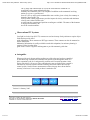
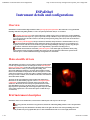
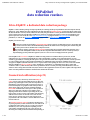
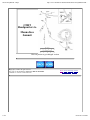
The image on the right (obtained by Moira Jardine and collaborators)
illustrates one of such scientific programs. It shows a 3D magnetospheric
configuration extrapolated from a magnetic surface map of the young
ZAMS star AB Doradus, derived from spectropolarimetric data such as
those ESPaDOnS can secure. The image shows X-ray emission from the
high temperature plasma filling the closed magnetospheric loops (the stellar
surface being depicted here as the central dark sphere in which the loops
are anchored).
Brief instrument description
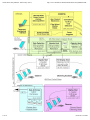
ESPaDOns consists of two distinct units, each located at a different place with respect to the telescope:
the Cassegrain unit, mounted at Cassegrain focus, includes the calibration/guiding module as well as the polarimeter
module;
the spectroscopic unit, installed in a thermally stable room right at the heart of the telescope building (the Coude
room), includes the spectrograph module (the core item of ESPaDOnS in terms of cost and weight) fed from the
1 of 3
08/07/04 11:28 PM