1
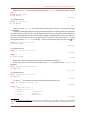
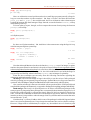
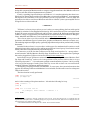
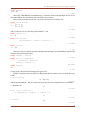
Free Working Environments for Computer Algebra Sage] gap.Factors(poly) [x 3; x + 3] 16 msec Next, we address the second problem and write a small Sage program (actually a Sage for loop) to count the number of prime numbers ≤ 100. Sage, of course, does have the functions prime_pi() and is_prime() that could be used, but we avoid them in order to demonstrate both the advantages and disadvantages of Sage. Instead, we use the function IsPrime() of Gap inside the Sage for loop. To know what to expect, though, we first compute the answer directly using the function primepi() of Pari/Gp: Sage] pari( 'primepi(100)' ) 25 or in Python syntax: Sage] gp.primepi(100) 25 11 msec 13 msec So, there are 25 prime numbers ≤ 100. And below is the same answer using the Sage for loop with the computer algebra system Gap: Sage] counter = gap(0) Sage] for i in range(100): if gap(i+1).IsPrime(): counter = counter + 1 Sage] counter 25 1.6 sec 671 msec 463 msec Note that although Maxima does have the function primep(), to test if an integer is a prime number, the system cannot be used in the for loop above because in http://www.sagemath.org/doc/ reference/sage/interfaces/maxima.html it is stated that «Maxima does not seem to have a noninteractive mode which is needed for Sage». So, the viable candidates for use inside the Sage for loop are Gap and Pari/Gp, where in the latter isprime() tests an integer for primality. From the above examples one can easily draw the following conclusions regarding the advantages and disadvantages of Sage: Advantages: The main advantage of Sage is the ability to use the various CASs packaged with it by learning just one general purpose language, Python! Moreover, Sage can connect to optional CASs, like Magma, Maple and Mathematica (all commercial), and Giac (free). Also, another advantage is the ease with which one can get the archive of files (tarball) and compile all the packages simultaneously, as opposed to finding and compiling packages individually. Disadvantages: Obviously it is quite impressive to be able to call different packages in the same program; by integrating these packages into a common (Python) interface Sage gets a lot of functionality without having to «reinvent the wheel». However, this very interface can also be a bane as in the case of Maxima not been able to run the Sage for loop above. Moreover, due to this interface at times it is impossible to take advantage of the very efficient and fast routines that exist in some libraries. To wit: Consider the (C++) library LinBox, which is one of the packages loaded with Sage and where there is an e cient implementation of large integer determinants that can be called from Sage. However, if Sage needs to call Maxima (to compute, say, the antiderivative of a function), and ÈÍÔÎÐÌÀÖÈÎÍÍÛÅ ÑÈÑÒÅÌÛ 39