1
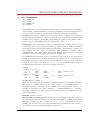
Error 7108. Server: protocol error in remove.
The Server/Loader tries to decode a ‘remove’ request from a node, but finds that the
file name is longer than the buffer size. The mode description is longer than 512
bytes, or the information sent in a ‘remove’ request was corrupted.
Error 7109. Server: protocol error in rename.
The Server/Loader tries to decode a ‘rename’ request from a node, but finds that the
file name (parameter 1) is longer than the buffer size. The file name is longer than 512
bytes, or the information sent in a ‘rename’ request was corrupted.
Error 7110. Server/Loader: protocol error in rename.
The Server/Loader tries to decode a ‘rename’ request from a node, but finds that the
file name (parameter 2) is longer than the buffer size. The file name is longer than 512
bytes, or the information sent in a ‘rename’ request was corrupted.
Error 7111. Server: protocol error in getenv.
The Server/Loader tries to decode a ‘getenv’ request from a node, but finds that the
environmental variable’s name is longer than the buffer size. The environmental
variable’s name is longer than 512 bytes, or the information sent in a ‘getenv’ request
was corrupted.
Error 7112. Server: protocol error in system.
The Server/Loader tries to decode a ‘system’ request from a node, but finds that the
command string (parameter 1) is longer than the buffer size. The command string is
longer than 512 bytes, or the information sent in a ‘system’ request was corrupted.
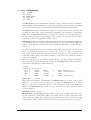
Error 7113. Server: encountered unknown primary tag [%x].
The Server/Loader, while serving, reads packets of 4 bytes, in which a node encodes
a request, for example an ‘fread’ or ‘printf’ request. After receiving a 4-byte packet,
the Server/Loader will execute the node’s request. The 4-byte packet was received
successfully, but has encoded in it a request that isn’t supported. Most likely the data
in the packet was corrupted or perhaps the DSP executable (*.out file) used a Server/
Loader library of a different version that the host PC executable (‘win32sl.exe’) or PC
library (‘win32sl.dll’).
Error 7114. Server: failed to allocate memory for incomming buffer.
The Server/Loader tries to execute a ‘user send’ request with a large buffer size. It
tries to allocate memory to receive the buffer data, but encounters an out-of-memory
error.
Error 7213. Server: encountered unknown primary tag (%d).
The Server/Loader, while serving, reads packets of 4 bytes, in which a node encodes
a request, for example a ‘fread’ or ‘printf’ request. After receiving a 4-byte packet, the
Server/Loader will execute the node’s request. The 4-byte packet was received
successfully, but has encoded in it a request that isn’t supported. Most likely the data
in the packet was corrupted or perhaps the DSP executable (*.out file) used a Server/
Loader library of a different version that the host PC executable (‘win32sl.exe’) or PC
library (‘win32sl.dll’).
Error 7214. Failed to allocate memory for incoming buffer.
The Server/Loader tries to execute a ‘user send’ request with a large buffer size. It
185
HUNT ENGINEERING Server/Loader USER MANUAL