1
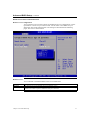
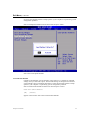
Advanced BIOS Setup, Continued
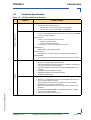
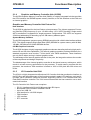
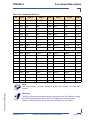
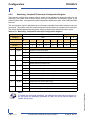
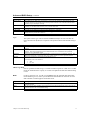
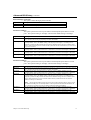
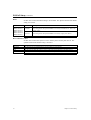
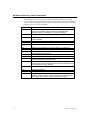
Option
UDMA1
UDMA2
UDMA3
UDMA4
UDMA5
UDMA6
Description
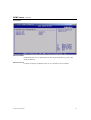
Set this value to allow the BIOS to use Ultra DMA mode 1. It has a data transfer rate of 25 MBs.
Set this value to allow the BIOS to use Ultra DMA mode 2. It has a data transfer rate of 33.3
MBs.
Set this value to allow the BIOS to use Ultra DMA mode 3. It has a data transfer rate of 44.4
MBs. To use this mode, it is required that an 80-conductor ATA cable is used.
Set this value to allow the BIOS to use Ultra DMA mode 4. It has a data transfer rate of 66.6
MBs. To use this mode, it is required that an 80-conductor ATA cable is used.
Set this value to allow the BIOS to use Ultra DMA mode 5. It has a data transfer rate of 99.9
MBs. To use this mode, it is required that an 80-conductor ATA cable is used.
Set this value to allow the BIOS to use Ultra DMA mode 6. It has a data transfer rate of 133.2
MBs. To use this mode, it is required that an 80-conductor ATA cable is used.
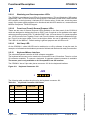
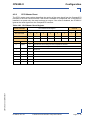
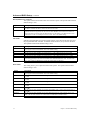
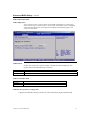
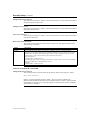
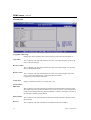
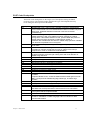
S.M.A.R.T. for Hard disk drives
Self-Monitoring Analysis and Reporting Technology (SMART) feature can help predict
impending drive failures. The Optimal and Fail-Safe default setting is Auto.
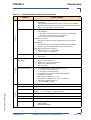
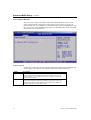
Option
Auto
Disabled
Enabled
Description
Set this value to allow the BIOS to auto detect hard disk drive support. Use this setting if the
IDE disk drive support cannot be determined. This is the default setting.
Set this value to prevent the BIOS from using the SMART feature.
Set this value to allow the BIOS to use the SMART feature on support hard disk drives.
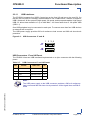
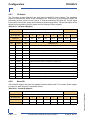
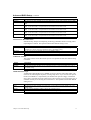
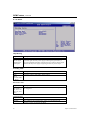
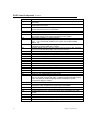
32-Bit Data Transfer
This option sets the 32-bit data transfer option. The Optimal and Fail-Safe default setting
is Enabled.
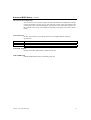
Option
Disabled
Enabled
Description
Set this value to prevent the BIOS from using 32-bit data transfers.
Set this value to allow the BIOS to use 32-bit data transfers on support hard disk drives. This is
the default setting.
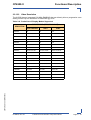
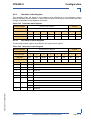
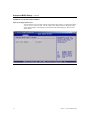
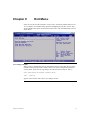
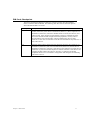
ARMD Emulation Type
ATAPI Removable Media Device (ARMD) is a device that uses removable media, such
as the LS120, MO (Magneto-Optical), or Iomega Zip drives. If you want to boot up from
media on an ARMD, it is required that you emulate boot up from a floppy or hard disk
drive. This is especially necessary when trying to boot to DOS. You can select the type of
emulation used if you are booting from such a device. The Optimal and Fail-Safe default
setting is Auto.
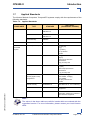
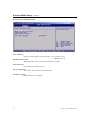
Option
Auto
Floppy
Hard disk drive
Description
Set this value to allow the BIOS to automatically set the emulation used by ARMD. This is the
default setting.
Set this value for ARMD to emulate a floppy drive during boot up.
Set this value for ARMD to emulate a hard disk drive during boot up.
Cont’d
Chapter 3: Advanced BIOS Setup
15