1
Chapter 17
44
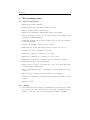
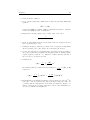
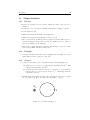
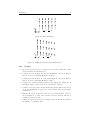
Figure 31: Once more the metallic bar moving in a uniform magnetic field
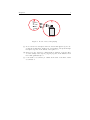
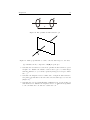
Figure 32: A loop moving along a current carrying wire
(a) Is the induced current clockwise or counterclockwise?
(b) If the bar moves to the left, will the current reverse?
13. In figure 32, a closed loop moves at a constant speed parallel to a long,
straight, current-carrying wire. Is there a current in the loop? If so, is
this current circulating clockwise or counterclockwise?71
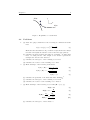
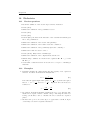
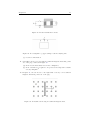
14. The square conducting sheet shown is moving at a uniform velocity v
through a uniform magnetic field B that is perpendicular to the sheet.
(a) What happens to free charges inside the sheet when it begins to
move? What happens to these charges while the sheet is moving at
a uniform velocity?
(b) Do your answers to (a) depend on whether there are positive or negative (or both) free charges in the sheet?
(c) Draw the equipotentials for the sheet in motion.
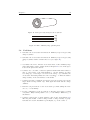
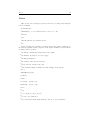
15. When Feynman (17.8) calculates
the inductance of a solenoid from the
R
magnetic field energy (0 c2 B 2 dV = 1/2LI 2 ), he only takes the field
inside the coil. Why doesn’t he include the field inside the conductors? 72
R
16. Can we always use (17.44) 1/2 j · AdV to calculate self-inducatance?
Apply this to a straight wire (See problem 5)