1
PROFINET
USER MANUAL
Imprint
FRABA Inc.
1800 East State Street
Alterations of specifications reserved
Hamilton, NJ 08609
Phone
+1 609 750 8705
Technical specifications, which are described in this
manual, are subject to change due to our
Fax
Internet
+1 609 750 8703
http://www.posital.com
permanent strive to improve our products.
e-mail
[email protected]
Disclaimer of Warranty
POSITAL GmbH makes no representations or
Copyright
The company POSITAL GmbH claims copyright on
warranties, either express or implied, by or with
respect to anything in this manual, and shall not be
this documentation. It is not allowed to modify, to
extend, to hand over to a third party and to copy
liable for any implied warranties of merchantability
and fitness for a particular purpose or for any
this documentation without written approval by the
company POSITAL GmbH. Nor is any liability
indirect, special, or consequential damages.
assumed for damages resulting from the use of the
information contained herein. Further, this
Version date:
Version number:
July 1, 2009
07.09
publication and features described herein are
subject to change without notice.
Article number:
Author:
n/a
Reiner Bätjer
1. Introduction
30
This manual describes the implementation and
configuration of an absolute rotary encoder with
PROFINET interface. The device fulfills the
requirements of a PROFINET IO device with RT
(real time) or IRT (isochronous real time)
classification.
resolution is 30 bits = 2 = 1,073,741,824 steps.
The standard single-turn version has 13 bits, the
standard multi-turn version 25 bits.
For further information about the function principle
or the setup of a PROFINET network please, refer
to http://www.profibus.com/pn.
1.1 Absolute rotary encoder
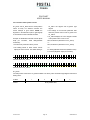
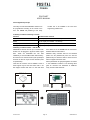
The basic principle of an absolute rotary encoder is
the optical sampling of a transparent code disc
which is fixed with the driving shaft.
The absolute rotary encoder has a maximum
resolution of 65,536 steps per revolution (16 bits).
The mutli-turn version can detect up to 16,384
revolutions (14 bits). Therefore the largest resulting
Version 07/09
Page 3
UMUS-OCD-EI