1
Event Definitions
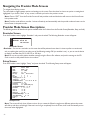
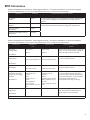
The BiPAP Pro monitors breathing and detects apneas and hypopneas.
Event
Definition
Obstructed Airway
Apnea / Clear
Airway Apnea
Detection
An apnea is detected when there is an 80% reduction in airflow from baseline for at least 10 seconds or if there is no
airflow detected for 10 seconds.
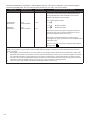
RERA
Detection
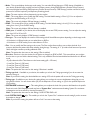
RERA (Respiratory effort-related arousal) is defined as an arousal from sleep that follows a 10 second or longer
sequence of breaths that are characterized by increasing respiratory effort, but which does not meet criteria for an
apnea or hypopnea. Snoring, though usually associated with this condition need not be present. The RERA algorithm
monitors for a sequence of breaths that exhibit both a subtle reduction in airflow and progressive flow limitation. If
this breath sequence is terminated by a sudden increase in airflow along with the absence of flow limitation, and the
event does not meet the conditions for an apnea or hypopnea, a RERA is indicated.
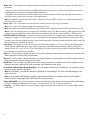
Periodic Breathing
A persistent waning and waxing breathing pattern which repeats itself between 30 and 100 seconds. The nadir of
the breathing pattern is characterized by at least a 40% reduction in airflow from an established baseline flow. The
pattern must be present for several minutes before it can be identified as periodic breathing.
During the apnea, one or more pressure test pulses are delivered by the device. The device evaluates the response of
the patient to the test pulse(s) and assesses whether the apnea has occurred while the patient has a clear airway or
an obstructed airway. The airway is determined to be clear if the pressure test pulse generates a significant amount of
flow; otherwise the airway is determined to be obstructed.
No therapy adjustments are made in response to periodic breathing.
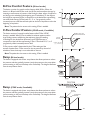
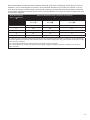
Flow Limitation
Detection
The device looks for relative changes in the peak, flatness, roundness, or shape (skewness) of the inspiratory portion
of the airflow waveform. These changes are observed both over a short period of time (groups of 4 breaths) and
over a long period of time (several minutes). Statistical measures are used to help minimize false event detection
while allowing the device to be sensitive to even small changes.
Hypopnea
Detection
A hypopnea is detected when there is an approximately 40% reduction in airflow from baseline for at least 10
seconds.
Snore
Detection
Vibratory snore is detected when a specific frequency is detected during the inspiratory portion of the patient’s
breath.Vibratory snore is disabled at pressures greater than 16 cm H2O.
Cleaning for Multiple Users
WARNING: If you are using the device on multiple users, discard and replace the bacteria filter each time the device is
used on a different person.
If you are using the device on multiple users, complete the following steps to clean the device before each new user.
1. Unplug the device before cleaning.
2. Clean the outside of the device only. Use a cloth with one of the following cleaning agents to clean the exterior of the device:
• Mild Detergent
• 70% Isopropyl Alcohol
• DisCide Towelettes
• 10% Chlorine Bleach solution
3. Allow the device to dry completely before plugging in the power cord.
-7-