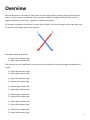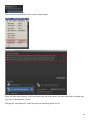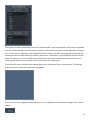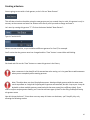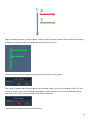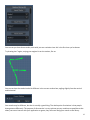
1
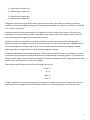
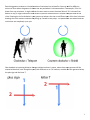
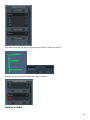
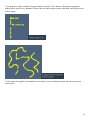
1) Upper-right to bottom-left
2) Bottom-right to upper-left
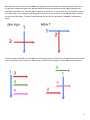
1) Bottom-left to upper-right
2) Bottom-right to upper-left
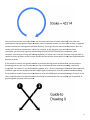
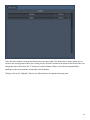
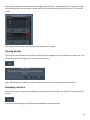
The gesture recognition engine breaks down a gesture into strokes, each stroke can have any number of
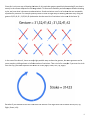
variations. In the above example, the x gesture would have two strokes, each with four variations (UL->BR, BR>UL, UR->BL, and BL->UR).
Variations allow us to store permutations of the gesture in a much more efficient manner. Otherwise you
would have to enumerate every possible combination of the strokes, which could easily become tedious (as
seen in the listing of the eight stroke combinations of the X).
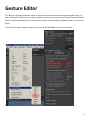
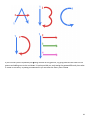
A library is a collection of gestures. Using libraries allows us to focus on capturing and analyzing specific
gestures related to the program the user is currently running. For instance, you may have an alphabet library
which contains gestures of letters, like A, B, C, etc, that may be used for handwriting recognition. Another
library may consist of shapes that let us draw and match figures in a game.
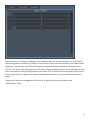
Strokes are captured by vector-based movement, meaning that the absolute distance and position in space is
not relevant. Only the direction changes that occur are considered when matching a gesture. This allows us to
flexibly capture input no matter the size of the gesture. The user could draw a small or large gesture, any place
on the screen, and the gesture would match equally.
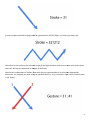
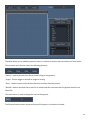
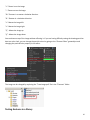
There are four base directions that a direction change can occur in:
Down = 1
Up = 2
Right = 3
Left = 4
Using a combination of these directions gives us a stroke. For a stroke that moves from upper-left to bottomright, the direction change representation would be shown as 31 (3 meaning right, and 1 meaning down):
3