1
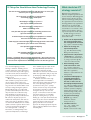
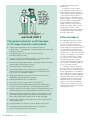
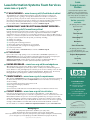
10 Things You Should Know About Technology Planning
1
2
3
4
5
6
7
8
9
10
Your ICT Strategy should meet the aims and objectives set out in your
business plan or organisational plan
An ICT Strategy is unique to its organisation –
avoid using generic model plans
Developing a strategy is a process –
don’t expect instant gratification!
The work involved is a team process –
build a ‘technology team’
Your plan will help you to minimise technology related crises
(get external help if you need it!)
It should stop the wasting of money on equipment or software
that frustrates or makes you miserable
What should an ICT
strategy consist of?
Although every organisation is
different, nearly all organisations will
need to develop an ICT Strategy. This
will help ensure that the purchase
and use of technology is firmly tied to
the organisations aims and business.
A strategy will also help organisations
make the best use of their ICT
resources now and in the future. It
is useful also to record risks – what
might go wrong with the strategy –
so you can keep these under review.
An ICT strategy need not be
more than two sides of A4 paper
but should include:
●
A time scale for implementing
the strategy and how often
the strategy will be reviewed
(e.g. 3 years, reviewed annually)
●
A date the strategy was
agreed and by whom
(e.g. 15th November 2004 by
Management Committee)
●
Organisational / department
/ team aims (e.g. organisation
provides advice and information
to young people through day
centre and outreach work)
●
How technology can be
used to meet these aims
(e.g. computer network to
allow easier information sharing
within the organisation,
database to assist staff with case
management)
●
Statement of Managing ICT
standards, detailing the
organisation's policies on
ICT and / or time scale for
developing and implementing
(e.g. staff responsibility, external
support, software standardisation,
hardware purchase, budgeting,
training, data protection – this
statement will generally refer to
separate policy documents)
●
Any special technology
projects (e.g. network
installation, website
development etc.)
●
Schedule and costs
(e.g. – year 1 detail, years
2 and 3 approximate,
Capital / revenue; Year 1/2/3)
It will help you to think through your technology priorities that enable
you to deliver your services more efficiently
Your plan will support budgeting
for technology
You should be able to use your completed
ICT Strategy to apply for funding
Finally – technology does not replace relationships – but can be a tool for
establishing, building, maintaining and expanding communication and systems
that assist the organisation in delivering services the best way you can.
is to do with budgeting, purchase,
training or whatever. Similarly, policies
could be adopted on other information
issues, such as the way an advice agency
records its client and case information,
or the way it acquires the information its
workers need.
Often the decisions you need to
make on ICT are pretty much routine:
do we need to replace a worn-out
printer? What sort of equipment should
we get for the new worker? Who needs
word processing training this quarter?
Occasionally, though, you realise that
you have reached the point where more
major decisions are needed. You may
have identified one specific aspect of
your agency that clearly needs attention.
Or someone may have proposed a
radical new development, with obvious
wider repercussions. Should we change
our main client database? Do we need to
update our finance system? There is then
a case for stepping back and taking a
more strategic view – collecting
information, consulting widely on the
options and implications, and writing a
more detailed, long-term plan. In this
case, any ICT developments must
obviously be related to the way
information is collected, stored and used
within the organisation, and you may end
up developing an ICT Strategy for all or
part of your activities.
Another case when a thorough
review might well be worthwhile is
where the agency realises that it has got
into a mess by buying equipment
piecemeal over the years – perhaps
because it never has any money for ICT
except when it includes a computer
among the start-up costs of a new
project – and needs to break out of the
cycle. Even if there is no immediate
prospect of having money to spend,
drawing up a clear plan should mean that
when money does become available, the
equipment that is bought moves the
agency towards a more consistent
approach. A clearly-argued plan may also
help to justify any ICT element included
in funding bids.
Lasa Computanews Guide • Managing ICT
3