1
1
Introduction
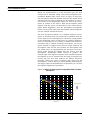
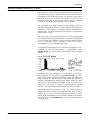
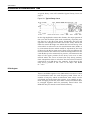
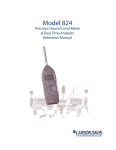
The Model 2900 Real-time SLM performs two measurement
functions simultaneously; that of a Precision Sound Level
Meter and that of a real-time frequency analyzer.
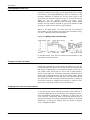
As a digital sound level meter, it simultaneously calculates
the sound pressure level corresponding to the following
detectors: RMS Slow, RMS Fast, Impulse and Peak. The Min
and Max values of the Slow, Fast and Impulse detectors over
the measurement period are maintained. At the same time, it
calculates both LEQ and SEL integrated values. In certain
versions of the Model 2900, such as delivered to German
users, the Min and Max values of the Impulse weighted
sound level are replaced by the Taktmaximal (Fast weighted)
3 and 5 values.
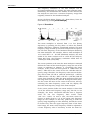
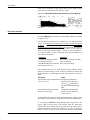
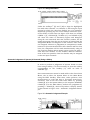
As a real-time analyzer, it can perform single or dual channel
frequency analysis using digital 1/1 and 1/3 octave bandwidths and FFT analysis using 100, 200, 400 or 800 line resolution. When equipped with the optional OPT 80 Acoustic
Intensity Module, and using a Larson•Davis intensity probe,
it can perform acoustic intensity measurements in both digital (1/1 and 1/3 octave) and FFT filter formats. Using digital
filters, it can generate statistics and Ln data using one or two
channels.
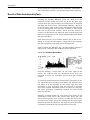
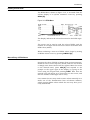
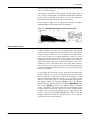
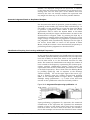
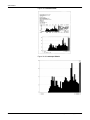
In its autostore mode, it can store spectra as fast as 400
spectra/second to non-volatile memory, and subsequently
display data in selected bandwidths as a function of time.
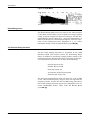
Additional on-board software permits the calculation and display of reverberation time, sound transmission loss, NC, and
STC. Along with these analysis capabilities, the 2900 provides a high degree of versatility in data presentation on the
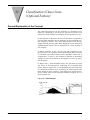
screen. The user may control the vertical and horizontal
screen formats (log/linear) as well as the display ranges. In
conjunction with horizontal and vertical display expansion
capabilities to provide the highest visual resolution of data,
vertical window and horizontal pan functions may be used to
move the expanded data blocks for easy examination.
Introduction
1-1