1
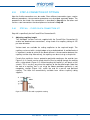
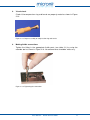
Figure 2.5. Cutting the capillary
2.
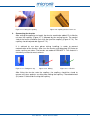
Figure 2.6. Capillary that has been cut
Connecting the ferrules
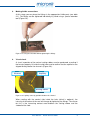
After cutting the capillaries to length, the ferrules need to be added. First slide the
nut over the capillary (Figure 2.7.1) followed by the sealing ferrule. The conical
side of the ferrule should be flush with the tip of the capillary (Figure 2.7.3). The
capillary should not protrude (figure 2.7.2).
It is advised to use latex gloves during handling, in order to prevent
contamination of the ferrules. Also rinse the ferrules with deionized (DI) water to
make sure they are clean. The ferrules are made of PERLAST™. This material is
chemically resistant to most solvents.
Figure 2.7.1. Fitting over cap
Figure 2.7.2. Wrong
Figure 2.7.3. Like this
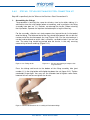
After fitting the ferrules onto the capillary, the capillary should be rinsed to
remove any glass particles resulting from cutting the capillary. Filtered deionized
(DI) water is advised for flushing the capillary.
User Manual - Fluidic Connect 4515
7