1
Choosing the RAID Levels
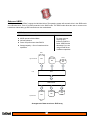
CalDigit products can support the following RAID levels: 0, 1, 0+1, 5, 6 and JBOD.
The choice for RAID levels depends on the application you are using for.
RAID Level 0 offers highest transfer rates, and is ideal for large blocks of data where speed is of importance. Computer
Aided Design, Graphics, Scientific Computing, Image and Multimedia applications are all good examples. RAID 0
provides no fault tolerance. If one drive in a RAID 0 array fails however, the data on the array will be lost.
RAID Level 1 may be an appropriate choice if cost and performance are of significantly less importance than fault
tolerance and reliability.
RAID Level 0+1 offers a compromise between the reliability and tolerance of level 1 and the high transfer rates provided
by level 0.
RAID Level 5 (CalDigit default setting) arrays offer high I/O transaction rates, and are the ideal choice when used with
on-line transaction processing applications, such as those used in banks, insurance companies, hospitals, and all
manner of office environments. These applications typically perform large numbers of concurrent requests, each of which
makes a small number of disk accesses. If one drive in a RAID 5 array fails; the lost data can be rebuilt from data on the
other disks.
RAID Level 6 is similar to RAID level 5. A second set of parity information is written across all the drives. This is
equivalent to double mirroring. This level may be more fault tolerant than necessary and has poor performance. If two
drives in a RAID 6 array fails; the lost data can be rebuilt from the data on the other disks
JBOD is a method of arranging multiple disks that is not technically a RAID at all. Under JBOD (“Just a Bunch of Disks”)
all disks are treated as a single volume and data is “spanned” across them. JBOD provides no fault tolerance, or
performance improvements over the independent use of its constituent drives.
33
33